What a “permanent tax” imposed by Tehran on oil would actually mean. The impact on the global economy

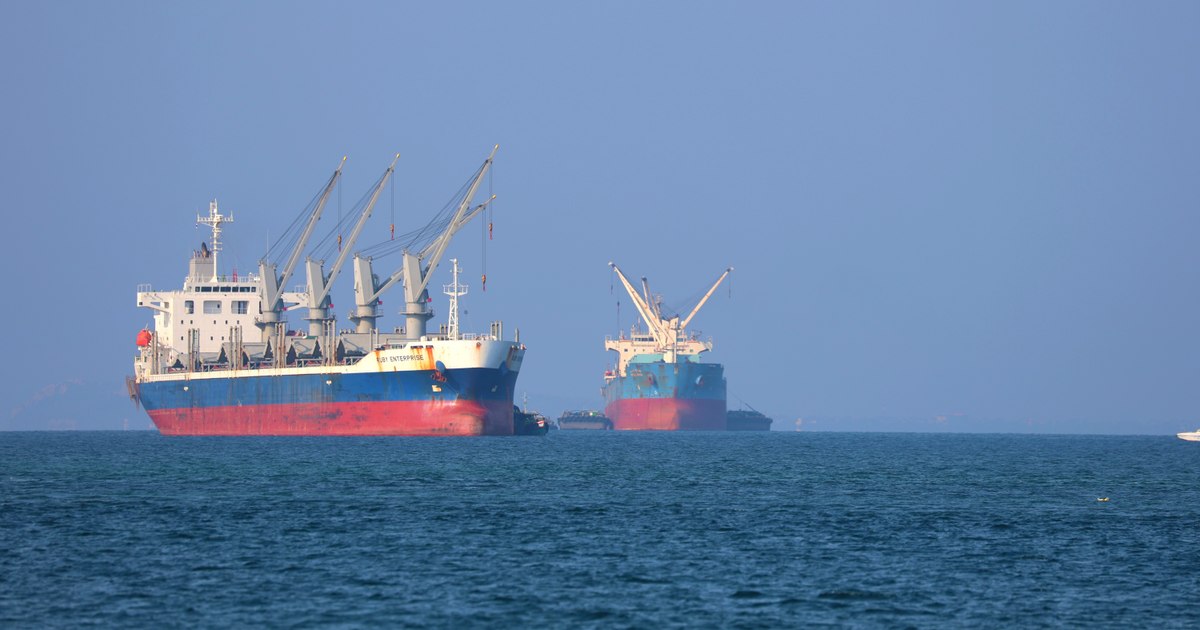
The US-Iran talks come amid tensions in the Strait of Hormuz, where Tehran could impose a huge tax on oil tankers. At stake is the control of a vital route and the impact on global energy prices.
Tehran could impose a huge toll in the Strait of Hormuz PHOTO Shutterstock
The future of this narrow waterway – as well as curbs on Iran's nuclear program – is at the center of the discussion after Tehran's blockade of oil and gas shipments through the strait sent energy prices soaring.
Iran's plan to maintain control over the traffic by charging a $2 million fee for each oil tanker transiting the area has sparked fears that this “toll barrier” could keep prices high for years, writes The Guardian.
What taxes does Iran want to impose?
Tehran's proposed 10-point peace plan includes a provision that Iran and Oman could levy a fee of up to $2 million for each ship crossing the strait, according to media reports. Iran claims the funds would be used for reconstruction.
The idea that safe passage through this route should only be allowed under Iranian military control has been harshly criticized by Washington and economic analysts. The plan was already tested earlier this month. Tehran reportedly required tankers to provide details of their cargo, destination and ultimate owner before paying a fee of at least $1 per barrel.
In the case of a typical oil tanker carrying about 2 million barrels, the fee reaches $2 million for a single passage, which would have to be paid in Chinese yuan or cryptocurrencies. Once approved, Revolutionary Guard vessels would escort the tanker through a narrow passage close to Iran's southern coast.
So far, ships from Malaysia, China, Egypt, South Korea and India have been among those granted transit permission. It is not clear whether they actually paid this fee.
How legal is such a system
The mechanism directly contravenes the UN Convention on the Law of the Sea, which guarantees the right of free passage through more than 100 straits in the world, including Hormuz.
About 170 states and the European Union have ratified the convention, which is considered part of customary international law. However, neither Iran nor the US are among the signatories. Even so, Washington strongly disputes Iran's right to control this route.
Added to that is the issue of sanctions: Iran is subject to decades of restrictions imposed by the US, Britain and other states, making it virtually impossible for major Western shipping companies to pay such fees to the Revolutionary Guards.
The actual costs to the market
Adding a dollar to every barrel of oil crossing the strait would mean additional costs of about $20 million a day, or about $7 billion annually, compared to pre-crisis traffic levels. In the context of a global market valued at around $3 trillion, the direct impact seems relatively limited.
The oil crisis is hitting the country with the second largest fuel production in Europe. Stocks last only 20 days
In reality, however, the costs could rise well above this fee.
Shipping companies will charge higher rates for routes deemed dangerous. Insurers will increase premiums, and crews – exposed to high risks – are entitled to double wages for working in areas classified as dangerous.
The strongest impact is expected on global energy prices, which depend on the resumption of normal flows through the straits.
How would it affect the price of oil
The de facto blockade of the strait, which previously carried about 20 million barrels of oil and gas daily, reduced regional exports by about 10 million barrels a day and led to an explosion in prices.
Brent crude has risen from under $70 a barrel last year to around $119 in futures markets and even close to $150 for physical deliveries.
Analysts warn that pressure on supply could keep prices high in the long term. Some estimates point to around $100 a barrel for much of this year, with highs likely to hold through 2027.
Although some exports have been diverted through pipelines, their capacity is limited. In addition, damaged infrastructure and the shutdown of some oil fields will delay the return to previous levels.
At the same time, legal risks, high costs and security concerns are causing traders to avoid Gulf oil, even if transit were allowed under Iranian control.
Many US allies in the Gulf and Asia are calling for financial aid amid turmoil over the Iran war
The impact on the global economy
Economists from the Bruegel analysis center estimate that the global economy “he would barely feel it” the direct impact of the tax, should Iran manage to maintain control of the strait.
The additional costs would be borne mainly by Gulf producers, who would cover between 80% and 95% of the total – up to $14 billion annually. In this scenario, oil prices would rise by only $0.05–0.40 per barrel from pre-conflict levels.
The major problem, however, is not the tax itself, but the precedent set: legitimizing control over an international maritime route and blocking the return to normal export flows.
Experts warn that long-term disruption of the Strait of Hormuz could have serious consequences for the world economy. The situation has already been described as the worst energy supply crisis in history by the head of the International Energy Agency, Fatih Birol, who called it “absurd but real”.
A further escalation of the conflict with Iran could trigger a global recession. The International Monetary Fund warns that Britain's economy would be the most affected among the G7 states.