Two companies with thousands of flights in Romania, in danger of collapse by winter, warns the head of Ryanair

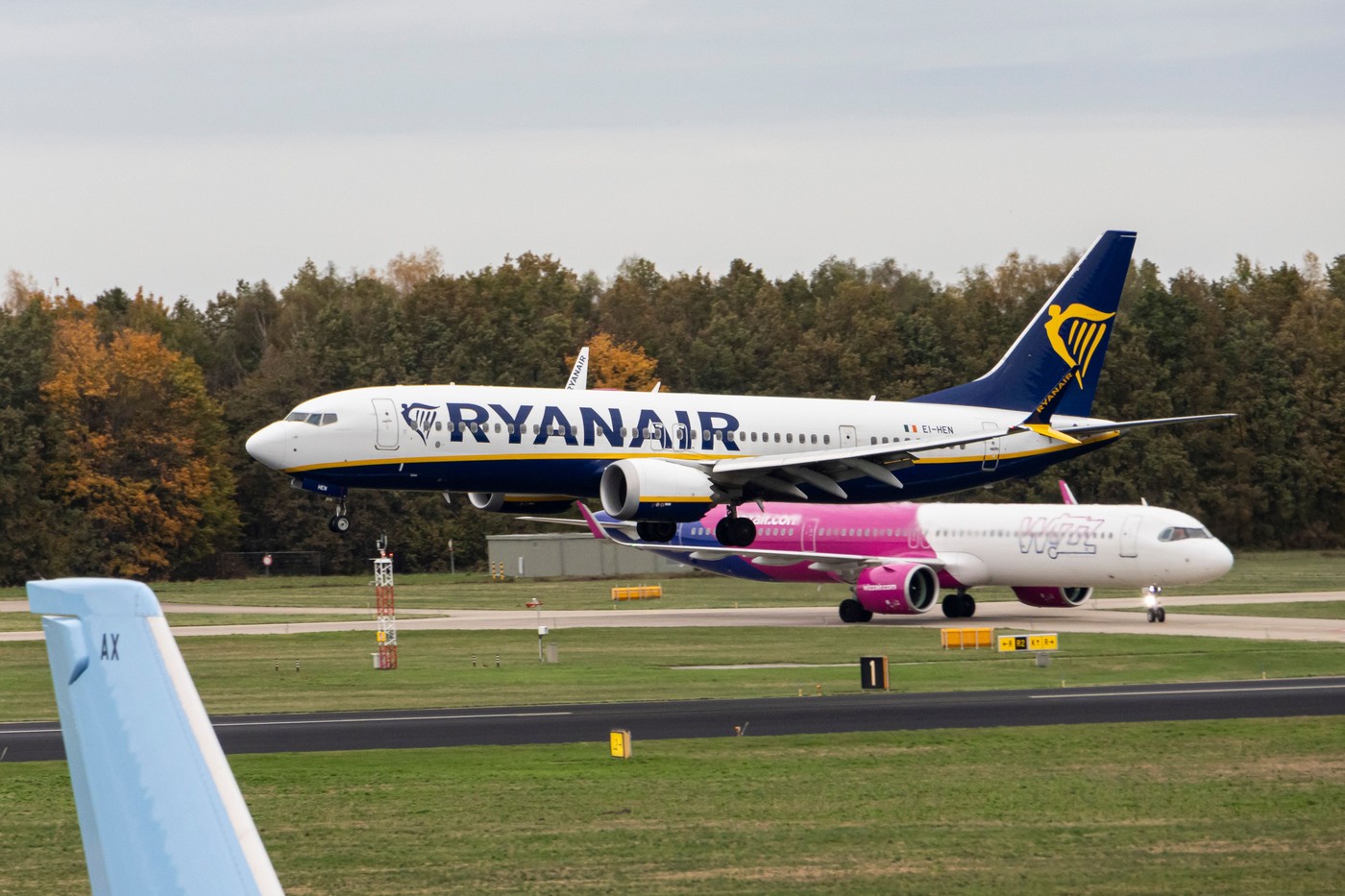
The increase in the price of fuel is putting pressure on the big low-cost operators and could lead to the bankruptcy of some European airlines, according to the website specializing in aviation Simple Flying.
Ryanair chief executive Michael O'Leary has issued stark warnings to rivals Wizz Air and airBaltic, claiming they could run out of cash reserves by the end of winter due to the current fuel crisis.
Both companies targeted by the head of Ryanair have an important presence in Romania. Wizz Air, the Hungarian low-cost giant, operates thousands of flights from 13 Romanian airports, while airBaltic provides the direct connection between Bucharest and the Baltic countries.
In a report published by Il Sole 24 Ore, O'Leary noted that Irish carrier Ryanair had already spent $50 million more on jet fuel this month.
He also warned that the effects of the fuel shortage were not yet fully felt, with a major crisis possible as early as May amid tensions in the Middle East and the blockade of the Strait of Hormuz.
Race for survival
Airlines typically hedge their fuel prices through contracts with suppliers, and Ryanair did just that before the dispute hit the global market hard, writes Simple Flying.
Ryanair secured 80% of the required at the price of $67 per barrel until March next year. Instead, the remaining 20%, purchased at the free market price, exceeded the threshold of $150 per barrel. For many operators, these costs cannot be sustained in the long term, already driving ticket price increases through fuel surcharges.
O'Leary suggested that the current level of prices will lead to the bankruptcy of some companies before the end of winter.
“If oil stays at these levels, two or three European airlines could go bankrupt in October or November, like Wizz Air, which wants to sue me but won't have enough time to do it, and Air Baltic. A good thing for our business because there will be fewer competitors,” he said.
Wizz Air and airBaltic's failure to hedge their fuel risks could see current reserves “depleted” by the fourth quarter, according to Ryanair's boss. In this scenario, companies may have to suspend their flights due to lack of liquidity.
In response to these statements, Wizz Air stated that it has a solid financial structure and has liquidity that would allow it to last 18 months or more. The representatives of the Hungarian company emphasized the firm stability of the operator and solid relationships with lessors and manufacturers, factors that allow the continuation of the fleet strategy without interruption.
In the case of airBaltic, a report issued by the financial rating agency S&P Global indicates increased vulnerability, suggesting that the operator may need a debt restructuring to avoid the blockade. Although it recently received a short-term loan from the Latvian government, the company is struggling to meet its financial obligations without back-up funding.
Countries across Europe are closely monitoring the fuel situation. The UK is in one of the most vulnerable positions as it sources its fuel from Kuwait. Other European countries have more diverse sources of jet fuel, including West Africa, as well as countries such as Norway, the United States and Russia.