Mysterious civilization discovered at almost 3,000 meters altitude. What do the Caucasus Mountains and the fortresses of the “giants” on the ridges hide

Researchers have recently discovered the remains of a mysterious ancient civilization in the Caucasus Mountains. It is about massive fortresses, with impressive walls, but also about settlements and cemeteries that belonged to communities that lived at altitudes of over 1,500 meters.
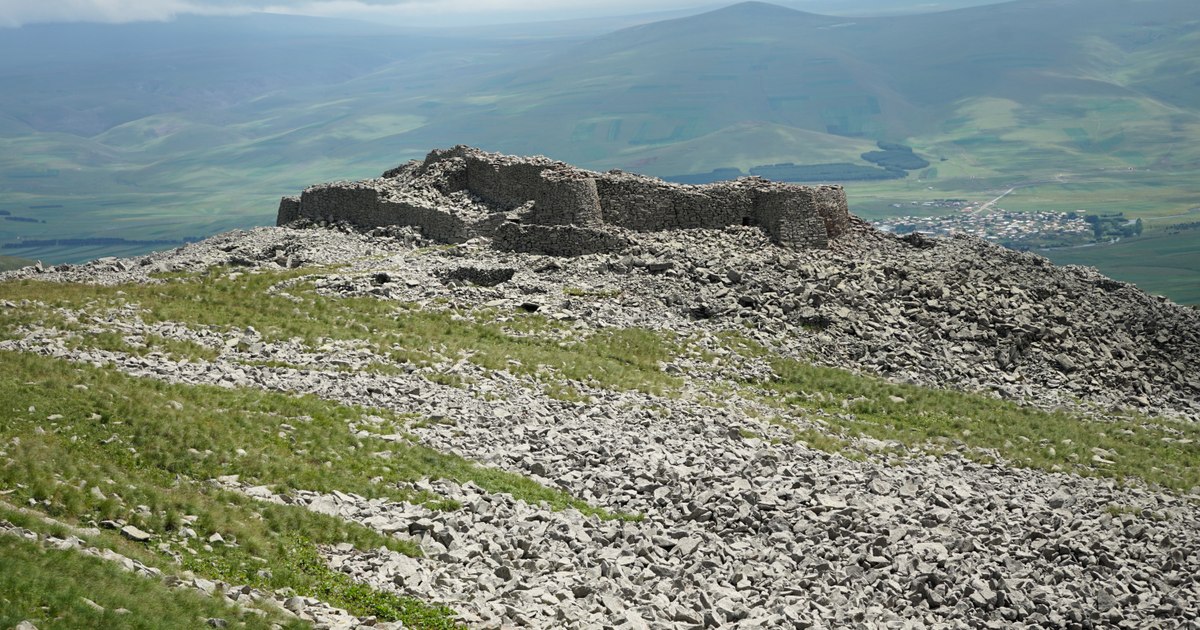
Abuli fortress ruins PHOTO wikipedia
Human history still holds many mysteries, including communities that erected impressive constructions in hard-to-reach areas. A recent example comes from the South Caucasus, in what is now Georgia, where archaeologists have identified traces of a forgotten civilization that thrived for millennia and suddenly disappeared towards the end of the Iron Age. For now, research is focusing on massive fortresses and an extensive network of settlements, necropolises and fortifications, trying to establish their role and functionality.
A world hidden on the ridges of the Caucasus
On the southern slope of the Patara Abuli mountain, in the Lesser Caucasus, at over 2,600 meters above sea level, are the ruins of a fortress known as the “Abuli fortress”. Although affected by weather and conflict, the construction impresses with its size and structure. It has been explored sporadically in the last century, but the altitude has made systematic investigations difficult.
Built of large basalt blocks, using the cyclopean masonry technique (without mortar), the fortress includes a central citadel of approximately 60 × 40 meters and a residential area with dwellings arranged on several levels. The exact dating remains uncertain, but it is associated with the Middle or Late Bronze Age. Originally thought to be a refuge for shepherds, recent research suggests a much more complex function.
Studies carried out between 2017 and 2022 by teams in Italy and Georgia, using satellite imagery, GPS mapping and GIS systems, have led to the identification of an extensive network of sites. The Samtskhe-Javakheti Archaeological Project has documented 168 ancient sites, including Cyclopean fortresses, settlements and necropolises. The results were published in the Antiquity Journal and change the perspective on the Bronze and Iron Ages in the region.
A vanished world at almost 3,300 meters altitude
The Samtskhe-Javakheti region, located on the Javakheti Plateau at altitudes between 1,500 and 3,300 meters, has long been ignored by archaeologists due to its difficult conditions. New research shows, however, that there was a complex civilization here, with over a hundred fortified settlements.
Fortresses like Abuli or Shaori were not simple refuges, but stable centers of habitation. Sites such as Abulis Gora or Saro indicate almost continuous occupation from the Bronze Age to the end of Antiquity. Necropolises discovered near Bertakana and Lake Tabatskuri confirm the presence of permanent communities. At the Meghreki fortress, traces of continuous habitation have been found since around 3500 BC. until the Middle Ages.
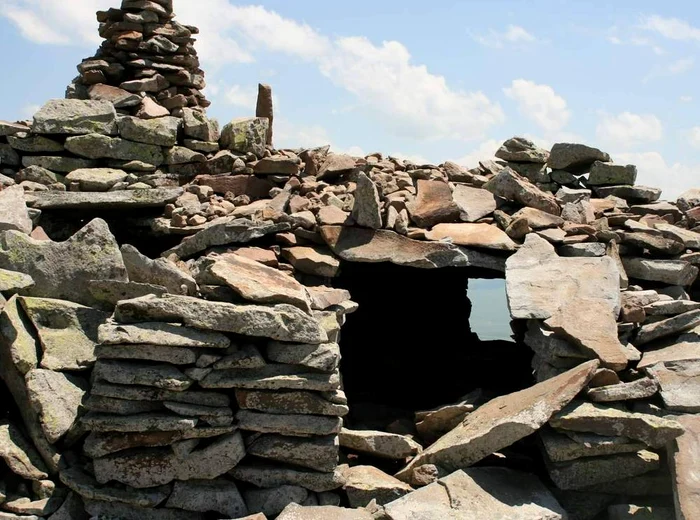
Detail from a megalithic fortress in the Caucasus PHOTO wikipedia
Specialists have come to the conclusion that a few millennia ago whole communities lived on the ridges of the mountains in more than a hundred settlements protected by fortifications with huge walls. In fact, fortresses like Abuli or Shaori were not just outposts or places of refuge but real citadels of this Caucasian civilization. Sites such as Abulis Gora and the Saro settlement show evidence of almost permanent habitation from the Bronze Age to late Antiquity. At the same time, there are numerous vast necropolises such as those discovered near Bertakana and Lake Tabatskuri which confirm the fact that the area was inhabited permanently and it was not just transhumant movements or populations retreating in times of war. In addition, spot excavations at the Meghreki Fortress have revealed that the settlement was permanently inhabited from 3500 BC until the Middle Ages.
Origin and extinction
Researchers assume that these communities belonged to the Kura-Araxes culture, a Bronze Age civilization spread across the Caucasus. The findings show the existence of communities well connected to trade networks, including the use of obsidian from remote areas.
Objects with a possible ritual role were also found, such as a bronze solar disk discovered at Baraleti Natsargora, decorated with geometric motifs. It suggests the existence of a solar cult and a social elite.
The disappearance of this civilization remains unclear. Thick layers of ash discovered at several sites indicate a violent end, possibly following conflicts or invasions.