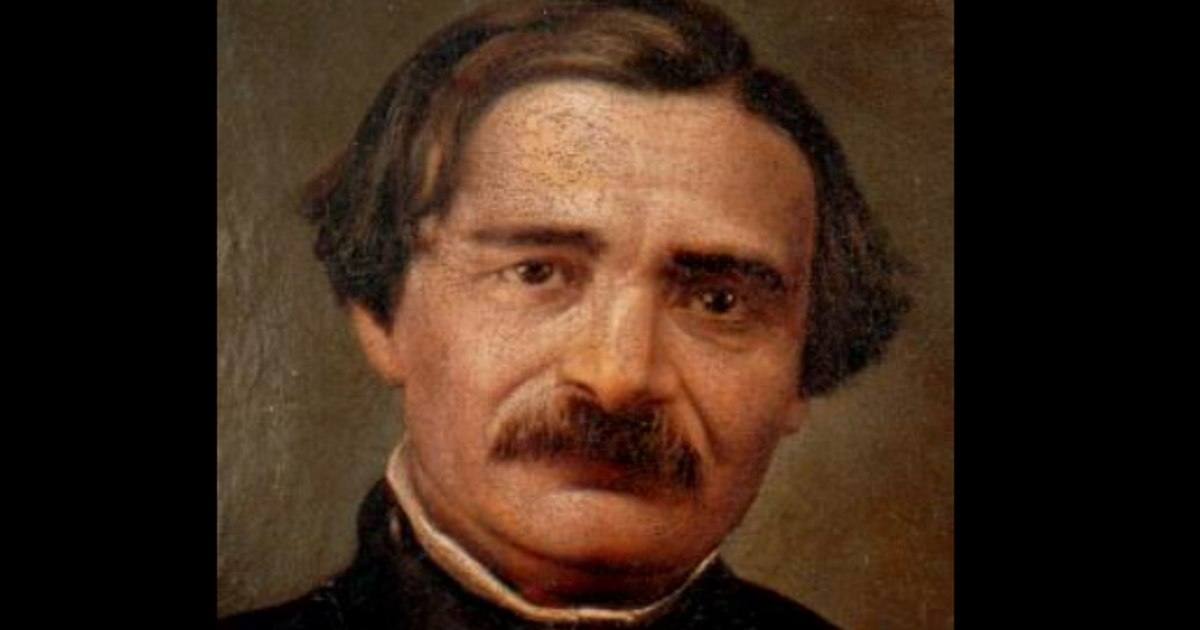
In history, April 27 is known as the date of the death of the writer Ion Heliade Rădulescu, but also for the arrest of Benito Mussolini and the communist leader Lucrețiu Pătrășcanu. Also on April 27, the politician Gheorghe I. Brătianu died in Sighet prison. Samuel Morse, the inventor of the Morse code, was born on April 27, 1791, and in 1872 the writer, philologist and politician Ion Heliade-Rădulescu died.
The writer Ion Heliade Rădulescu died on April 27. PHOTO: Wikipedia
1791 – Samuel Morse, inventor of Morse code, was born
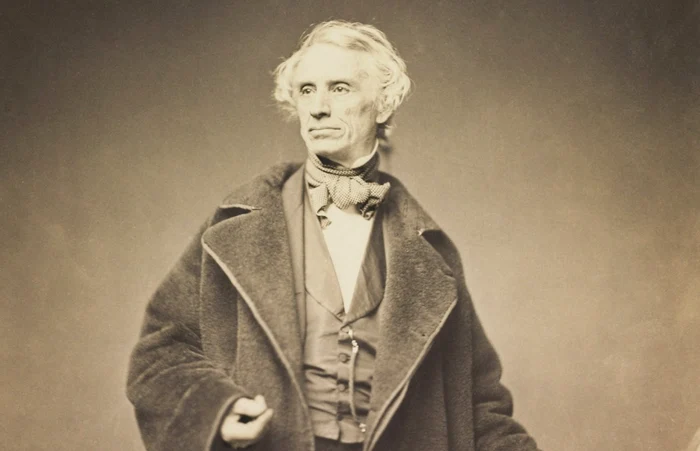
Samuel Finley Breese Morse (b. April 27, 1791, Massachusetts, USA – d. April 2, 1872, New York, USA) was an American painter and inventor. In 1837, he made an electromagnetic device for telegraphy, patented in 1840, and in 1838 he invented the alphabet that bears his name, which is still used today.
1872: Ion Heliade Rădulescu, Romanian poet, prose writer, journalist and politician, died
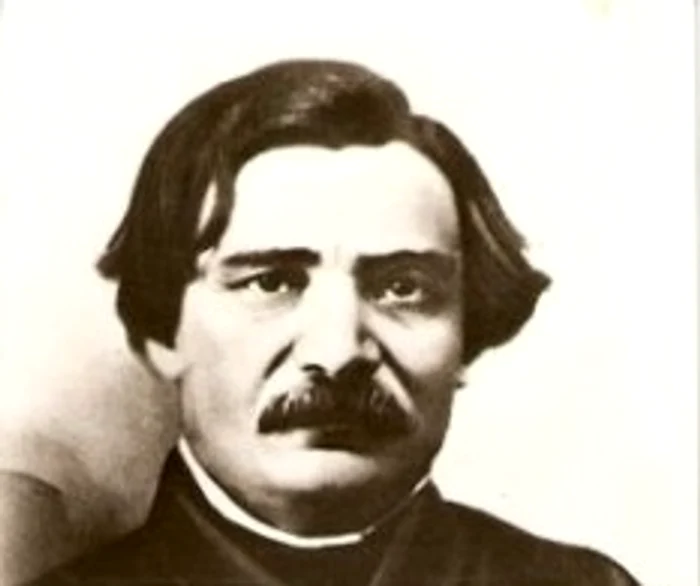
Ion Heliade Rădulesc
Writer, philologist and politician Ion Heliade-Rădulescu, founding member and first president of the Romanian Academic Society, was born on January 6, 1802, in Târgovişte.
He attended the courses of the Royal Academy of Schitu Măgureanu and the Romanian school of “St. Sava”.
He was a teacher and head of the College “St. Sava'' from Bucharest (1822-1827), teaching Romanian and Mathematics.
He participated in the preparation of the Revolution of 1848 in Wallachia, being the first author of the program manifesto “Proclamation from Islaz”. He was part of the provisional government, after which he left the country, returning from exile only in 1859.
He was among the active members of the Literary Society, starting in 1827, and of the Philharmonic Society, from 1833, according to the “Dictionary of Romanian Writers” (Romanian Cultural Foundation Publishing House, Bucharest, 1998).
He led the “Society of Literature, Declamation and Vocal Music”, founded a printing and publishing establishment, edited the first newspaper published in Wallachia, entitled “Curierul Românesc”, 1829. At the same time, he founded and managed “Gazette of the National Theater” (1835-1836, continued by “Courier of both sexes”, 1836-1848), “National Museum”, “Conservatorul”, “Legalitatea”.
He was the first director of the “Official Monitor” of Romania, a publication that appeared on December 8/20, 1832, under the title “Bulletin. Administrative Gazette”.
Ion Heliade-Rădulescu wrote numerous works related to language reform, including “Romanian Grammar”, 1823; “Quick overview of the language and the beginning of the Romanians”, 1832; “Parallelism between the Romanian and Italian languages”, 1840. He died on April 27, 1872.
1909: Ottoman Sultan Abdul Hamid II is ousted by the “Young Turks” movement, succeeded by his brother Mehmed V
He was the 34th sultan of the Ottoman Empire and reigned from August 31, 1876 until his dethronement. On December 23, 1876, under the pressure of the European allies of the Empire, outraged by the cruelty with which the revolts in Bosnia-Herzegovina and Bulgaria had been repressed, he decreed the first Constitution of the Ottoman Empire, which confirmed the transition from absolutist monarchy to constitutional monarchy.
The first constitutional period ended following the historical disturbances on February 13, 1878, with the dissolution of the Parliament. He led the Empire in the Russo-Romano-Turkish War of 1877-1878, which resulted in the loss of two-thirds of Turkey's Balkan territories.
1931: George Enescu finished the orchestration of the opera “Oedipus”, a creation that he dedicated to Maria Rosetti-Tescanu

George Enescu
Oedipus is a lyrical tragedy in 4 acts by George Enescu, with a libretto in French by Edmond Fleg, starting from the tragedies Oedipus rege and Oedipus la Colonos written by Sophocles.
The opera “Oedipus” was composed by George Enescu between 1921 and 1931, being dedicated to his wife Maria Tescanu Rosetti. Enescu worked at the Marucăi mansion in Tescani, in a summer pavilion built on an artificial hill in the ground, right in the middle of the forest.
The world premiere took place at the Opéra Garnier in Paris on March 13, 1936.
The Romanian premiere took place in Bucharest, on September 22, 1958, with interpretation in Romanian, translated by the critic Emanoil Ciomac, conductor Constantin Silvestri, on the occasion of the first edition of the “George Enescu” International Festival.
[1945:BenitoMussoliniwasarrestedbyItalianpartisansnearthevillageofDongowhiletryingtoescapedisguisedasaGermansoldier
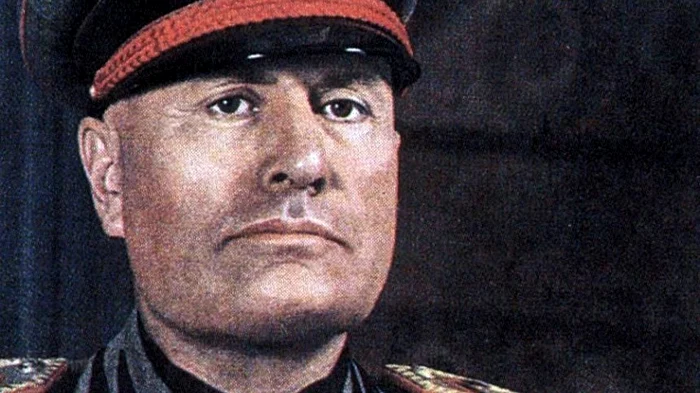
Benito Mussolini PHOTO: Archive
January 6: birthday of the actor Rowan Atkinson, who would become known worldwide with the character Mr. Bean
Communist Italian partisans capture Mussolini and his mistress, Clara Petacci, at Dongo, a town on Lake Como, and, without trial, “for crimes against the Italian people,” executes them by firing squad, ignoring the Allies' demand to be arrested, tried and convicted.
Their bodies are taken to Milan and hung upside down, hanging by the heels from a roof bar, along with the bodies of several other Fascist dignitaries.
The show was attended by thousands of Italians and numerous American soldiers. Before being hanged, the corpses were left for a while on the ground in Loreto square, surrounded by the crowd. Some kicked the corpses and Mussolini's skull was crushed.
1948: Romanian communist leader Lucrețiu Pătrășcanu was arrested by order of Gheorghiu – Dej
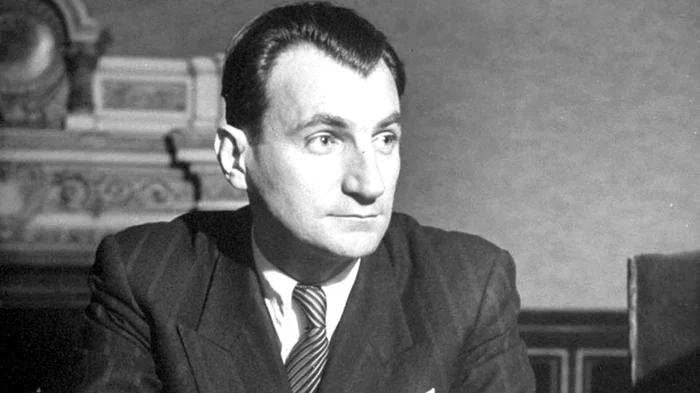
Lucrețiu Pătrășcanu PHOTO: The truth
Lucrețiu Pătrășcanu (b. November 4, 1900, Bacău – d. April 17, 1954, Jilava Prison, Bucharest) was a Romanian politician, member of the leadership of the Romanian Communist Party, minister, lawyer, sociologist and economist. For a period of time he was also a professor at the University of Bucharest.
Graduated in law and doctor of economic sciences from the University of Leipzig, Pătrășcanu was a rare figure among the few communists in Romania. He was a representative of the Romanian illegalists at the Comintern and in the political alliance that declared the country's withdrawal from the Hitler alliance in August 1944. The first communist to become a minister held the portfolio of Justice.
1953: The historian and politician Gheorghe I. Brătianu died in detention in the Sighetu Marmaţiei camp
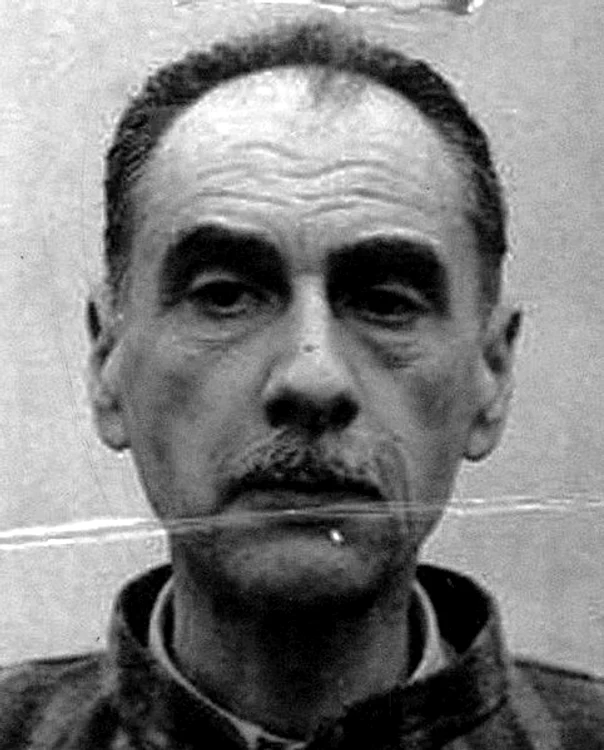
Gheorghe I. Brătianu PHOTO: The truth
From 1924 he was a university professor at the department of universal history of the University of Iasi, and from 1940 at the University of Bucharest. In 1942 he was elected a full member of the Romanian Academy and between 1935 and 1947 he was director of the Institute of Universal History in Iași (1935-1940) and then of the “Nicolae Iorga” Institute of Universal History in Bucharest (1941-1947).
In the 1930s, he was the head of a dissident faction of the National Liberal Party, which he had founded
He died under still unexplained conditions on one of the days between April 23 and 27, 1953.
According to the testimonies of other detainees, it seems that he committed suicide by strangulation, unable to bear the tortures of detention. According to other sources, it is assumed that he was beaten by a guard until Gheorghe Brătianu died. In 1971, the family was authorized by the communist rulers to exhume him from the Sighet cemetery and rebury him in the Brătieni crypt from Florica/Stefanesti, Arges county.
1968: Cristian Mungiu, Romanian director, was born

Romanian director Cristian Mungiu
April 27, the day when the explorer Ferdinand Magellan was killed by the natives of the Philippines VIDEO
He directed several short films, for which he received several awards, including the best director award at the Dakino Festival in 2000 for Zapping. The feature film Occident (2002) was presented in the Quinzaine des Réalisateurs section at the Cannes Film Festival, winning the Grand Prix at the Transilvania International Film Festival.
The film “4 months, 3 weeks and 2 days” (2007) made the director Cristian Mungiu famous, by being selected by the Cannes Film Festival jury. After receiving the Award granted by the International Federation of Cinematographic Press and the award granted by the national education administration in France, the director Cristian Mungiu won on May 27, 2007 the Grand Prize of the Cannes International Film Festival – Palme d'Or. The film was also nominated for the Golden Globe Awards.
2002: Ruth Handler, the creator of the Barbie doll, died

Ruth Handler PHOTO: Archive
Ruth Marianna Handler (November 4, 1916 – April 27, 2002) was an American businesswoman and inventor. Best known for inventing the Barbie doll in 1959, she was the first president of toymaker Mattel, Inc. which she co-founded with her husband in January 1945 until 1974 when the Handlers were forced to resign from Mattel and in 1978 Ruth Handler was convicted of making false reports to the Securities and Exchange Commission.
Two stories are often cited as Handler's inspiration for the Barbie doll. The first details a trip to Europe with her husband and children, during which she saw a doll that looked like a woman (which was very different from the typical baby dolls that many girls owned at the time). The other tells of a singular moment when Ruth saw her daughter Barbara playing with paper dolls in their home. Handler then wanted to create a more realistic, 3D toy that represented what these girls “wanted to be.”
Although the truth behind these stories has never been fully confirmed, Ruth pressured Mattel to release what would become known as the Barbie doll (named after her daughter Barbara).