At first it all looked familiar: the cavernous ballroom at the Washington Hilton, filled with the indistinct hum of thousands of mostly irrelevant conversations mingling together over a sea of hundreds of tightly packed tables, as they always do before the official program of the annual White House Correspondents' Dinner begins.
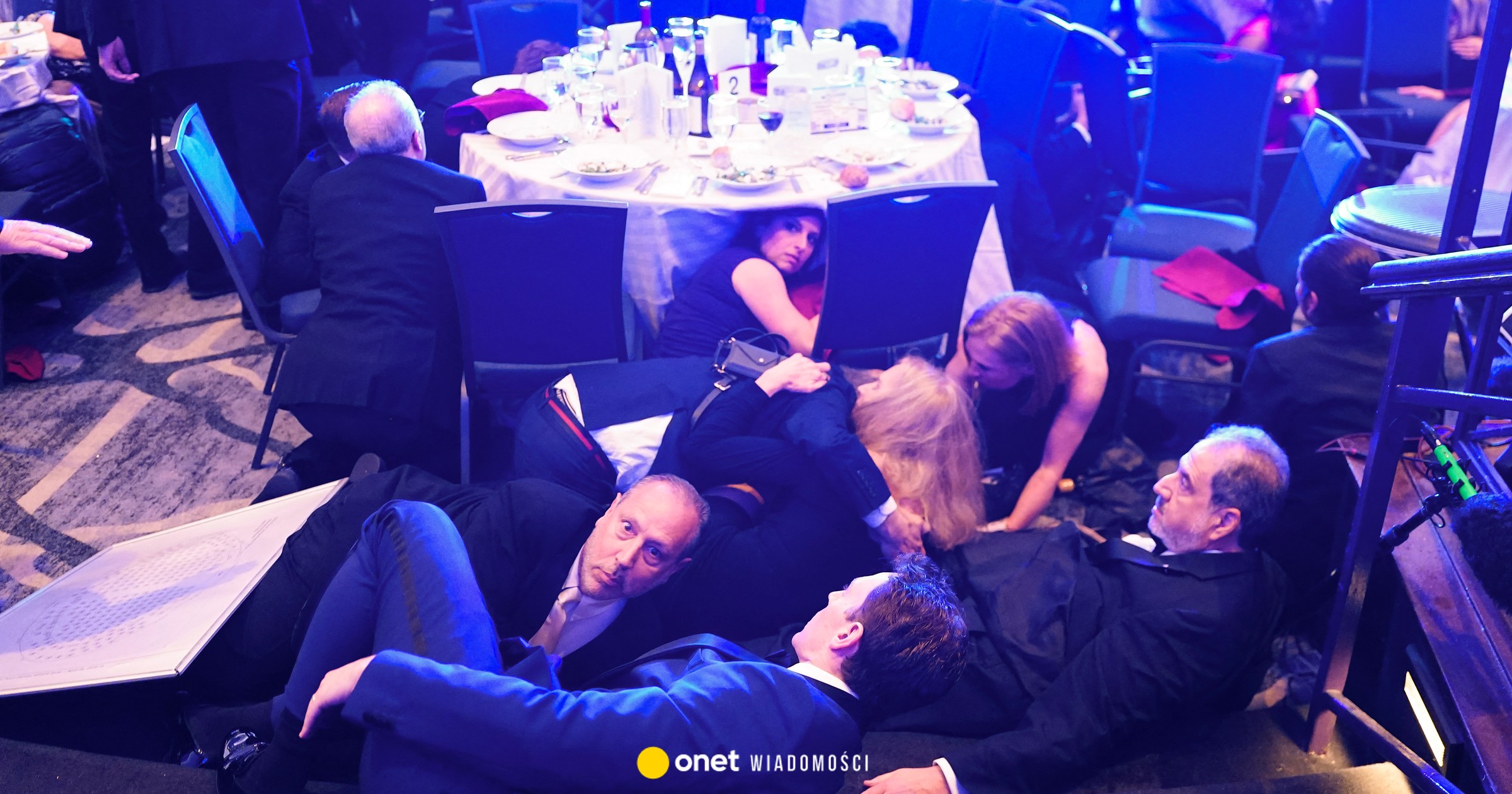
In the next moment, everything became surreal: women in ball gowns, men in tuxedos, almost all of them huddled on the floor, and the ballroom fell silent. As people cautiously raised their eyes to look around the room, we saw men with machine guns standing at the head table where President Donald Trump was sitting, and Cabinet secretaries being escorted by agents one by one from the cavernous room.
The juxtaposition of these scenes may suggest a sudden, piercing realization of terror. Perhaps some in the room felt that way. For me, and I think for others around me, that's not exactly how it felt when this incident was unfolding. The feeling was more like that hazy intermediate zone of consciousness when you wake up to a phone call in the middle of the night: “Hmm, what's going on, I'm confused, is this really happening?”
Donald Trump told reporters after returning to the White House that the shots fired just outside the ballroom sounded to him like a tray of food falling. Yes – that's a good shot. In my case, the noise was just at the periphery of my awareness, not enough to trigger a sudden alarm or even interrupt my conversation (other members of the POLITICO team heard it clearly).
What happened next took a few seconds, but it was slower in my head. The subconscious instinct to assume normal order was overcome by the awareness that something decidedly abnormal was happening. People fell to the floor. “Come on,” I thought, “is this really necessary?” The sight of the agents with their guns drawn made it clear that joining their colleagues on the floor was in fact a good idea.
Agents reaching for guns after shots rang out during the White House Correspondents' Dinner at the Washington Hilton in Washington, April 25, 2026Mandel Ngan/AFP / AFP
When I joined them, my first thoughts were dominated by the question: what the hell was actually going on? Then came the journalist's instinctive reaction: whatever the answer is, the president just got escorted out of the party, that's pretty damn important news. Many colleagues, cowering on the floor, raised their phones above their heads to record the scene.
At no point during this incident did I feel that I or my colleagues were in any serious danger. Whatever happened, it was clear that it took place just outside the ballroom. There were no signs of an active shooter or an ongoing terrorist attack.
For a long time, the problem was that there were no clues in any direction. The physical features of the Hilton's ballroom – located deep in the bowels of this massive venue – mean that cell reception is often not very good, especially when thousands of people are present.
At the moment, the most important news in the country was the disruption of the event and the president's sudden departure from the venue, witnessed by hundreds of journalists. However, the room was locked down and most reporters were unable to make calls to learn anything or to assure family members that they were okay. For about half an hour, when it became clear it was safe to get up, people milled around asking each other what they had heard. The mood was definitely no longer celebratory, but it wasn't mostly serious or somber either. There was mainly uncertainty and anxiety.
For a moment, everyone seemed to be saying the same thing: the potential attacker had been shot by security and lay dead just a few meters away, in front of the middle door of the ballroom.
It turned out that this was not true. But just when we all thought it was true — before anything had been confirmed — the president of the correspondents' association, Weijia Jiang of CBS News, came to the podium to assure everyone that the evening's programming would resume soon. Really, while there's a dead body lying nearby and every serious journalist has to get down to business, are we going back to the usual dinner program of award presentations and humorous speeches? Or would Trump insist on a dramatic return to the stage? (“I recommended that we 'LET THE SHOW GO ON,'” Trump wrote on Truth Social while the ballroom waited).
After announcing several times that the event would be resuming soon, Jiang returned to thankfully report that this would not be the case. However, she made a promise Trump that the dinner would be rescheduled within 30 days. She said Trump wants to host the dinner — which is notable because it's the first time in his two terms that he has chosen to attend it.
But one wonders whether the strange events of that Saturday night – about which we still only have a fragmentary understanding – might make it difficult to return to the familiar concept of a correspondents' dinner. The Hilton, with its enormous ballroom within an even larger hotel, never seemed the easiest facility to secure reliably (it was outside the hotel, leaving the same ballroom, that Ronald Reagan was shot by would-be assassin John Hinckley in March 1981). Trump himself was the subject of two serious assassination attempts, including being slightly injured by bullet fragments near Butler, Pennsylvania in July 2024.
This dinner's combination of journalism, celebrity and frivolity has long felt like an anachronism in an angry and turbulent era of politics. But never has dinner itself felt more surreal than this weekend.