Today, a much more fundamental question must be asked: is it possible to not only produce, employ and sell locally, but also to make real decisions?
This is not an academic argument about definitions. This is one of the key problems of modern corporate governance, especially in companies dependent on foreign capital providers. Very often, local presence is stripped of agency. The company is formally Polish, has a Polish management board, a Polish address, a Polish team and Polish customers. But the most important decisions are made elsewhere – at the capital provider, outside the formal structure of responsibility, outside the local legal order, outside the market to which these decisions concern.
This is a convenient model for the owner, but less and less rational for the business. And increasingly dangerous to the very idea of responsible management. Is a capital majority enough to shape a subsidiary according to its own uncompromisingly defined ownership rules?
See also: “We are even 20 years behind schedule.” The head of the Post Office tells us what awaits the state giant [TYLKO U NAS]
Need to change the model
We need a new definition of local. Let's call it Local Content 2.0.
The current model, the classic one, can be described as Local Content 1.0 – i.e. local resources and local execution. We are then talking about work, suppliers, investments, and operational facilities.
In the Local Content 2.0 model, however, the focus shifts from material resources to management responsibility. We no longer ask only how much comes from a given market, but also how many decisions, responsibilities and know-how actually remain in that market.
This is a seemingly subtle change, but in fact it is a systemic change.
- First, it's about efficiency.
Decisions made closer to the market are usually faster, more accurate and better grounded in reality. The ownership headquarters may have scale, procedures and a global perspective, but they will not know the local nuances like local management. The greater the centralization, the longer the response time, the weaker the ability to adapt and the greater the risk that the organization will be managed according to the logic of the report and not reality. In an economy that changes faster than corporate presentations, this is simply costly inefficiency.
- Secondly, it is about the symmetry between responsibility and entitlement.
This is not only a business issue, but also a requirement of basic order. The Management Board is accountable to Polish law, to numerous stakeholders: employees, partners, state institutions, and finally the local community. Therefore, since he is responsible, he must also have a real influence on decisions. Otherwise, we create a peculiar system: responsibility is local, but agency is not. Such an arrangement is legally bad, organizationally bad and morally bad. It is difficult to talk about serious corporate governance where a formal body, strongly embedded in Polish law, is responsible for other people's decisions.
- Thirdly, social capital is important.
A company that can honestly say: “decisions are made here” builds credibility. Such a company is perceived differently by regulators, partners, local governments, employees and the public. It becomes a participant in local economic life, not just an advanced branch of a larger structure. This, in turn, translates into trust, and trust has a very specific economic value. Especially in difficult times, during crises, we want to trust that those whom we have admitted to our market, to the employees we have educated, to our infrastructure, will share their fate with us with care.
- Fourthly, we must finally call a spade a spade: the center of profit and innovation is moving to where there is real management control.
Where strategic decisions are made, where competences are located, where knowledge and influence are gathered. If the local market is only a service and production center without agency, it does not become a full-fledged value center. The largest part of the economic bonus goes to where the decision center is located.
This is why mere presence is not enough. Locality without management responsibility is economically handicapped.
See also: “There's no chance of that.” We reveal what is happening behind the scenes of the construction of a nuclear power plant
How to change such a model?
A noble declaration is not enough. Three layers of implementation are needed. In all of them, the careful influence of the state is required.
Companies should explicitly include a commitment to local agency in their ESG and CSR policies – something like a Local Governance Commitment. Today, there is a lot of talk about carbon footprint or social impact, and surprisingly little about where decisions are actually made. And yet this area can be measured. You can create an indicator of the share of decisions made locally. We can also talk about governance footprint on a given market. Not just how much the company produces here, but how much it really means here.
- The second layer is the organizational structure.
The principle of decision-making subsidiarity is needed here: the ownership headquarters should deal with what really requires scale and uniformity, and not everything that can be prescribed to a global procedure. The areas of autonomy of the local management must be clearly defined – in market relations, partnerships, personnel policy, communication and business development. Where central programs apply, there should be a catalog of justified local exceptions. Well-designed local advisory boards can also strengthen the rooting of decisions in the realities of the market, and not only in the logic of group hierarchy.
- The third layer is culture and people.
And perhaps this is the most important thing. Because even the best structure will be of no use if local management boards are selected according to the criterion of predictable compliance. This is one of the most silent pathologies of modern management: what is sought is not those who have competence, courage and character, but those who will not cause problems for the capital investor. In such a model, the local manager is supposed to implement efficiently, not think independently. The problem is that the market rewards those who can think for themselves.
Therefore, the standard for assessing management staff also needs to be changed. What should count is not only compliance with the process, but also the quality of decisions, the ability to defend the local interest of the company and managerial courage. Assertiveness towards the headquarters should not be interpreted as an “alignment” problem, but as evidence of professionalism.
Good local management is not an extension of the ownership headquarters. It is a partner who takes responsibility for the market in which it operates.
All this leads to a simple conclusion, although uncomfortable for many organizations: management in conditions of limited local control makes no local sense. Of course, you can maintain formal structures, local signs and boards without full agency. You can even convince yourself for some time that it works. But sooner or later it will turn out that such a structure produces mainly appearances: the appearance of responsibility, the appearance of autonomy, the appearance of rootedness.
Local content without local governance only means presence.
Local content with local governance means participation, responsibility and lasting value.
Balanced concern from the state is needed here. Just calling for respect for Local Content 2.0. not enough.
Differentiating Local Content 1.0. from Local Content 2.0. will be a test of the maturity of a modern, sovereign state in the coming years.
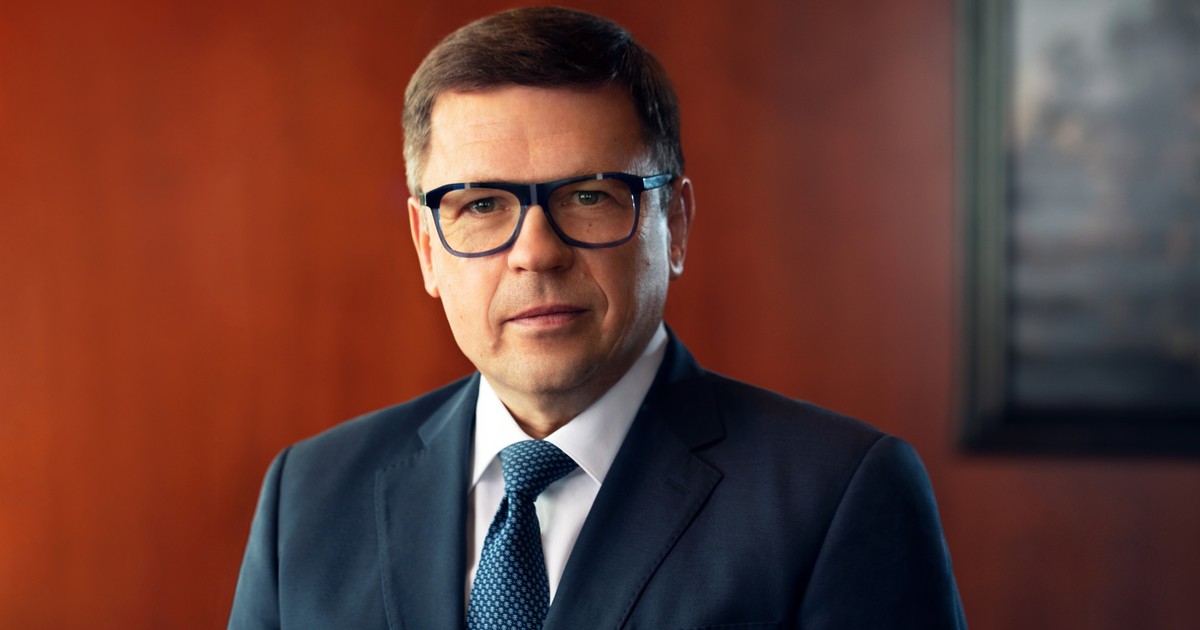
Piotr Maria Śliwicki – Polish manager, for years professionally associated with the Sopot group of insurance companies Ergo Hestia, of which he was the president.