According to investigators, the man who committed an armed attack in the Goloseevsky district of Kyiv on April 18 was preparing for a mass execution. Prosecutor General Ruslan Kravchenko announced this on Facebook on April 25.
The investigation established the full chronology of the terrorist attack and compiled a detailed portrait of the identity of the attacker.
He indicated that the shooter was a native of Moscow. In the period from 1992 to 2005, he served in the Armed Forces of Ukraine in various positions in the maintenance of automotive equipment. Retired major. After the start of Russian aggression, he moved to Kyiv from Bakhmut.
According to the prosecutor's office, the man was prosecuted, but owned two registered carbines and a traumatic pistol. He received his last weapons permit on the basis of an allegedly journalistic ID issued by one of the public organizations. The SBU is checking the circumstances of obtaining permits for weapons, the Prosecutor General added.
According to him, the contents of the shooter’s mobile phone indicate systematic preparation for committing a mass shooting.
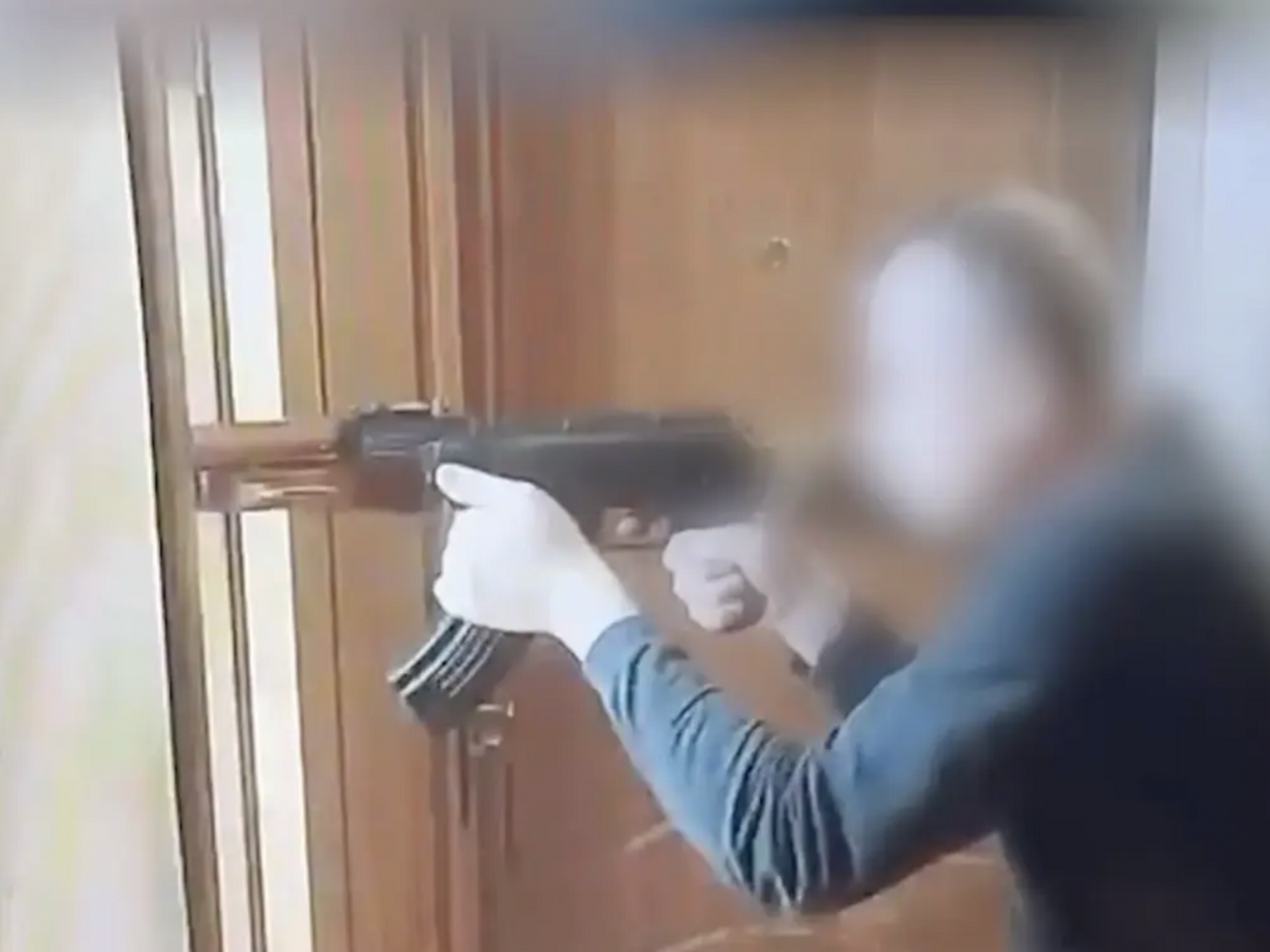
“The discovered video recordings showed him at home practicing the skills of quickly bringing weapons into combat readiness and aimed shooting. He accompanied his actions with aggressive monologues: he called people “pigs” who he would “kill,” used hate speech against Ukrainians, shouted Nazi salutes and called for violence on ideological grounds,” Kravchenko said.
The attacker showed particular hostility towards his neighbor, whom he disparagingly called “director of number six,” the prosecutor general indicated. It was he, according to investigators, who became the first victim of the attack.
The “trigger” of the tragedy on April 18 was another quarrel over the intercom, which the killer personally repaired, but after that some residents could not get into the house,” he said.
During the conflict at the entrance, the man first opened fire with a traumatic weapon, injuring several people. When the bullets ran out, he threw away the gun, went up to his apartment, took the firearm, set the apartment on fire and returned to the street, where he continued shooting, police believe.
Near the house, the shooter killed a neighbor and a taxi driver. He also wounded the son of the first victim, his wife, her sister and the janitor, who was covering the child. The sister and the janitor died from their wounds.
He recorded his actions on audio. After the first murders, the man continued to fire as he headed towards the supermarket and shot two more people. At the same time, he selectively warned individual passersby to run away “because there would be shooting,” the prosecutor’s office said.
In the store, the attacker walked between the aisles, threatened people with a gun, and shot an employee. In addition, five more people were injured in the store.
Having barricaded himself with the hostages, he turned to the employee of the currency exchange office with a demand to immediately leave the cash desk and call a representative for negotiations. The man threatened to shoot through the door and kill the woman if she refused. He was not interested in money, prosecutors say. In an audio recording released by the prosecutor's office, he shouted: “Get out of the cash register, I won't take your dollars.”
The man justified all his actions as “self-defense” from an alleged group attack of four people at the entrance, claiming that he was “run over by young men along with women.” He referred to his military experience and the rank of major, stating that he “couldn’t stand it anymore.” At the same time, he demonstrated extreme cynicism, commenting on the murder of his neighbor: “He is already a corpse, his brains are lying there,” Kravchenko emphasized.
He also said that the investigation checked the version about the possible connections of the attacker with the Russian special services. According to him, at the moment no such connections have been established.
Final conclusions regarding the motives, mental state and sanity of the shooter at the time of the crime will be made after the completion of post-mortem forensic psychological and psychiatric examinations, Kravchenko added.