Energy expert: Romania does not necessarily lack resources, it just uses them inefficiently

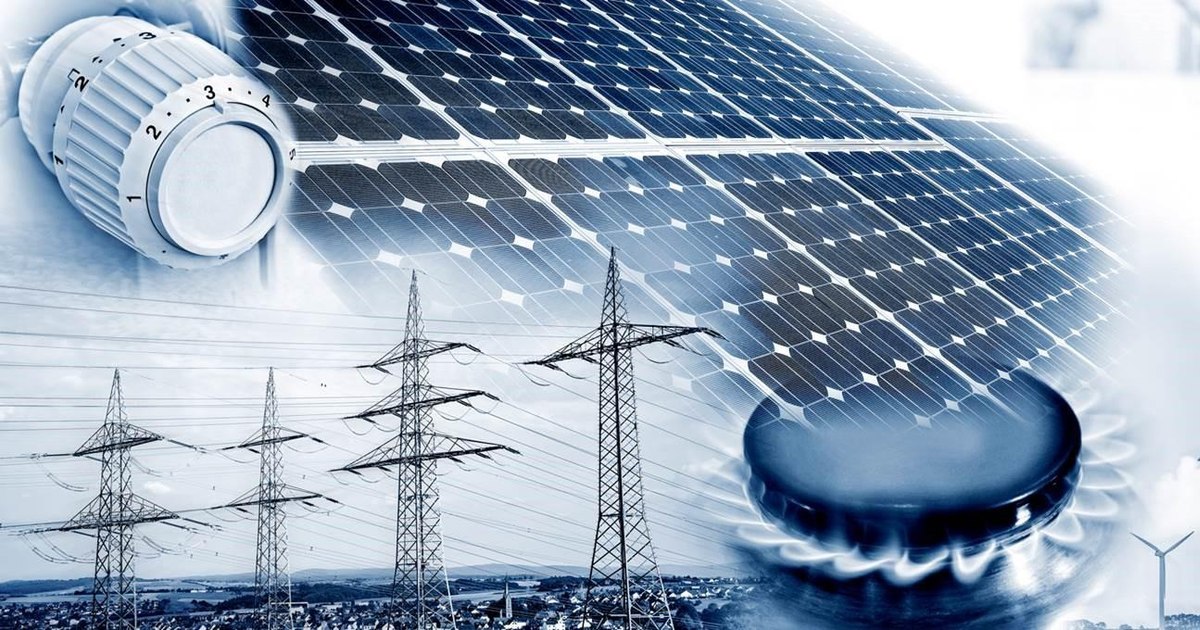
Romania does not lack energy resources, but uses them inefficiently, in a poorly coordinated system, with insufficient investments and decisions that shift dependence from one side to another (from coal to imports, from crude oil to finished products, from production to the grid), claims energy expert Dumitru Chisăliță.
Romania does not necessarily lack resources, but uses them inefficiently. Archive photo
The INS figures for February 2026 send an uncomfortable message: Romania is not facing a simple consumption problem, but a much deeper one, related to structure, planning and the defective way in which it substitutes resources, points out the energy expert.
According to him, even in situations where some physical needs decrease or domestic production increases, the economy ends up importing more exactly in those areas where the system is rigid, poorly coordinated or insufficiently financed.
Consequently, adds the specialist, the idea that “we keep everything we have and we are safe” is not confirmed by the data; on the contrary, in several sectors, Romania is becoming more commercially dependent and less energy independent.
Coal: Demand falls by 20%, but imports rise by 520%
The coal situation is probably the clearest proof of this, points out the specialist. Although the demand decreases by 20%, the imports increase spectacularly by 520%, which indicates an obvious break in the balance.
This suggests either that domestic production has collapsed faster than consumption, or that power plants continue to operate but are no longer efficiently fed from domestic sources, or even that the system has reached a paradoxical pattern where it maintains “domestic” capacities on paper but supports them from imports. Under these conditions, the argument of coal as a security guarantee becomes very weak: we are no longer talking about a strategic resource, but about an old technology, increasingly dependent on external fuel and increasingly expensive. Basically, the safety of the system is not maintained, but a high cost and a political illusion.
Crude oil: Production falls by 9%, imports of petroleum products increase by 23%
On the oil segment, the table shows another structural vulnerability: production decreases by 9%, imports decrease by 18%, but imports of petroleum products increase by 23%. According to the energy specialist, production and imports of crude oil are decreasing, but imports of petroleum products, especially diesel, are increasing significantly.
“Here the signal is clear, Romania imports less raw material and more finished product, especially diesel. This shows a weakness in refining, demand structure or trade optimization. Your question 'why have crude oil imports decreased?' has several plausible answers, and the most economically sound ones are these: refineries processed less crude oil, whether for technical, commercial, maintenance, margin or demand reasons; the market preferred to directly import finished products, especially diesel, instead of importing crude oil and refining locally; the demand structure has moved towards products that the internal system does not cover efficiently; if imports of petroleum products are increasing while crude oil is decreasing, this suggests that value added is moving out of the country”declared Chisăliță, adding that this is very important politically and economically.
“It's not enough to say you have refineries; you have to look at whether they are reducing dependency or just coexisting with an increased dependency on imported diesel.
Romania may have oil infrastructure, but if it ends up drawing more and more diesel from outside, then the vulnerable link is no longer extraction, but the ability to transform the resource into the product required by the economy”, it is mentioned in the expert's analysis.
On the other hand, states Chisăliță, what becomes really accusatory is not only the imbalance itself, but the moment in which it appears. “This move, less imported crude but more diesel from abroad — comes precisely in a context where geopolitical tensions (including risks in the Gulf) were already rising and visible to any strategic actor.”
Gas: Consumption increases by 11%, imports increase by 47%
Regarding natural gas, consumption increases by 11%, while imports increase by 47%, which shows a “poor elasticity of the internal system”. According to the energy expert, an 11% increase in consumption should not push imports by 47% unless domestic production cannot respond quickly enough; warehouses/stocks were managed in such a way that imports were used more; there are seasonality, price, contracts or domestic availability issues; the additional marginal consumption is disproportionately covered by imports.
The truth about cheaper fuels: why the excise duty drop is avoided, even though it is the only measure with real impact
“In other words, each additional unit of gas consumption “bites” much more strongly from imports than from domestic production. That is the very definition of vulnerability.
Politically, this dismantles the slogan “gas makes us independent” if in practice, at a relatively modest increase in consumption, imports jump four times faster than demand.
This means that independence is a showcase, not a system“, argues Chisăliță.
Electricity:. Consumption +3%, imports -16%, exports +8%
In terms of electricity, where we have a consumption of +3%, internal hydro production +46%, wind +39%, imports -16%, exports +8%, the picture “is much better”.
The data show that when Romania has a favorable hydrological and wind year, import dependence immediately decreases, and external competitiveness increases.
“This says two things: renewables, together with hydro, have a real effect on the external balance, not just on the image; Romania's problem is not that it “does not produce enough current”, but that it does not always produce when and where it should, and the network and balancing costs.
So yes: the numbers argue that good cheap domestic production growth without imported fuel reduces imports and increases exports. This is a strong argument against the discourse that renewables are just “ballast”. Just as the opposite is not true, renewables are everything. Not. In the good months, they release the import system. In bad months, they load the import system“, claims Dumitru Chisăliță.
Domestic electricity consumption drops by 5%
Referring to the 5% drop in household electricity consumption, the energy expert argues that this does not necessarily mean efficiency. “It may be, but most likely it's largely price-killed demand. That is, households do not consume less because they have suddenly become more energy efficient, but because they avoid consumption, postpone the use of some equipment, reduce comfort and react to the bill, not to structural modernization.
This is important to the public narrative. The decrease in household consumption is not automatically good news. it most likely meant energy poverty in disguise,” points out the specialist.
Technology consumption in networks increases by 24%
As for technological consumption, which shows an increase of 24%, the expert claims that “that's one of the ugliest numbers in the whole set.”
According to him, a 24% jump in technology consumption in networks suggests higher losses, flow imbalances, higher systemic costs with transmission and distribution, possibly more difficult integration of variable generation, possible increased operational inefficiency.
Cheap prices at the pump, just an “illusion” – 11 lei diesel becomes inevitable in April. Why the Government's measures fail
“If you produce more hydro and wind, but the technology consumption jumps by 24%, then part of the gross gain is eaten by the grid. That's not an argument against renewables, but against the lack of effective investment in networks, digitization, balancing, flexibility, storage, congestion management. It's not the source that's holding you back, it's the lagging infrastructure“, says the specialist.
Overview of INS energy figures
Put together, says the energy specialist, the numbers say this:
• coal can no longer be honestly presented as a pillar of independence if imports explode even though the need decreases;
• oil shows weakness on the value chain, less crude, more finished products from outside;
• gas shows immediate vulnerability to moderate increases in consumption;
• electricity from domestic renewable and hydro sources improves the trade balance;
• households are less likely to consume due to price pressure, not prosperity;
• networks are becoming a critical point and the real cost of the system is increasingly moving from production to infrastructure and balancing.
“These data show that maintaining old capacities on fossil fuels does not guarantee security, because you end up importing more fuel or finished product, while exactly domestic production from hydro and wind reduces electricity imports and allows exports.
In other words: Romania does not suffer from too much energy transition, but from too little transition done intelligently. We didn't go fast enough on: network modernization, flexibility, storage, efficiency, clean and cheap internal capabilities, reducing dependence on imported fuels”, concludes the energy expert.