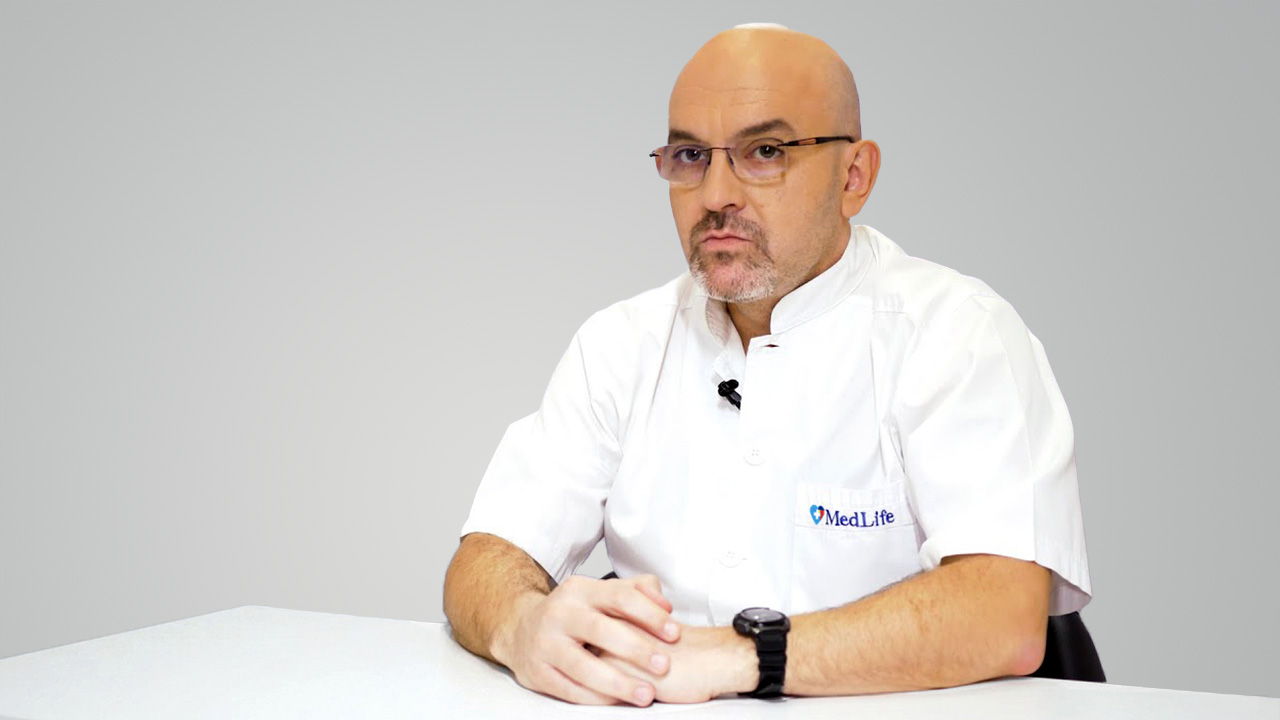
Dr. Alin Popescu, sports medicine primary physician: “The secret of sports performance is adequate rest”

Surely more than once you have been told or read that in order to succeed in achieving your goals, you have to do 3 things: train, train and train again. Sports medicine specialists are coming along today and disproving this myth: A truly healthy training program—especially in sports, but not only—relies heavily on rest and recovery. Because an exhausted body will not only not achieve performance, but will gradually weaken until it snaps.
In a world in constant agitation, with time that seems to be compressed more and more and with an endless list of tasks, many of us end up neglecting perhaps the most important aspect that helps our body to function properly: sleep. And the good doctors at MedLife warn: no matter how many diets we keep and no matter how much exercise we do, if we don't give the body the necessary recovery period, everything will be in vain, and the results will not only be delayed, but what we might get will be the very opposite: depression, slowed metabolism, cardiovascular diseases, etc.
Mens sana in corpore sano
It's the saying that most of us try to live by, taking care of both our physical and mental health. And the main elements that contribute to this state are nutrition, exercise and rest.
“Sleep is one of the body's most important processes, through which the body's state of homeostasis is established – that is, it helps the body to function within normal parameters. Or when our body is deprived of the necessary rest for recovery, especially for long periods of time, disturbances are inevitable“, explains Dr. Alin Popescu, primary sports medicine physician at MedLife.
In other words, a good night's sleep:
- reduces the frequency of illnesses and the risk of serious ailments;
- helps maintain an appropriate body weight;
- lowers stress levels and improves mood;
- clears thoughts, prevents anxiety and increases the ability to concentrate;
- improves social skills;
- reduces the risk of accidents.
So, no matter how absurd it may seem to you, breaks between intense workouts are rather welcome than avoided. And experienced athletes know this and faithfully follow the 3-1-2-1 rule to ensure an effective training schedule: three days of training, one day of rest, two days of training and one day of rest.
“Obviously, rest day does not mean bed rest or complete lack of movement. Light exercise such as walking, pilates or yoga can be done and is even recommended. However, it is necessary to give the body the time it needs for regeneration. Damage repair, muscle strengthening, and muscle protein synthesis—that is, the building of new muscles—occur only during periods of rest. This is so that we don't have to take into account the recovery of the lost energy”. adds Dr. Alin Popescu.
We're basically talking about a sense of measure and balance – that is, the secret to a healthy and successful life.
How do you reconcile sleep with sport?
An unbeatable couple, experts say. Research shows that even vigorous exercise done shortly before bed does not cause sleep disturbances and, in some cases, can even help us rest better. The secret lies in the end of the training, which should not be interrupted suddenly, but completed with a stretching session, maybe even with a massage or a relaxing bath, which will help relax the muscles and joints.
And sleep is the period when the body recovers best. When we sleep, the muscles are completely relaxed and the cells regenerate. And that will help you improve your subsequent workouts and increase your performance.
This is so that we don't take mental health into account. Because an increased level of cortisol – the hormone secreted during training – can lead to irritability, which affects mood. So, it is not for nothing that they say that “the night is a good counselor.” Surely you are familiar with the expression and surely, not infrequently, when you had to make an important decision, you preferred to wait at least a day until the final answer.
On the other hand, studies have shown that the lack of sufficient and quality sleep leads to both a sluggish metabolism and the maintenance of bad cholesterol in the blood, which translates into weight gain and the development of serious conditions.
In addition, in addition to a good night's sleep, it is recommended that you try to include in your rest and recovery routine other activities that will help you get back on your feet as quickly as possible.
During periods of rest, try to spend more time with loved ones or maybe even develop a hobby. So, while your body regenerates, the mind gets that dose of calm and well-being it needs to function effectively and stay healthy.
In addition, don't forget the small everyday gestures that, added up, make the difference between a healthy lifestyle and feeling trapped in a rat race with no way out.
***
This article is supported by MedLife, the largest network of private medical services in Romania, and is part of an extensive information and education effort, dedicated to prevention and a long-term healthy lifestyle.
At MedLife, health is approached with care and responsibility, starting from the real needs of each patient. Medical decisions are based on complex evaluations, supported by multidisciplinary teams of good doctors and state-of-the-art technologies. Through modern diagnostic and treatment solutions and, more recently, genomics expertise and the possibility of early identification of risks for common and lifestyle diseases, MedLife aims to help people take better care of their health.
The objective is clear: active prevention and timely intervention, before health problems affect the balance and quality of life. Because health means more than the absence of disease. It means energy, mobility and balance, at any age. MedLife is constantly investing in solutions that support sustainable health and contribute to a life well lived, not just today, but over the long term.
More information about available services can be found on www.medlife.ro.
Article sponsored by MedLife