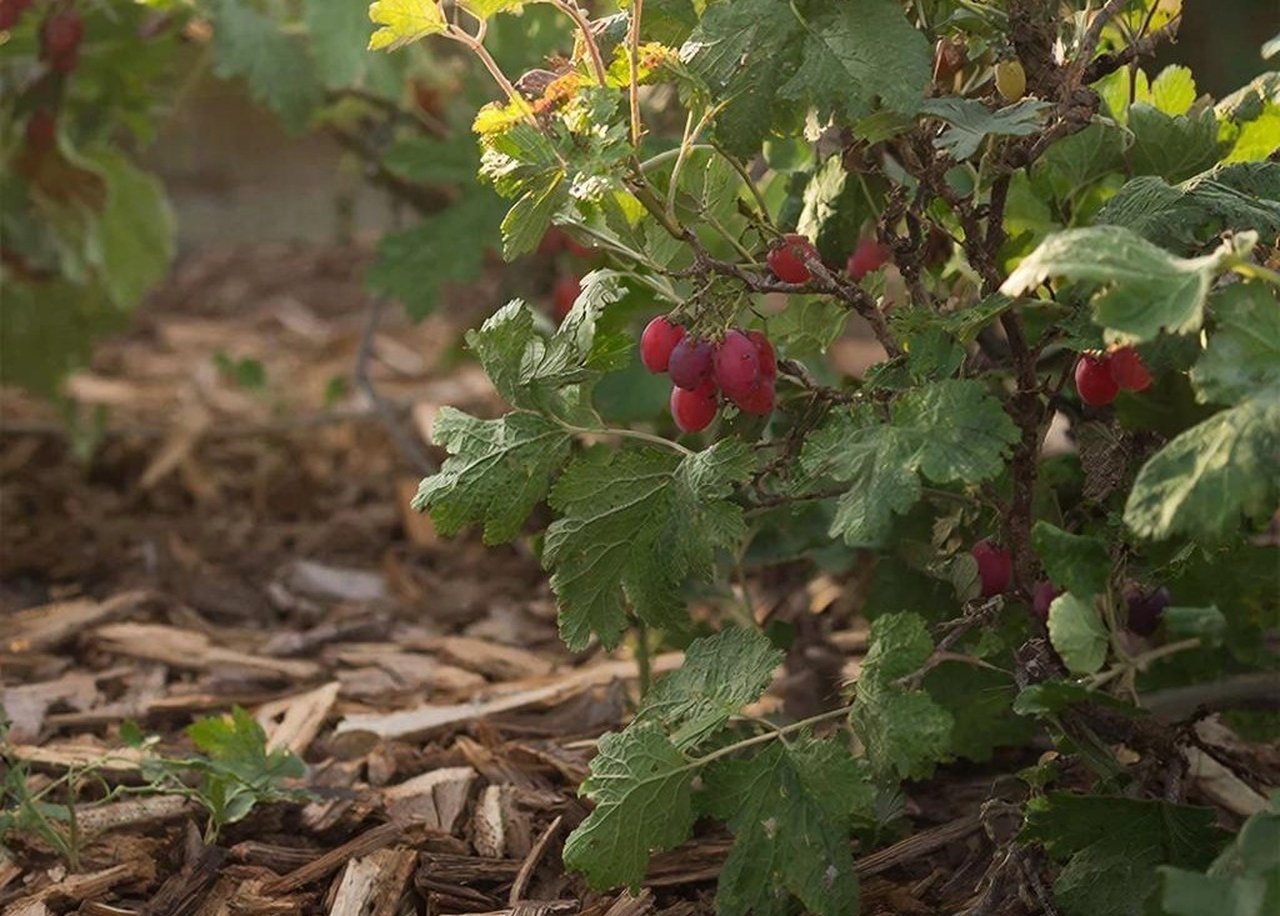
If you notice that the bush is powerful, the greenery is dense, and by the end of summer the harvest is barely harvested, and even that one is small and sour, the reason is often not the variety or the weather. It seems like they were watering according to schedule and doing pruning, but to no avail. The secret is in one simple omission: many are waiting for summer, and gooseberries need to be supported in the very first warm days, when the ground has just thawed. If you provide food at this moment, the bush will direct its forces to the formation of fruits, and not to pulling out extra shoots. Since gardeners began to feed the bushes strictly according to deadlines, the branches bend from the weight, and the berries are filled with sugar without any extra hassle.
Why is the first feeding so important?
Gooseberries wake up early, as soon as the earth warms up to +5°C. Over the winter, the bush has devoted everything to maintaining life, and the roots work slowly in the cold soil. Giving power at this moment means starting three processes. Nitrogen will trigger the growth of strong annual shoots on which fruit buds are formed. Potassium and phosphorus will strengthen the cell walls, making the berries larger and sweeter. A healthy root system will more easily withstand returning cold weather and will not give powdery mildew a chance.
When to feed
- Fertilizing is carried out as soon as the snow has melted and the tree trunk has dried out slightly, but the ground is still wet.
- In the middle zone this is mid-April. The main landmark: the buds have started to grow and become larger, but have not yet opened.
- If you add nitrogen later, when the bush is already blooming, it will begin to drive away the greenery, and the berries will remain small and sour.
Three feeding methods:
Method 1. Quick start with minerals
Suitable when you urgently need to give the bush strength without long infusion.
- Urea or ammonium nitrate: 20–25 g per 1 m², approximately a level tablespoon.
- Scatter over moist soil, 20 cm from the base of the branches.
- Lightly rake or pour warm water to dissolve the granules.
- Important: do not exceed the dose. Excess nitrogen will make the shoots loose, and the bush will become vulnerable to disease.
Method 2. Ash for immunity and sweetness
A budget option that strengthens tissue and reduces the risk of powdery mildew.
- Wood ash: 1 cup per 10 liters of warm water.
- Leave for a day, stirring occasionally, then strain.
- Water 2-3 liters per bush.
- Important: ash only works in neutral or slightly acidic soil. On alkaline soils it is replaced with humus so as not to block the absorption of microelements.
Method 3. Nettle infusion for soft nutrition
If you want to feed the bushes carefully and improve the soil structure, choose green fertilizer.
- Fill a third of the bucket with fresh nettles without seeds, cover with water, and keep for 5–7 days until a characteristic smell appears.
- Dilute 1:10 and pour 3–4 liters per bush.
- Important: use only fermented infusion. Fresh grass can cause fermentation in the soil and attract pests.
After applying fertilizer, mulch the tree trunk circle with mowed grass, straw or peat. Mulch will retain moisture, protect surface roots from overheating, and prevent weeds from choking the bush. After 2-3 weeks, when the petals fall and the ovaries begin to form, add potassium fertilizer for the density and sweetness of future berries.