After the ceasefire, the storm begins in Iran: “Critical infrastructure will be hit – bridges, power grids”

The deadline for a cease-fire between the United States and Iran expires on Wednesday, April 22, without the negotiations having produced any concrete results. Security analyst Hari Bucur-Marcu warns that the US military will resume the strikes, only that this time critical infrastructure will also be targeted – bridges, power grids until Iran's leadership accepts the conditions imposed by the Americans.
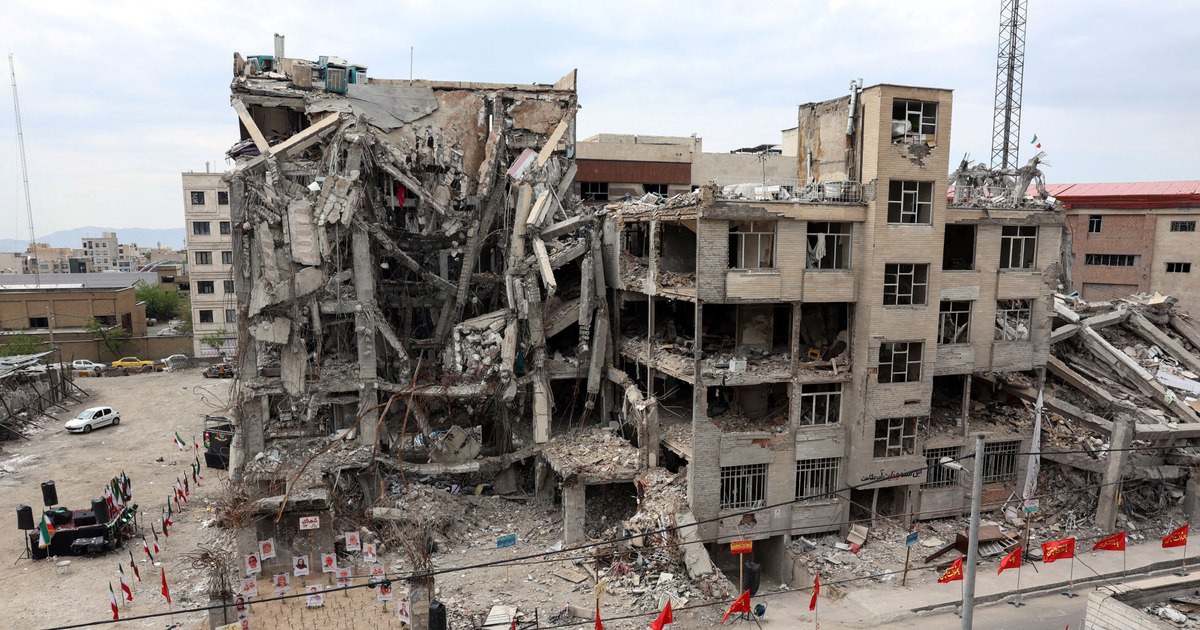
Tehran could again be targeted by American bombing. PHOTO: AFP
A day before the two-week ceasefire between the US and Iran expires (April 22, 2026), the situation is extremely tense and uncertain. Although major fighting has largely been suspended, the conflict is far from resolved.
Militarily, the truce is already fragile. Both sides accuse each other of violations, and the US maintains a naval blockade of Iran, including in the strategic area of the Strait of Hormuz. Iran, for its part, has restricted or even temporarily closed maritime traffic, affecting one of the most important global oil routes. This indirect confrontation shows that although the bombing has decreased, the conflict continues in other forms.
Politically and diplomatically, negotiations are deadlocked or uncertain. The mediated talks in Pakistan have no clear participation, and the positions remain very distant: the US insists on limiting Iran's nuclear program, while Iran refuses negotiations “under threat” and demands the lifting of sanctions.
The leaders' rhetoric indicates a major risk of a resumption of hostilities. The US president has explicitly warned that in the absence of an agreement, “the bombing will resume”, while Iranian officials have announced that they are prepared to use “new means” on the battlefield.
On the eve of the expiration of the ceasefire, the situation in Iran is characterized by insecurity.
Security analyst Hari Bucur-Marcu explains for “Adevărul” what is the most possible scenario in the coming days.
Why the ceasefire looks like just a tactical pause
In his analysis, security expert Hari Bucur Marcu describes the current situation not as a diplomatic failure, but as a predictable stage in a larger strategy. “It's not like the Americans needed to stop for lack of resources. On the contrary, the ceasefire was granted at the request of the Iranians“, he explains, suggesting that the two-week break was more of a tactical concession than a real compromise.
This temporary ceasefire, the analyst says, had a clear purpose: reducing operational costs and strategic repositioning. “It would have been much more expensive for America to occupy key points on the Iranian coast to control the Strait of Hormuz”says Marcu. Instead, the solution adopted was an indirect but effective one: a combination of naval pressure and conditional freedom of transit. “The condition was simple: cease fire, but let the ships pass.”
However, this fragile understanding seems to have been quickly broken. “The Iranians did not respect this matter, they fired at some ships”, emphasizes the analyst. At the same time, the Americans took advantage of the break to strengthen their positions: “they had a chance to restock, the USS Gerald Ford was under observation but now she's back in the area. Now the Americans have three aircraft carriers ready in the area.”
The extension of the truce with Iran, improbable. “A deal to end the war seemed close. Then Trump started posting again”
“Americans don't give up on any goal”
In essence, the negotiations were never about compromise, but about capitulation. “The Americans are not giving up on any goal. The negotiations are about how Iran accepts what the US would have gained anyway through military victory.”says Mark. In this context, the idea of a real diplomatic solution becomes illusory.
On the other hand, Iran is playing a limited card: regime survival. “They have no real bargaining chip other than their own survival“, says the analyst. The threat to close the Strait of Hormuz is, in his opinion, more of a rhetorical tool than an operational one.
Another key element is the lack of a unified leadership in Iran. “They do not have coherent leadership. Decisions are fragmented and reactions are rather impulsive”explains Marcu. This internal instability further reduces the chances of a lasting agreement.
At the same time, the break gave the Americans a major advantage: information. “The Iranians came out of hiding around this time. Now we know exactly where they are and what weapons they still have“says the analyst. This exposure could have direct consequences with the resumption of hostilities.
“Critical infrastructure will be hit – bridges, power grids”
The resumption of bombing seems inevitable. “It is not serious to think that Iran will accept the terms. Nobody expects that,” says Mark. Furthermore, he suggests that Donald Trump is ready for a significant escalation: “I don't think the threats are empty. Critical infrastructure will be hit – bridges, power grids.”
This strategy does not target the civilian population directly, but the state's ability to function. “The goal is for the regime to no longer have anything to govern from an economic point of view, to destroy Iran economically”the analyst explains. The naval blockade has already produced effects: “It worked so well that it drove the Iranians to the brink of despair.”
In this context, talk of “war crimes” in relation to hitting civilian infrastructure is, in his opinion, rather rhetorical. “Which war crimes? Has there ever been a war in which civilian infrastructure was not hit?”asks Marcu rhetorically, suggesting that such actions are an integral part of modern conflicts.
Another important aspect is the absence of ground intervention. “They don't need troops on the ground. Objectives can be hit without direct exposure“, he says. This approach reduces the risks for the US and increases the pressure on Iran.
In the end, the big picture is clear: we are not facing a failure of negotiations, but a stage in an intensifying conflict. “The ceasefire was an opportunity for both sides to prepare. But the direction is already set”concludes Hari Bucur-Marcu.