What happened the night airspace over El Paso was closed: Confusion, tensions and an experimental weapon


On the evening of February 10, 2026, around 9:00 p.m., air traffic controllers at El Paso International Airport received an unexpected message from the Federal Aviation Administration (FAA).
ElPaso International Airport in Texas/PHOTO: EPA/EFE
The notice announced that in less than three hours, much of the city's airspace would be closed for “special security reasons” — for a period of ten days.
For controllers, the implications were hard to fathom: no commercial flights could take off or land, and even medical helicopters would be banned. In addition, aircraft that did not comply with the restrictions risked being intercepted or even shot down.
The restricted zone covered a wide circle around the city, and the airport effectively became the center of a total no-fly zone below 5,486 meters.
It was the first major closure of American airspace since the attacks of September 11, 2001, writes The New York Times.
Hours of uncertainty
In the absence of clear explanations, controllers and local authorities tried to understand the situation. Questions ranged from possible terrorist threats to conflicts on the Mexican border.
Congresswoman Veronica Escobar was awakened in the middle of the night by a call from an air traffic controller and immediately began looking for answers at the federal level.
Meanwhile, controllers began diverting aircraft already in the air and warning medical operators that they would lose access to airspace.
“It took us completely by surprise,” a controller told the pilots, according to audio recordings.
The impact on the city
As word spread, local authorities and medical facilities began to assess the consequences.
The only major trauma center in the region has looked at alternatives for transporting patients, and transplant organizations have considered transporting organs by road.
The city's mayor, Renard Johnson, learned of the situation in the middle of the night and began his own efforts to get clarification.
In the absence of official information, residents had to rely on rumours. Some suspected a military conflict, others even extreme scenarios.
What actually happened
Eventually, it became clear that the situation was not caused by an external threat, but by a conflict between federal agencies.
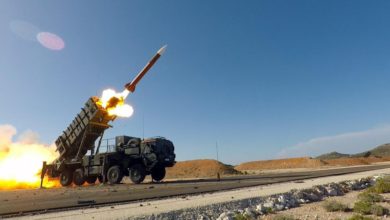
The day before, US border authorities had tested a high-powered laser weapon intended to intercept drones. The system, developed by the War Department, had been used to shoot down an aerial object—which later turned out to be a balloon.
Customs and Border Protection was using these technologies as part of efforts to combat drones used by cartels.
But the FAA had previously warned that such tests could jeopardize airline safety. After the military continued the experiment, the agency decided to close the airspace completely to avoid risks.
The crisis ends quickly
After high-level interventions, including from the administration in Washington, the restrictions were lifted the next morning.
At 6:54 a.m., the FAA announced the resumption of air traffic, stating that “there is no threat to commercial aviation.”
In total, the shutdown lasted less than eight hours, but it resulted in flight cancellations and delays and confusion among the public.
Unanswered questions
The incident highlighted coordination problems between federal institutions and lack of communication with local authorities.
Mayor Johnson said the situation “should never have happened”, criticizing the way the information was handled.
Later, several congressmen demanded official explanations from the institutions involved.
For many El Paso residents, the episode was a wake-up call about how decisions made at the federal level can directly affect local communities.
“It was yet another demonstration of a lack of coordination and communication”one resident said. “It makes you feel like you have to fend for yourself.”