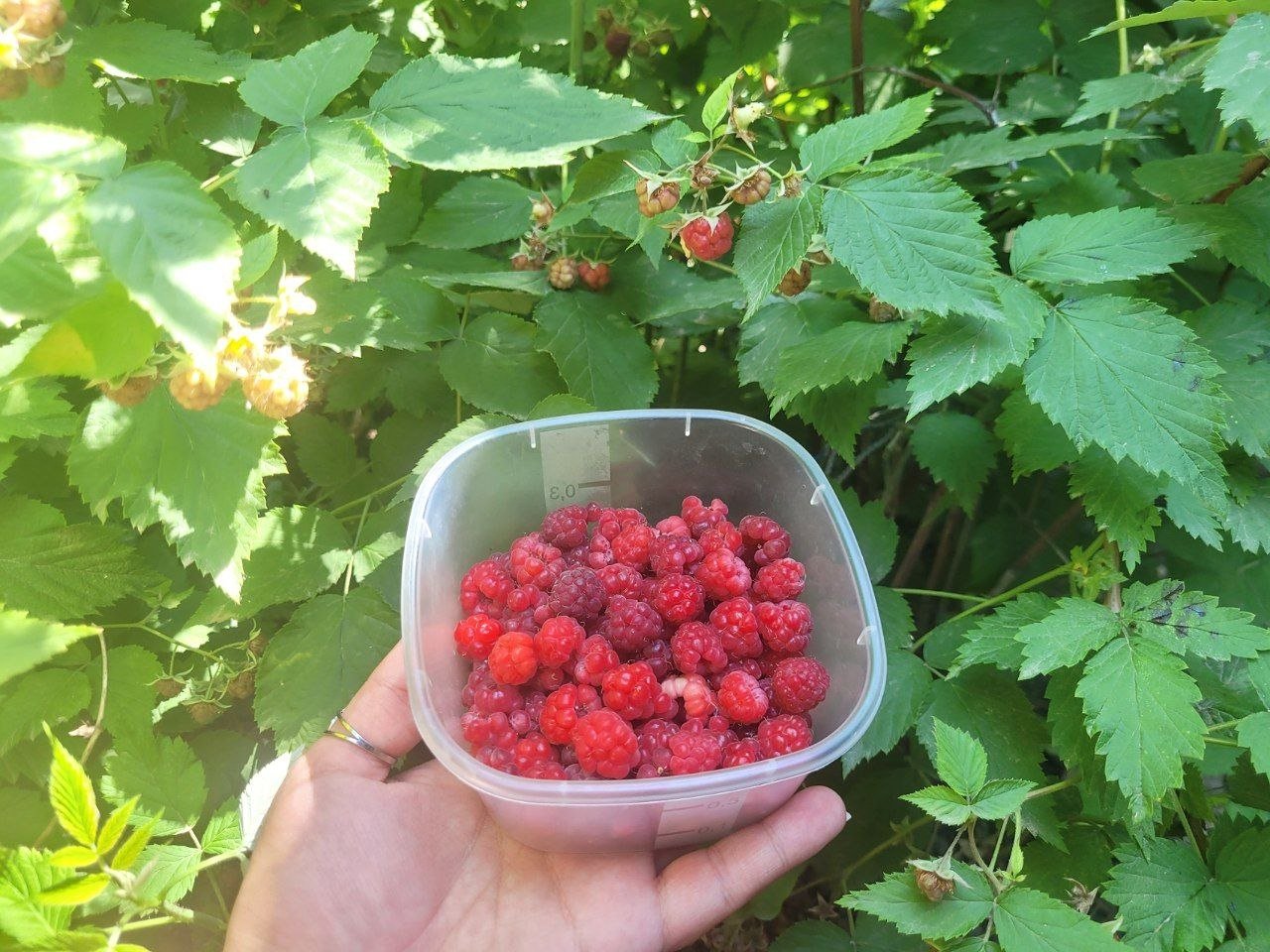
Many people dream of the kind of raspberries that experienced gardeners grow: the bushes are completely strewn with berries, and each one is large, sweet and fragrant. Such raspberries are the result of proper care, especially in spring.
“Every year my raspberry bushes look excellent: strong, healthy, with berries that delight both in size and taste. And the secret is that in the spring I pay special attention to feeding them. These simple but very effective “treats” work wonders,” the author of the Zen channel “Your Dacha” (12+) shares his experience.
How to “awaken” the earth
It’s worth starting with a complex fertilizer. It’s not difficult to prepare it yourself.
Take: 30 g of potassium sulfate (for the health and durability of plants), 30 g of ammonium nitrate (for active growth of greenery), 40 g of superphosphate (for powerful roots and abundant flowering).
How to use:
- Water the ground around the raspberry bushes well.
- Distribute the prepared mixture evenly per 1 square meter around each bush.
- Lightly sprinkle with soil so that the fertilizer gets into the soil.
Urea – a real “energetic energy” for raspberries. It helps plants grow quickly and produce a lot of berries. Eat two ways to use it.
In liquid form: add 30 g of urea to a 10-liter bucket of warm water. Stir thoroughly until completely dissolved. Gently water the raspberry bushes at the root.
In dry form: if you don’t have time to tinker with the solution, simply scatter 20 g of urea evenly per 1 m² of land around the bush. After this, be sure to water the soil well so that the urea penetrates into the ground.
Ammonium nitrate – another great option for spring feeding. It stimulates the growth of shoots and leaves. They use it for root feeding: apply 20 g of ammonium nitrate per 1 m² of land around the bush.
In addition to feeding the roots, raspberries will also be grateful for the “vitamin shower” outside from ammonia.
Add 1 tablespoon to 1 liter of water and mix well. The resulting solution is sprayed onto raspberry leaves and shoots. Do this in cloudy weather or in the evening to avoid sunburn of the leaves.