The Senate eludes Republicans. Frustration is growing within the party's ranks. “We're going back to 2018.”

Democrats still have a difficult task ahead of them to take control of the Senate. But interviews with nearly 20 GOP activists and strategists in key states indicate growing concerns that the longer the war with Iran drags on and the economy weakens, the more it could complicate their path to maintaining the majority in November.
“The momentum is now on the Democrats' side,” admits Jason Roe, a GOP strategist from Michigan.
“Republicans have the best candidates they haven't had in a long time, but they face major obstacles,” notes Mike Dennehy, a New Hampshire-based party strategist.
“I wouldn't say I'm in an optimistic mood right now,” adds the Republican activist from Georgia.
Until recently, no one expected the Senate to be a cause for concern for Republicans.
Although the typical dynamics of midterm elections often do not favor the ruling party, this year's electoral map strongly favored Republicans. Democrats need to hold on to all of their seats — including Sen. Jon Ossoff's seat in Georgia and an open seat in Michigan, states Trump won in 2024 — while taking over four seats currently held by Republicans.
But Republicans in key Senate constituencies say Democrats have fielded strong candidates and the difficult situation in the country — fueled by voter concerns about the rising cost of living and the ongoing war with Iran — made their path to victory much more difficult.
Roe, who is an occasional critic of Trump, warns that high gasoline prices resulting from the ongoing conflict in Iran have angered Americans. Dennehy says the situation could reverse if “Trump radically changes his approach to improve his standing with voters.” The Georgia activist called the prolonged war “the exact opposite of what Senate Republicans need right now.”
“They still have an uphill battle ahead of them,” Roe said of Democrats' hopes for a majority. However, he adds, “when you look at what the electoral map looks like today and what we thought it would look like a few months ago, the difference is huge.”
War in Iran and rising prices
Republicans are not in full panic mode yet. Most don't expect the war to last long and say there is enough time for financial pressures to ease before November — and for voters to start feeling economic relief.
— If military operations end in the summer, there will be enough time for gasoline prices to stabilize, which I think is really the main concern here. I think the situation will return to normal, says the second Republican Party activist from Georgia.
Negotiations to end the war remain uncertain, and economic experts warn that high gasoline prices will remain high for at least several more months as the global economy grapples with the fallout from the conflict. Republicans also want Trump to refocus on the administration's successes rather than the ongoing conflict or other potential distractions.
One of the strategists from Iowa assessed the current strategy of the White House before the midterm elections as “three”, reflecting some Republicans' frustration with the White House.
“They say the right things, but then they don't follow through on them as expected,” adds the strategist.
The White House said Trump is focused both on Americans' economic problems and on resolving the ongoing conflict in Iran. “While the U.S. armed forces and the president's diplomatic team continue to make progress toward reaching an agreement with Iran and resolving temporary disruptions in energy markets, the rest of the administration has never lost sight of advancing the president's agenda on affordability and economic growth on the domestic front,” spokesman Kush Desai said in a statement.
“Once the short-term disruption caused by Operation Epic Fury subsides, Americans can count on continued economic progress under this administration,” he added.
The fight is getting fiercer
Republicans noticed some cracks in its optimistic scenario even before the war started.
Party officials were initially optimistic about retaining North Carolina and Ohio and taking Georgia. Then Republican Sen. Thom Tillis of North Carolina announced his retirement, leaving the seat open in this key state. Republicans nominated former national committee chairman Michael Whatley, and Democrats ran against him former Gov. Roy Cooper, who enjoys wide recognition and demonstrated strong fundraising skills.
“It's a state where the results are pretty close and the race is close,” notes a Republican Party activist in the state. — However, considering that the situation on a national scale looks so unfavorable for Republicans right now, and we are dealing here with an established governor like Roy Cooper, I think he has the advantage – claims.
Another good move by the Democrats was the involvement of former Ohio senator Sherrod Brown, who also has extensive experience in fundraising.
Early polls show the former three-term senator running neck-and-neck with Republican Sen. Jon Husted, who was appointed to fill the seat left by J.D. Vance after his promotion to vice president and doesn't enjoy as much name recognition as incumbents usually do.
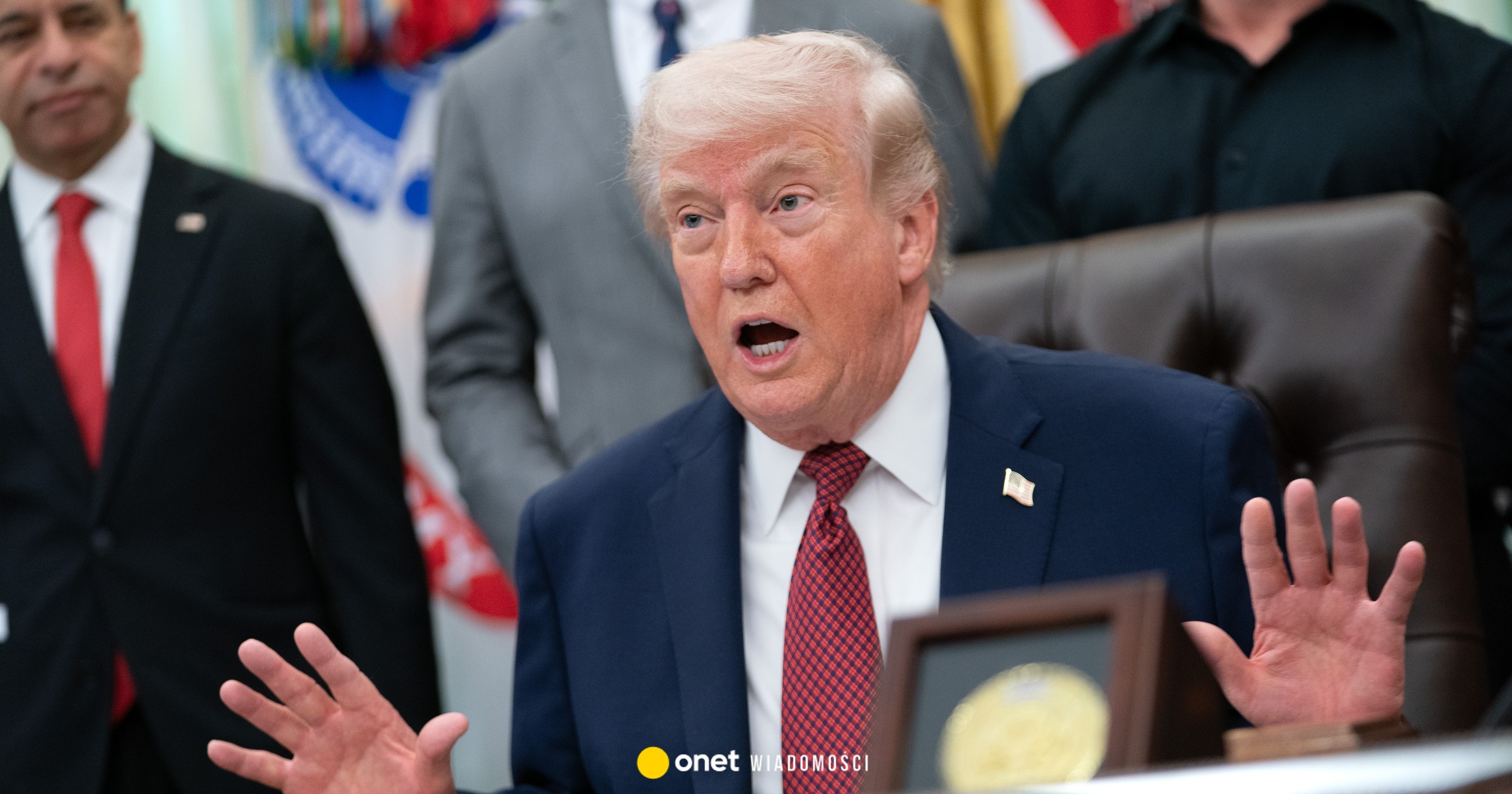
US President Donald Trump talks to journalists, April 16, 2026.Celal Gunes/Anadolu via Getty Images/Getty Images
“I think we're back to 2018, when Republicans were against the wind,” said former Ohio Republican congressman Jim Renacci, who unsuccessfully challenged Brown at the time. — I mean, I ran against Sherrod Brown in 2018, and the Democratic support nationally was about six to eight percentage points. more than for Republicans. “I think we're getting close to the same level in Ohio,” he adds.
In Georgia, a chaotic three-candidate primary has Republicans increasingly concerned about their chances against Democratic Sen. Jon Ossoff, who has amassed a massive campaign fund.
— Republicans really need to unite behind one candidate to defeat Jon Ossoff. “I don't think they can continue, or have the resources to do so, to fight each other,” said Morgan Bonwell, a Republican strategist from Iowa.
The National Republican Senate Committee (NRSC) said the Democratic candidates in North Carolina, Ohio and Georgia are “wolves in sheep's clothingwho will obediently pursue the Democrats' increasingly radical agenda.” The NRSC also attacked Democratic candidates for their past actions on crime, immigration and the economy.
As competition in some states becomes increasingly tight, Republicans are increasingly focused on taking Michigan. They claim that former Republican congressman Mike Rogers, who narrowly lost to Sen. Elissa Slotkin in 2024, is running a stronger campaign this time and will benefit from the chaos of the Democratic primary, in which three candidates will face off.
But Republicans, who had watched Democrats outperform in a series of midterm elections, they are also starting to worry about attendance — even in states where they are more confident of winning. Several state and local Republican Party chairmen told POLITICO the party needs to focus on keeping Trump voters engaged even though the president is not running in this election.
“What we need to focus on here in Michigan — and I'm sure all chairs across the country are doing this — is implementing a strategy to mobilize Republican voters,” says Michigan Republican Party Chairman Jim Runestad. — This will be the deciding factor – thinks.