The mystery of the origin of the moti from the Apuseni Mountains. Descendants of the Dacians, Romans and peoples attracted by gold

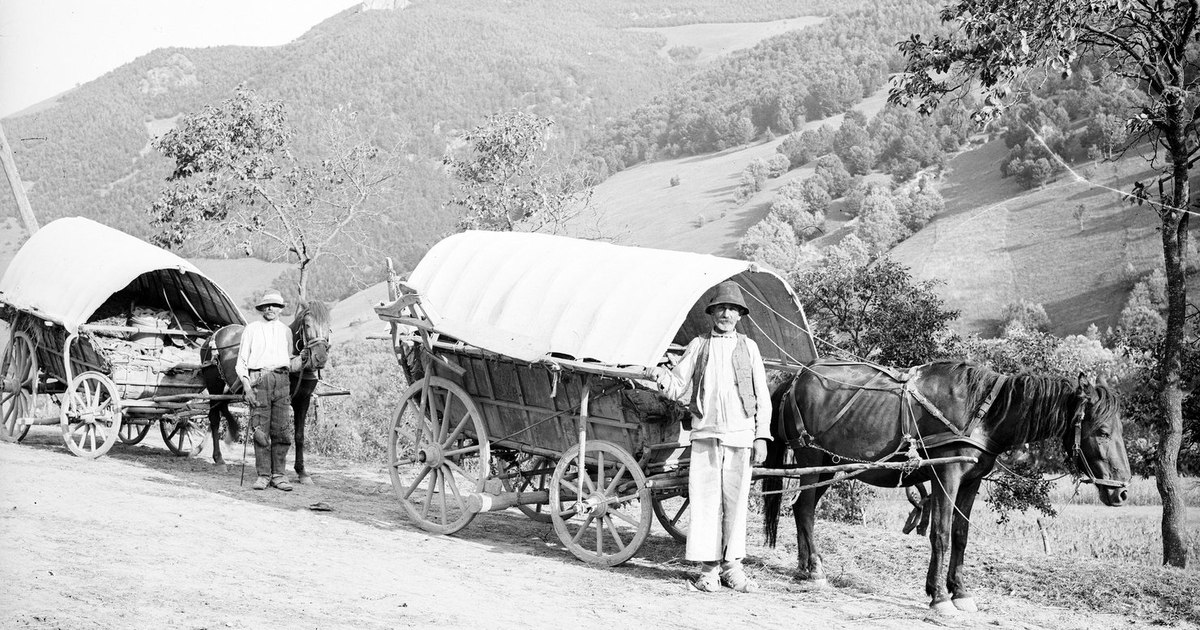
The Moti from Apuseni, the inhabitants of some of the most isolated and spectacular mountain lands in Romania, have been considered by historians to be a special population, whose ancient origin has sparked controversy.
Move. Photo: Romulus Vuia, Ethnographic Museum of Transylvania. 30s
In several regions of Romania, traditional communities have, over time, claimed their ancient origins, linked to the tribes that lived on the current territory of the country several millennia ago. A special place among the archaic populations is occupied by the Moti from the Apuseni Mountains, considered by historians to be one of the oldest Romanian populations in Transylvania, but also one of the most enigmatic.
The decline of the population in the Land of Motilor
Their name would come from the French term “mons”, which means mountain or mountaineer. The Moties have been linked since ancient times to the settlements in the Apuseni Mountains, developed around the cities of Câmpeni and Abrud, but also to other mountain villages in Alba, Bihor, the north of Hunedoara and areas of Cluj and Arad counties.
Traditionally, the “Country of Motilor” includes the communities of the cities of Câmpeni and Abrud and the nearby communes of Arieseni, Albac, Bistra, Avram Iancu, Ciuruleasa, Bucium, Gârda de Sus, Horea, Roșia Montană, Poiana Vadului, Sohodol, Scarișoara, Vidra and Vadu Motilor.
At the beginning of the 20th century, the population of this ethnographic region amounted to 50,000 inhabitants, and in the 1940s, when it reached its demographic peak, the “Land of the Motiles” had a population of over 64,000 inhabitants. After the Second World War, it gradually decreased, and according to the most recent census, from 2021, the population of the 14 communes and the two cities totals approximately 34,000 people.
Over time, the origin of mots has been controversial and disputed by historians, ethnographers and linguists. Some researchers attributed ancient roots to them, associating them with ancient populations that lived or passed through the Carpathians: Celtic tribes that arrived in Transylvania from the west, Agatârsi, Dacians or Roman colonists, but also with Illyrian and Dalmatian groups brought by the Roman Empire to exploit the rich gold and silver deposits in the Apuseni.
The land of gold, also inhabited by hookers
Before the arrival of the Romans, the large gold deposits in the Apuseni Mountains, located in the north of the current Hunedoara county and in Alba, were exploited by the locals, who collected the gold from the rivers or from the sand and rocks on the surface of the slopes.
“Neither in a dream, nor the most fantastic imagination could imagine what people have done here, during the several thousand years since they started looking for gold. They are the oldest mines in Europe. They speak of a people before the Dacians, the Agatarsi. There must have been others before them. Gold seekers, all of them. It is certain that the Romans came to Dacia attracted, the most, by the fame of these mines. The traces of their exploitation remained intact, absolutely intact. Straight, symmetrical galleries, dug with hammer and chisel, centimeter by centimeter.” note Geo Bogza.
Among the ancient populations associated by historians with the territory of Transylvania are also the Agatârsi, about whom ancient authors wrote that they tattooed themselves on the face and body and dyed their blond hair a blue color — colore caeruleo. Aristotle related that, in the hangmen, the laws were sung to be learned by heart.
“The love of literature and especially of music and poetry of the Daco-Gets was, moreover, ancient. Aristoteles has preserved the news that the “Agathyrsii”, that is, the Dacians from the mountains, versified their laws and sang them in order to remember them well by heart”. wrote the historian Vasile Pârvan in Getica.
Some historians claim that the Agatârsi tribes were assimilated by the Daco-Geta population that lived on the territory of Transylvania, but their traces were also associated with groups of burial tombs discovered on the Upper Mures, which present special features. According to some researchers, the name agathirsoi would mean “leaders with rods” (thirsus = rod). They are said to have mined and worked metals, grown vines and herded sheep, and were worshipers of Dionysus.
The Land of Motilor, full of ancient vestiges
Historian Ion Rusu Abrudeanu described the Moti as descendants of Dacians, Romans and settlers brought by the Roman Empire to populate the gold-bearing region in the mountains. The Apuseni contain some of the largest resources of gold and precious metals in Romania, and their deposits have been sought since ancient times, with Abrud (video) being one of the oldest mining centers.
The forbidden cave in Apuseni that hides tens of thousands of years old paintings. What secrets do the caves of prehistoric people have?
“The Moti or Topi are the direct descendants of the Dacians and the Roman colonies, brought by the emperor Traian following the occupation of Dacia in the year 105 AD, in order to colonize it and to be able to work and exploit with their hands the gold mines in the former country of Decebalus”. informed the publicist Ion Rusu Abrudeanu in the volume “Moţii, the ordeal of a heroic, but unjust people” (1938).
According to historians, Illyrians and Dalmatians, ancient populations with experience in extracting and processing ores, were brought to work in the gold mines developed by the Romans immediately after the occupation of the Dacian territories.
In Roșia Montană, the old Alburnus Maior, the wax tablets, inscriptions and archaeological research attest to the presence of miners and settlers of Illyrian and Illyrian-Dalmatian origin, who came from the western Balkans to work in the Roman gold mines. Epigraphic and archaeological sources mention the presence here of groups such as Delmatae, Pirustae, Baridustae and Sardeates, coming from Dalmatia and the Illyrian region of the western Balkans.
An ancient necropolis discovered in the 1980s on Muncelul hill, in the Barza area, a few kilometers from Brad, near the old mining galleries, provided important information about the ancient inhabitants of the land.
“Archaeological excavations have so far revealed 129 cremation graves with burning in place, belonging to the Illyrian population colonized here in order to extract and process the gold ore”, archaeologist Adriana Rusu pointed out in a report on the research results.
The researcher showed that the necropolis at Muncelu-Brad, through its funeral rite peculiarities and the shapes of the vessels discovered here, belongs to a population of Illyrian or Dalmatian settlers, brought to this area immediately after the Roman conquest, a population that was involved in the extraction and processing of gold ore from this part of the Apuseni Mountains in the 2nd and 3rd centuries en
The Moții, the people of the mountains and forests of Apuseni
Other authors have shown that the Moti represent a gradually formed population that preserved its identity due to the difficult relief in which it lived, isolated settlements and occupations specific to mountain communities.
The Apuseni mountains have been covered, since ancient times, by vast expanses of centuries-old forests, and this natural wealth decisively influenced the way in which the numerous villages scattered on the peaks were founded and lasted. In this difficult land, isolation, forest and relief have shaped the life and identity of local communities alike.
The rare resource found in the old mines of Apuseni. Ignored for a long time, tellurium has become strategic for the industry of the future
“In the Land of Motiles there are only fir trees, people, axes and rocks. It is a land of stone, where poverty is harsh and hard as stone”Geo Bogza described it in the 30s.
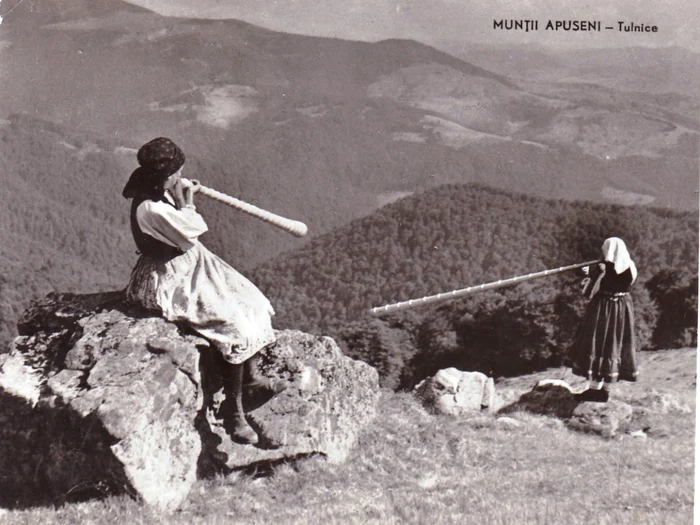
The Land of Motils. Source: Illustrated Reality
The Moti settled in isolated places, close to pastures, springs or the land they could gain by clearing forests for hay and livestock. Often, when a family found better pasture or a suitable place for mowing, they would break away from the old village and set up a new homestead a great distance away. This is how many of the scattered settlements in the Apuseni appeared.
Forests ensured the long existence of many mountain villages in a land where farming was difficult and mining did not always offer stability. They also contributed to the formation of the Moti identity, known for their skill in carpentry and wooden constructions.
“In Șara Moților, the ax is not just some thing from the household inventory. The ax is an essential tool, an element of life, something indispensable, present everywhere, like air, like breathing. In Câmpeni, half of the shop windows are occupied only with axes, arranged in all kinds of ways, with the edge highlighted. It is a commodity that must be given the place of honor”wrote Geo Bogza in the volume “Countries of stone, fire and earth” (1939).
Over time, the people of the “land of gold” rejected the influences of foreign populations, preferring to keep their archaic traditions and simple way of life, historian Ion Rusu Abrudeanu said. One of the traditions that remained emblematic for the Moti world was the “Târgul de Fete de pe Măntele Găina”, a celebration that had the role of bringing the mountain communities together and strengthening the ties between them.