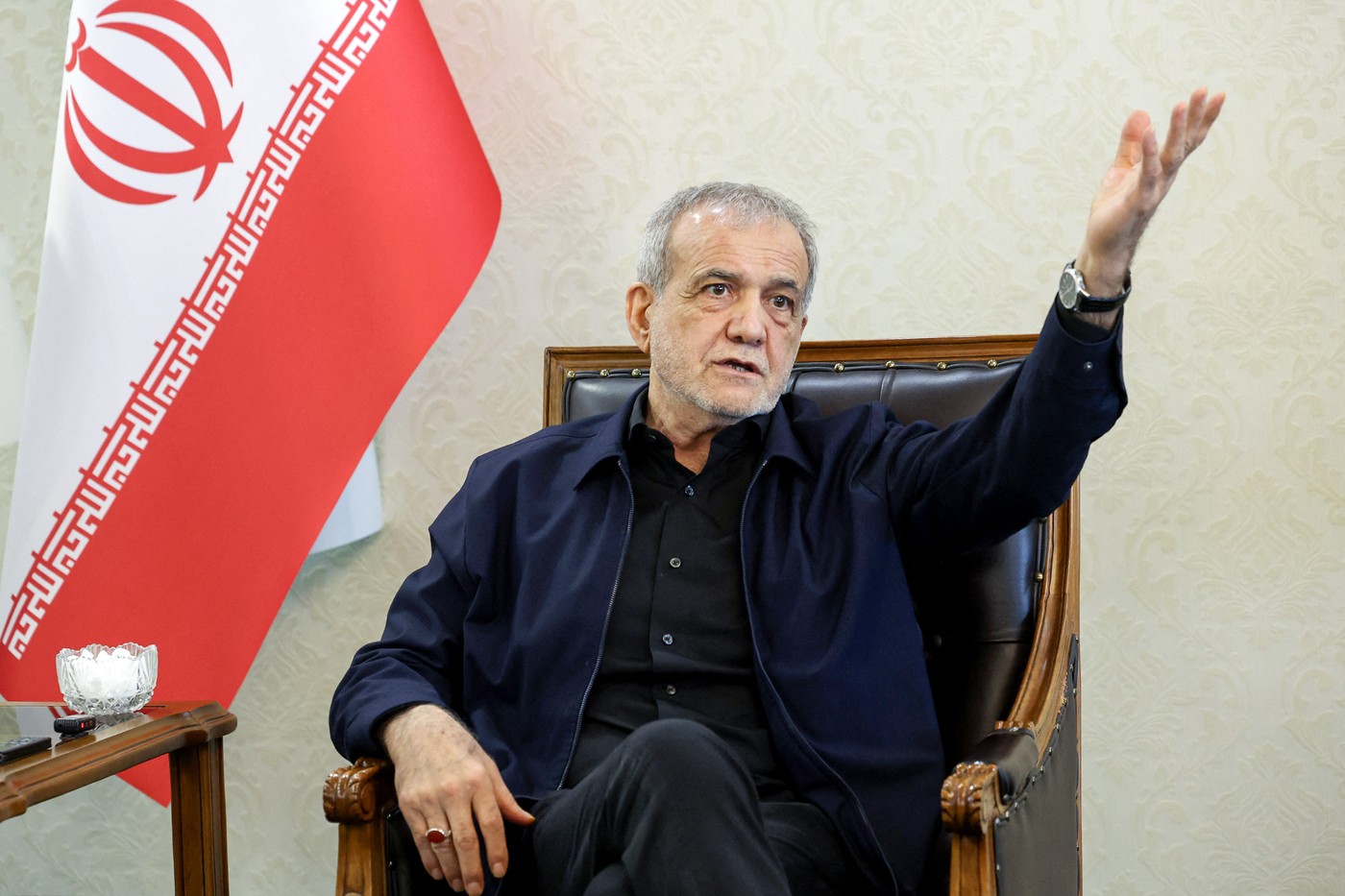
Iranian President Masoud Pezeshkian accuses the US of trying to deprive an entire nation of its legal rights without any justification, according to the exiled Iranian website Iran International.
“The US president says that Iran should not exercise its nuclear rights, but does not explain for what crime,” Pezeshkian said on Sunday. “After all, who is he to deprive a nation of its legal rights?” he added.
Pezeshkian also stated that Iran does not seek an escalation of the regional conflict. “Iran is not seeking to expand the war, has not initiated any conflict, and will not. We have not attacked any country, and under the current circumstances, we have no intention of attacking any side. We are only engaged in legitimate self-defense.”
However, the regional reality contradicts Tehran's pacifist rhetoric. During the conflict, Iranian forces have launched attacks spanning almost the entire Middle East — from the Gulf states and Jordan to Syria, Iraq and Turkey. The scope also included British bases or the territory of the West Bank, extending to maritime incidents involving Thai vessels and undeclared activities in Azerbaijan.
Pezeshkian, however, insisted on his country's position as a victim. “The assassination of scientists, attacks on scientific centers, targeting of innocent people and the killing of 168 students have no justification, and no free man in the world accepts such behavior,” concluded the leader in Tehran.
Trump: The situation is “going very well”
President Pezeshkian's statements on Sunday come after a series of controversial statements by the US leader.
On April 16, 2026, Trump claimed that negotiations with Iran were progressing rapidly. Donald Trump even claimed at the time that Tehran had “agreed to hand over the nuclear powder” — using the term to refer to the uranium stockpile — and that he was considering a visit to Islamabad to sign a peace agreement.
On April 17, 2026, the White House leader declared that the United States would take control of Iran's nuclear resources, stating that Iran's uranium would be brought to the US through massive excavations.
The US president later described the situation in Iran as going “very well”, despite tensions being fueled by the situation in the Strait of Hormuz.
This seaway, vital for the transit of about 20% of global oil, was reopened on Friday, but Iranian forces decided to close it again on Saturday. The move triggered a maritime blockade and imminently increased the risk of a direct conflict with US naval forces present in the region.