We are talking about the ship Sofia, which is included in the sanctions lists of the United States, Great Britain, the European Union, Switzerland, New Zealand and Canada. According to Shkradyuk, crude oil or heavy heating oil could have leaked from it, but the exact volume of the leak cannot yet be determined.
According to media reports, the pollution spot was recorded on April 7 at 18.27 Moscow time using the Sentinel-1 satellite. By April 14, its area, according to researchers, exceeded 200 m², and it began to disintegrate into separate fragments. Part of the pollution, according to observations, drifted towards the Utrish nature reserve. Local bloggers talked about birds found in fuel oil.
On April 11, the operational headquarters of the Krasnodar Territory administration blamed the spill on an alleged drone attack by Ukraine in the Black and Azov Seas, as well as on coastal infrastructure.
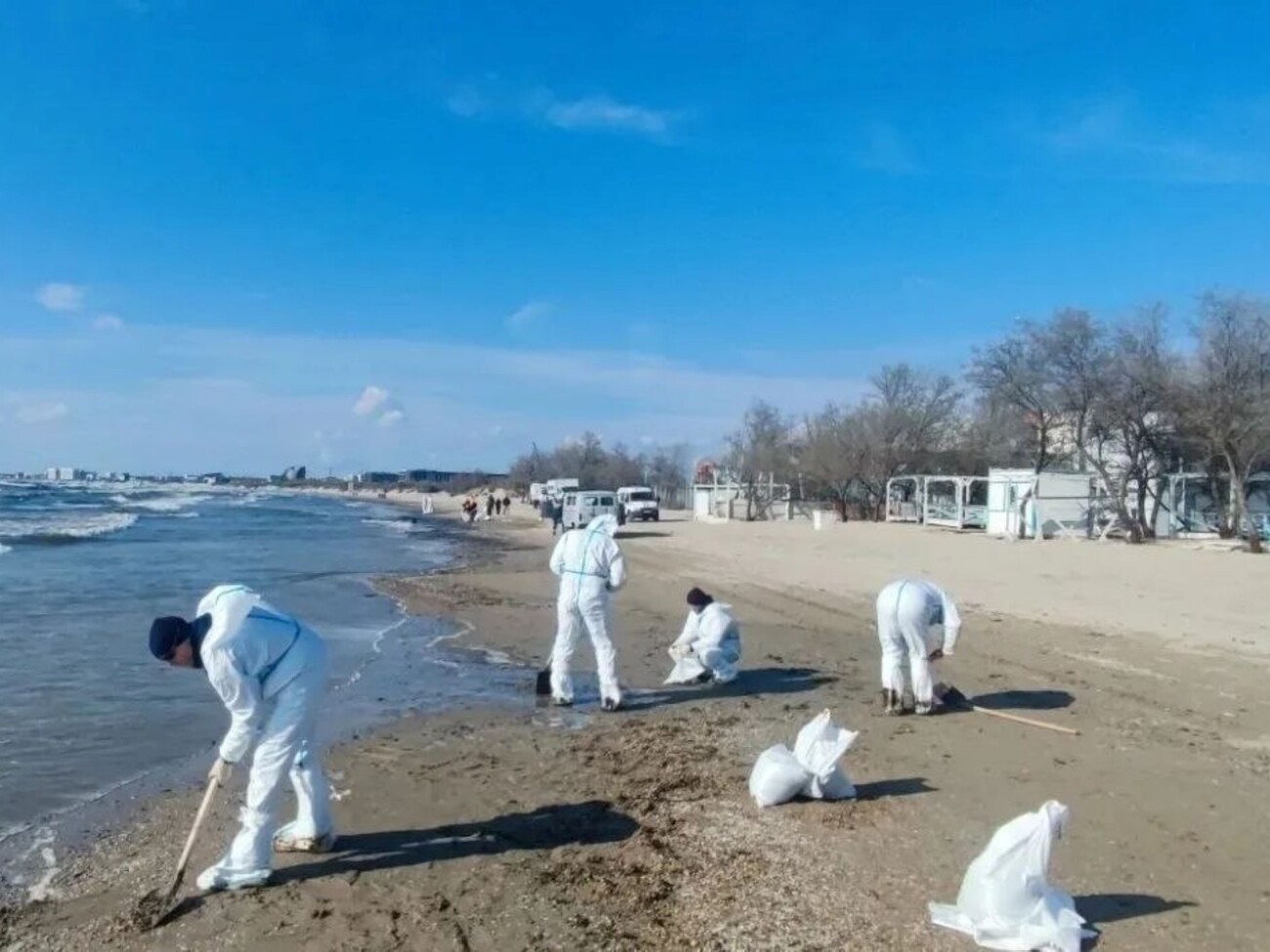
They clarified that at that time, about 28 tons of oil-containing mixture had already been collected from the surface of the water; more than 1 thousand people and over 200 pieces of equipment were involved in the work.
However, environmentalists note that the forces involved may not be enough to eliminate the spill. According to Shkradyuk, existing regulations in Russia provide a limited amount of funds to respond to such incidents.
On April 17, the Russian government, following a meeting of the government commission led by Deputy Prime Minister Vitaly Savelyev, reported that since the start of work, more than 3 thousand km of coastline have been cleaned, about 186 thousand tons of contaminated sand and soil have been collected, and about 99% of the removed materials have been neutralized or recycled.
Savelyev added that repeated emissions of petroleum products were recorded on the beaches of Anapa, which are being localized and eliminated. In addition, preparations are underway to restore sandy beaches and import clean sand.