Kremlin doping. How the Russian secret police help athletes

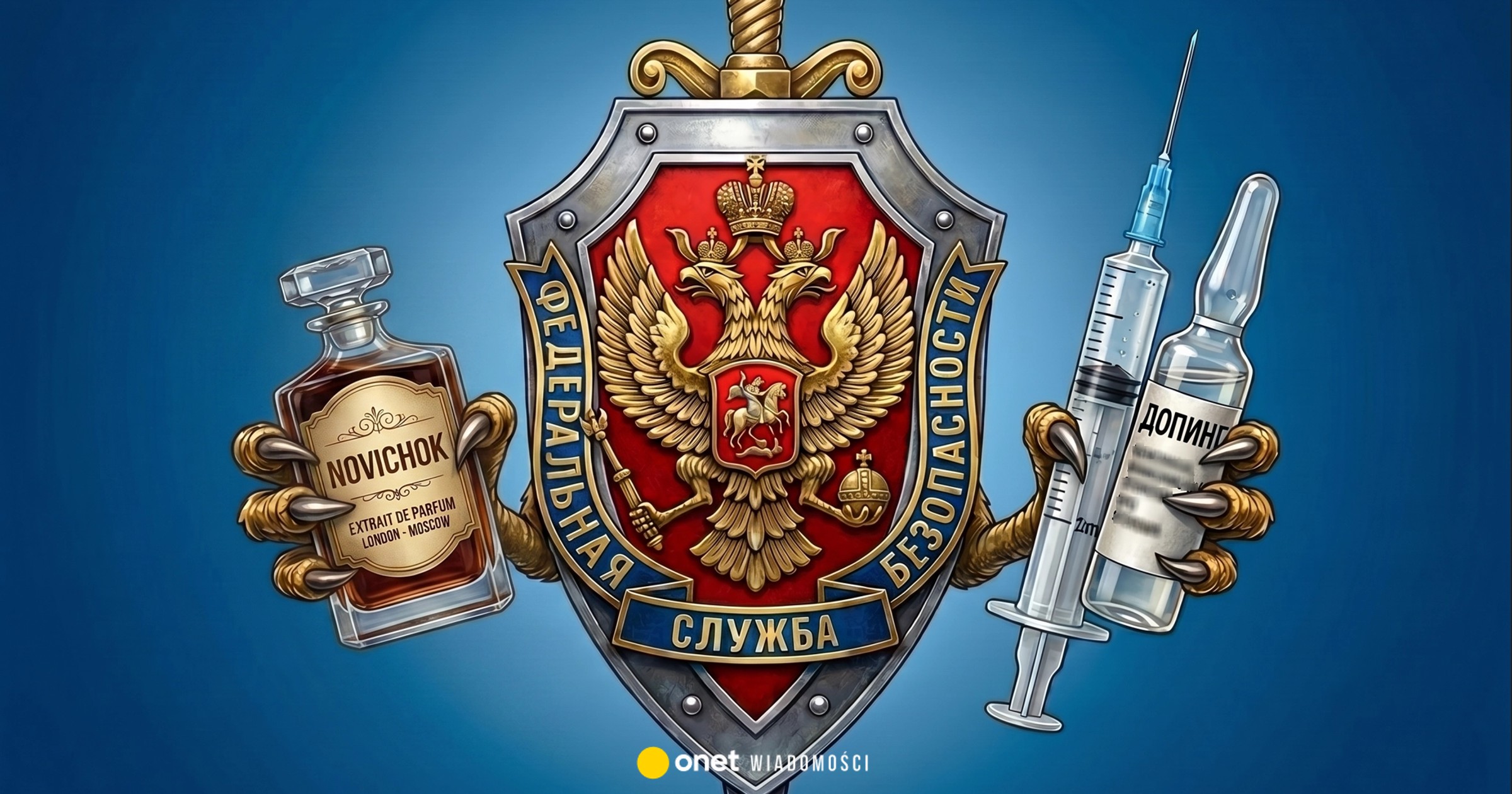
The doping itself is produced by the same center “Signal”, owned by the FSB, which previously synthesized Novichok and epibatidine.
1.
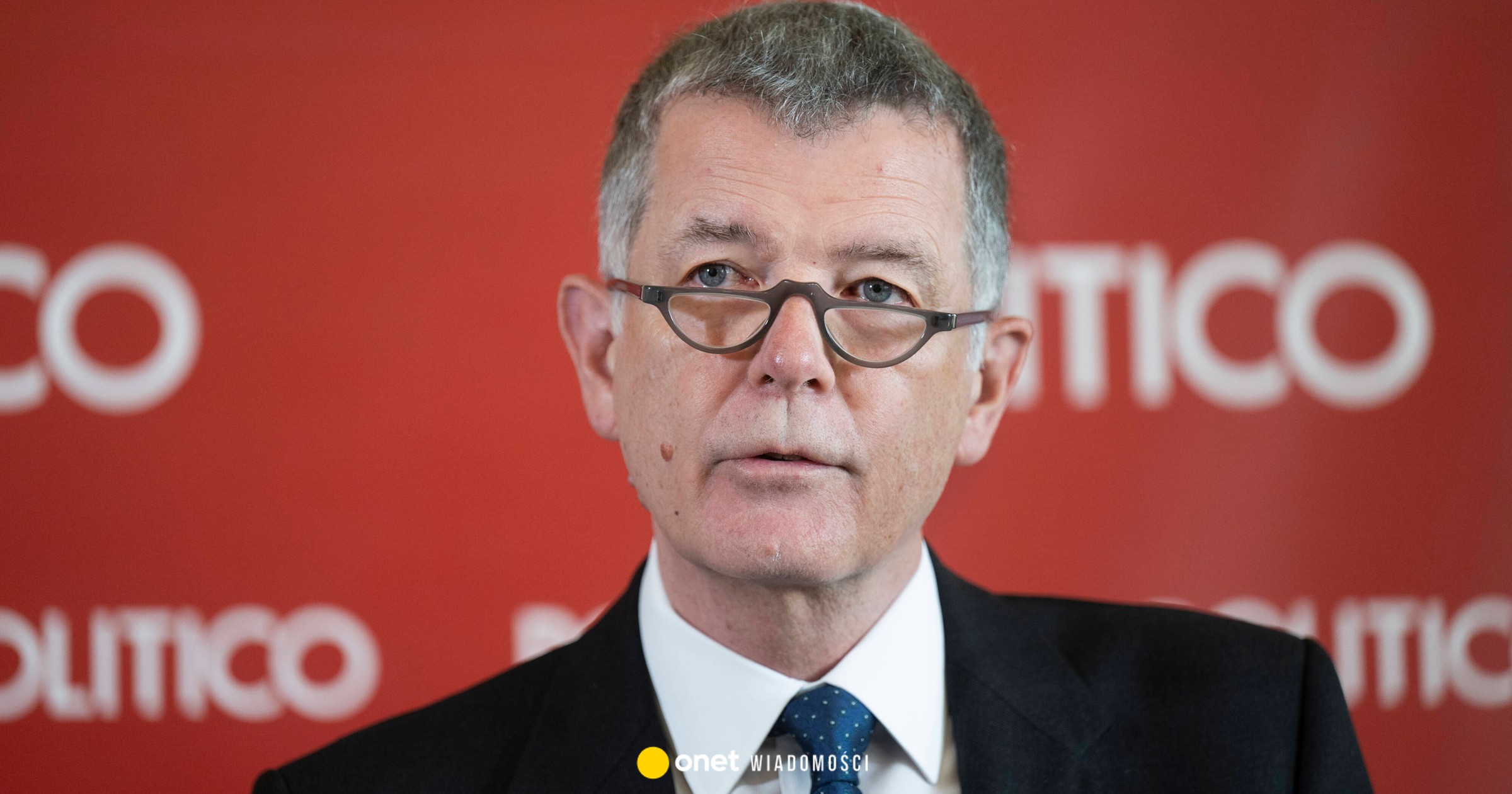
Grigory RodchenkovTheInsider
Rodchenkov's testimony was very detailed and full of unpleasant details. For example, according to him, during the Sochi Games in 2014, through the Ministry of Sports, he supplied dozens of Russian athletes with a mixture of three banned substances. Many of these athletes won medals while avoiding detection thanks to a “special method” of doping testing.
The information provided by Rodchenkov formed the basis of the McLaren report, and as a result of the investigation, Russia faced a four-year ban from the competition – an issue that came before the sports court in Lausanne. In January 2019, WADA received 23 terabytes of data from the Moscow laboratory from Russia, and the data showed that someone had edited the records just before they were transferred: deleting positive doping test results, deleting files with raw data and placing fabricated entries to put the blame on Rodchenkov.
The official Russian position was that Rodchenkov himself had falsified data to make false accusations against the Russian authorities. In Lausanne, Kovalev, as a witness from the Investigative Committee of the Russian Federation (the equivalent of the American FBI), stuck to this version: there was never a state doping program, and all manipulations were organized by Rodchenkov himself (how he would do it after emigrating to the USA, Kovalev did not even try to explain). He probably did not count on success, because his testimony had already been found unreliable by the WADA commission.
During the trial, when WADA's lawyer accused him of participating in evidence tampering, Kovalev burst out laughing. The lawyer probably didn't even realize how right he was. As The Insider found, Kovalev was not simply a “RUSADA expert”, but a colonel of the Second Service of the FSB – the same one that substituted doping samples of athletes through a hole in the wall.
2.
The officers of the Second Service carried out their attacks and poisonings together with employees of the Center for Special Technologies (Scientific and Research Institute No. 2 of the FSB), where the key figure is Major General Vladimir Bogdanov. The billing data shows that on the same summer days of 2020, when he coordinated the poisoning of Navalny, he regularly talked to Kovalev – most likely, the latter reported to him about his testimony in Lausanne.
The reason why poisoners needed Scientific Research Institute No. 2 is clear: the FSB's poison experts were located there. But why would Kovalev cooperate with him? It's simple – the same Scientific and Technical Center “Signal”, which produced Novichok and epibatidine for the Navalny poisoning, has also produced doping for athletes since 2015.
As one source familiar with the center's structure told The Insider, although poison synthesis and doping production were separate programs, the same scientists took part in both, using the same equipment. The document we have seen shows that the decision to transfer the doping project to “Signal” was made “at the highest level” with the promise of “unlimited financing.” The impetus was Rodchenkov's escape in 2015 and the closure of the Moscow Anti-Doping Laboratory. The FSB program needed a new base – technically well-equipped and at the same time unobtrusive. The “Signal” facility met both of these requirements.
As part of the doping program, Signal chemists develop and improve substances, test their detection and modify recipes to comply with WADA protocols. Meanwhile, officers of the Second Service, placed in sports federations, provide doping to athletes and cover their tracks.
3.
Kovalev's presence did not save RUSADA from embarrassment. By the court's ruling, Russia was banned from all world sporting events – although for a shorter period than WADA wanted (two years instead of four). Only individual Russian athletes could take part, starting as neutrals, without a flag.
Kovalev also had personal reasons to defend the Russian doping program – he is the life partner of Veronica Loginova, the new director general of RUSADA, whom an anonymous WADA whistleblower accused in an article by The New York Times of “direct participation in attempts to cover up the results of doping tests during the 2014 Winter Games.”
Loginova, an environmental engineer by profession, previously worked as a RUSADA expert, and her responsibilities included participation in the WADA educational program during the Sochi Games in 2014. At that time, Russia reported no cases of doping among its athletes.
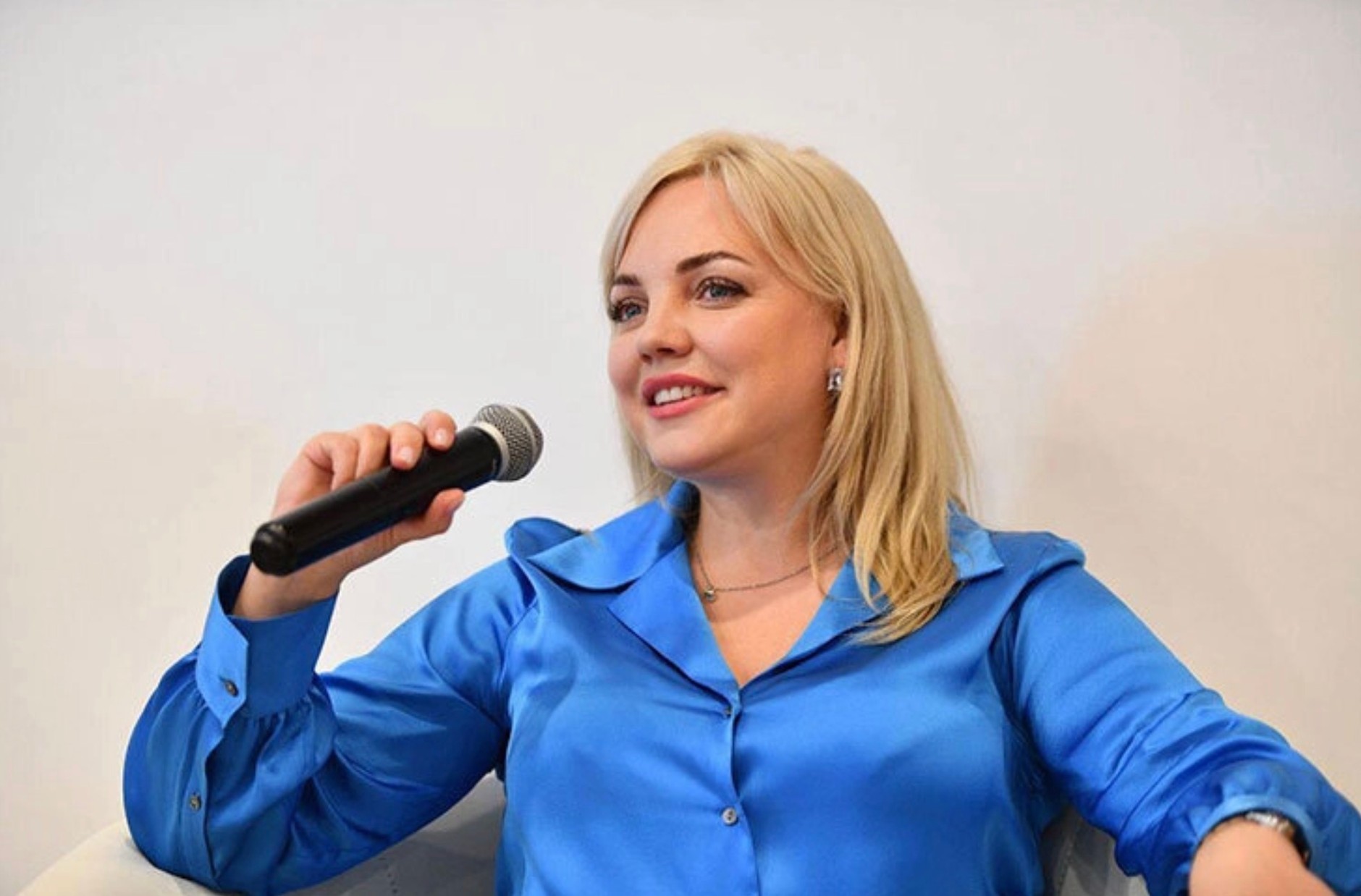
Weronika ŁoginowaInsider
Later, Loginowa headed the anti-doping department at the Ministry of Sports, and in December 2021 she returned to RUSADA: she was appointed general director under the supervision of WADA after the dismissal of reformer Yuri Ganus. Appearing at international forums as director, she called RUSADA “a model for other anti-doping organizations” and advocated the reform of global anti-doping management under the aegis of UNESCO.
According to flight database data, Loginova regularly travels with her life partner from the FSB. For example, a booking from August 2023 shows three related tickets from Kaliningrad to Moscow: Loginova, her daughter Valeria and Kovalev. A similar pattern is repeated on many domestic flights in 2022–2024.
4.
Kovalev is just one of many officers of the Second Service of the FSB directly linked to the doping program. Everything indicates that this was handled by the entire department of the System Protection Board (UZKS). In telephone books [niezależni dziennikarze kupują na czarnym rynku w Rosji dane kontaktowe z telefonów oficerów służb specjalnych oraz urzędników państwowych] Kovalev is listed as “Kovalov Dima, 8th Department”, and his collaborator and colleague Andrei Fedorov goes by the name “Andrei Doping – 8th Department”.
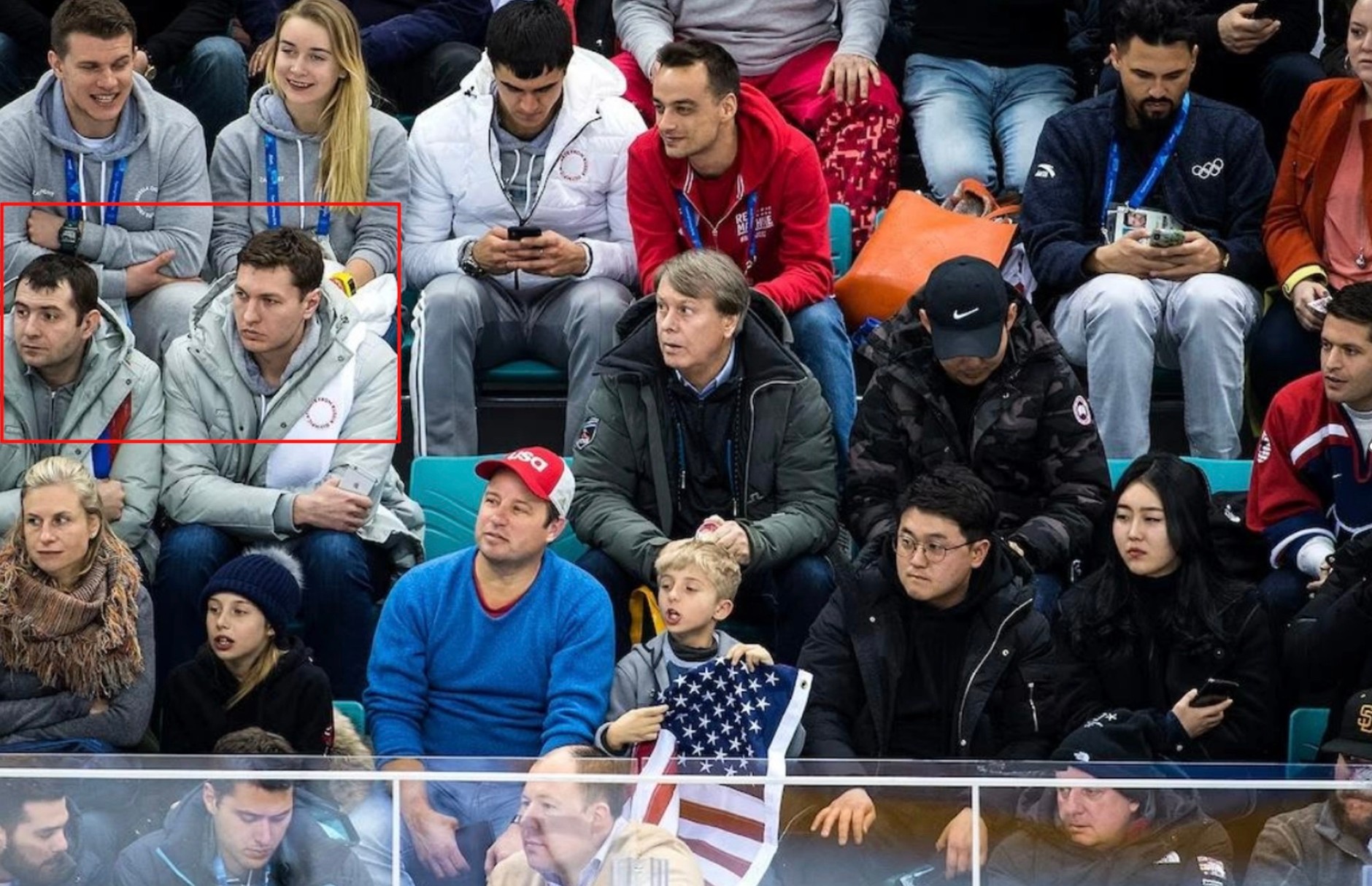
Dmitry Kovalev and Andrei Fedorov in 2018 observe the historic defeat of the US national hockey team against Russia (0:4) during the Olympic Games in South KoreaTheInsider
“Andrei doping”'s phone is full of contacts with athletes, including:
- head coach of the Russian national snowboard team Denis Tikhomirov,
- head of the CSKA sports school in swimming Maria Pjanowa,
- President of the Russian Volleyball Federation Stanislav Shevchenko,
- head coach of the CSKA youth basketball team Vladislav Norkin,
- medalist of the European Championships in long jump Kirill Sukharev and others.
The unpunished activity of doping specialists from the FSB is enabled by representatives of the Second Service, who officially sit on the authorities of the Russian Olympic Committee. For example, Second Service officer Nikolai Varfolomeyev is the advisor to the chairman on security, and in 2022–2024 Rodion Plitukhin, who started his career in the Second Service of the FSB, even served as secretary general of the RKO.
5.
Having failed to convince Swiss investigators in person in 2020, Kovalev posted his arguments online.
After the Court of Arbitration for Sport found that Russia had committed “deliberate, sophisticated and brazen” manipulation of doping data, a series of posts (which he later deleted) appeared on the Russian Telegram channel called “Naked Sport”, where Kovalev often posted comments. He presented in detail the theory that Grigory Rodchenkov extorted money from athletes for hiding positive test results. The Lausanne Commission had previously rejected this claim as fabricated, pointing out that it was based on data that had been falsified by the Russians:
“The hysteria surrounding these terrible Russian doped athletes and other nonsense is a figment of the imagination of all Western sports structures without exception. Russia is not even a leader in the statistics of detected cases. The old fairy tales of Rodchenkov and other truthful among us, including those who fled abroad out of fear, are still the basis for the attempts of inept pseudo-lawyers-fraudsters who make money off unfortunate athletes. That is why the current activities of RUSADA do not give peace. dishonest, to put it mildly, gentlemen and their companions, some of whom, in the years 2013–2016, did not hesitate to take money from sportswomen to settle cases allegedly before sports courts, and did not disdain blackmail or other methods against successful athletes.
Meanwhile, in December 2025, Loginowa took part in the annual WADA conference in South Korea, which was RUSADA's first official appearance at the forum in many years. She presented proposals to adapt Russian law to the WADA Code. The Russian sports bureaucracy, together with the Second Service of the FSB, is ready for Russia's return to world sport.