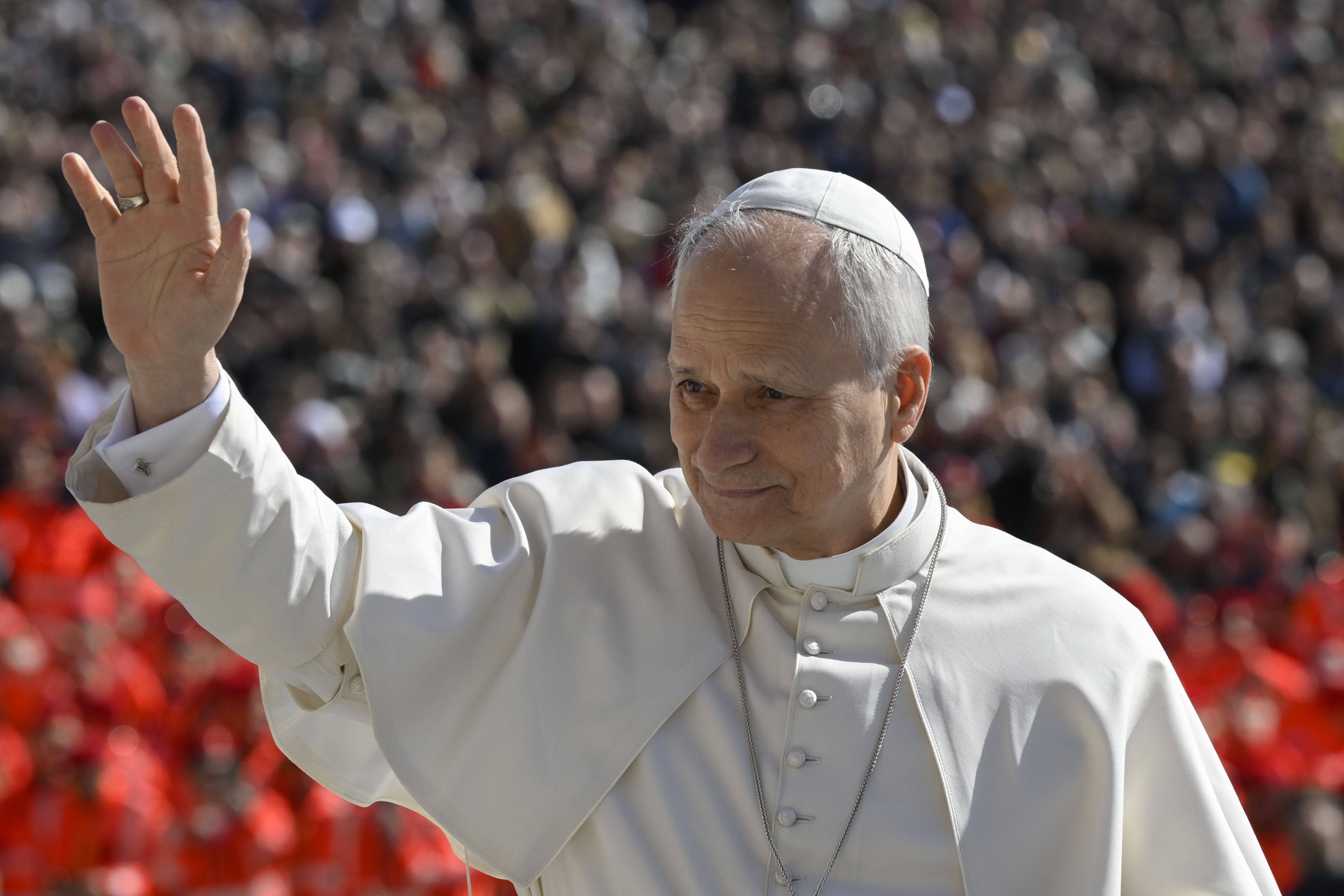
Pope Leo XIV warned on Friday about the use of artificial intelligence (AI) to fuel “polarization, conflicts, fears and violence”, while also denouncing the “environmental destruction” caused by the “frantic race” for rare earths, which are essential for the manufacture of modern electronic products, inform AFP and Reuters, according to Agerpres.
“The challenge represented by these systems is deeper than it seems: it does not only refer to the use of new technologies, but to the gradual replacement of reality with a simulation of it,” said the sovereign pontiff in a speech given at the Catholic University of Central Africa in Yaoundé, the capital of the state of Cameroon.
“When simulation becomes the norm,” we live “as if we were in impermeable bubbles from each other, we feel threatened by anyone who is different,” the Vatican leader lamented. “That's how polarization, conflict, fear and violence spread. It's not just a risk of error, it's a transformation of our very relationship with truth,” he added.
This statement was made in the context of growing criticism of US President Donald Trump's use of AI-generated images for political purposes. After the pope's criticism of the Iran war, Donald Trump published an image of him as a saint last Sunday. The image, inspired by Christian iconography, was deleted on Monday.
At the university in Yaoundé, Pope Leon, an American whose civil name is Robert Francis Prevost, urged students to prioritize the “otherness of flesh and blood” over the “functional response” of chatbots, whose use has expanded massively among younger generations.
“In the context of the digital revolution,” he also denounced “the hidden face of the environmental and social havoc caused by the frantic race for raw materials and rare earths.”
AI is particularly based on the extraction of cobalt ore, an activity for which Africa bears the environmental, social and human cost.
The Democratic Republic of Congo (DRC) has some of the richest deposits on the planet, especially copper, cobalt, coltan and lithium. In 2024, this country supplied 76% of the world's cobalt production, according to the United States Geological Survey (USGS).