“Law of the Jungle”. In a rare statement on the Iran war, China's leader points the finger at the US

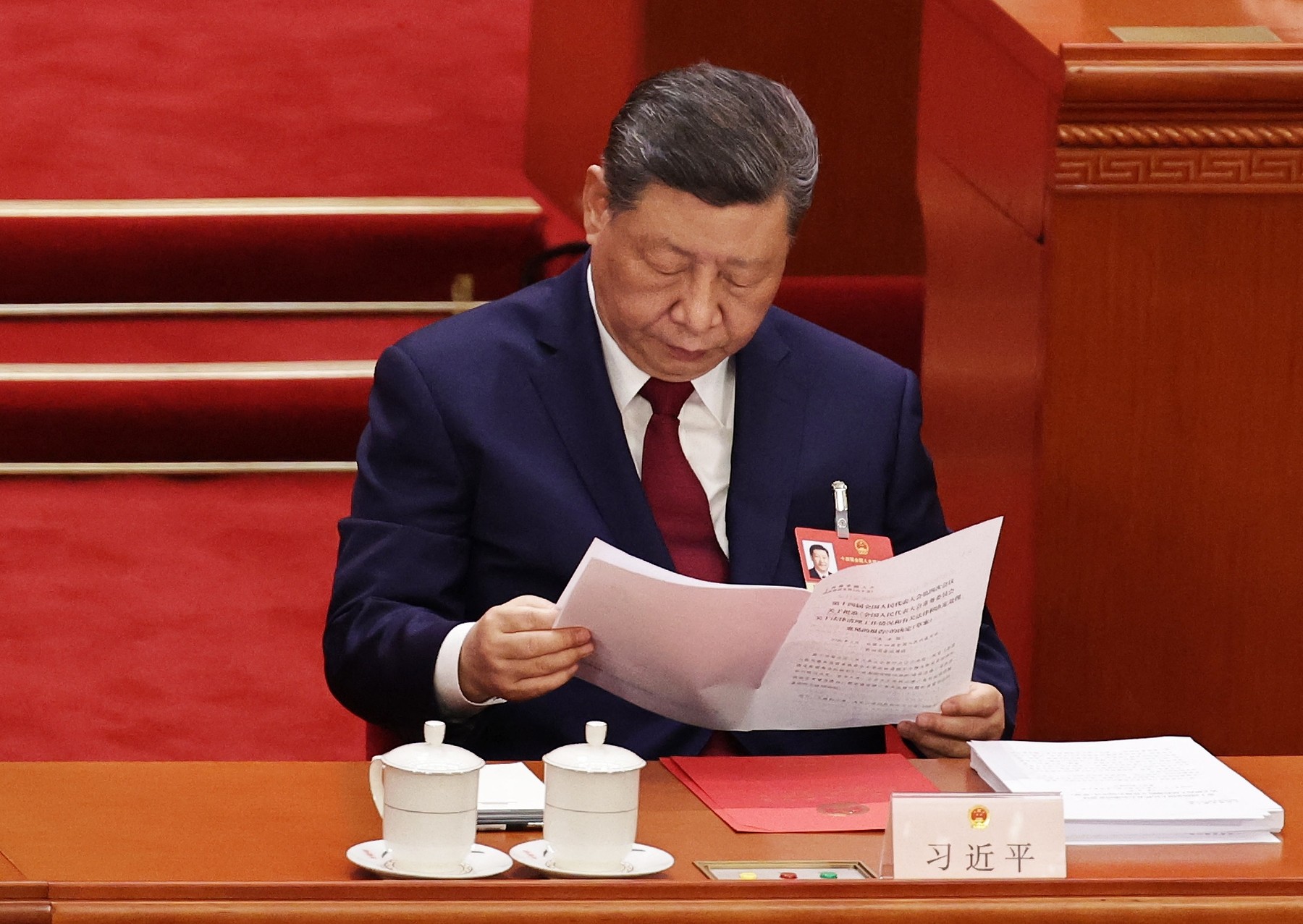
China's leader Xi Jinping has said the world cannot risk returning to “the law of the jungle”. As the crisis in the Strait of Hormuz persists, Beijing has begun to adopt a more active diplomatic role, writes The New York Times on Tuesday.
China's president said the world cannot risk returning to “the law of the jungle”, a veiled criticism of the United States, in his most direct public comments on the US-Israeli war with Iran.
“Upholding the authority of the rule of law internationally means not using it when it suits us and abandoning it when it suits us not. We cannot allow the world to return to the law of the jungle,” he said in a meeting in Beijing with the crown prince of the United Arab Emirates.
Xi's comments, in addition to meetings and phone calls between senior Chinese officials in recent days, suggest Beijing is playing a more active role in trying to consolidate the two-week truce the United States and Israel reached with Iran last week. China also depends heavily on the Strait of Hormuz for its oil supply. Iran has restricted shipping for weeks in the strategic strait, through which 20 percent of the world's oil and liquefied natural gas supplies pass, and the United States on Monday began imposing a blockade on Iranian ports aimed at choking off Tehran's crude oil revenues.
Chinese Foreign Minister Wang Yi on Monday asked his Pakistani counterpart to help “maintain the hard-won momentum” at Islamabad-hosted weekend talks between the United States and Iran that failed to lead to a peace deal. During a meeting with the special envoy of the United Arab Emirates for Chinese affairs, Wang also stated that Beijing is campaigning for the restoration of peace in the region.
Although China has condemned the conflict between the US and Israel against Iran, it has also tried to maintain a neutral position, “navigating” between partnership with Tehran and tensions with the United States, notes the NYT.
“The Key Element”
President Trump is due to pay an official visit to Beijing in May, where he is expected to discuss extending the truce in the US-China trade war.
Ding Long, a professor at the Middle East Studies Institute of Shanghai International Studies University, said that as the Strait of Hormuz crisis has deepened, China has adopted a more active diplomatic stance. Up to 40% of China's oil imports are transported through this waterway.
“Fundamentally, it's about ending hostilities as soon as possible. That's the key element,” he said. “This is about giving peace talks a chance, and China is willing to play a bigger role.”
China, tougher tone on the US
On Tuesday, China took a tougher tone towards Washington, calling the US military's blockade of Iranian ports in the Persian Gulf “dangerous and irresponsible”.
Beijing also warned it would take “firm” retaliatory measures if the US imposed additional tariffs on it amid suspicions that it was supplying military aid to Tehran.
The blockade imposed by the US military “only exacerbates tensions, weakens an already fragile ceasefire agreement and further compromises the safety of cross-strait transit,” said Guo Jiakun, spokesman for the Chinese Foreign Ministry, according to AFP.
“It is dangerous and irresponsible behavior,” the Chinese diplomat stressed in a press conference.
He also reacted strongly to US media reports that China had delivered or was preparing to deliver military equipment to Iran. He again described this information as “fabricated from one end to the other”.
China will take “firm countermeasures if the US persists in using this pretext to impose additional tariffs,” Guo Jiakun warned.