Szymon Majewski, Business Insider Polska: During this year's Fuel Congress, representatives of the Polish Organization of Petroleum Industry and Trade (POPiHN) emphasize that Poland does not import oil through the Strait of Hormuz. Does this mean that we are not at risk of a physical shortage of raw materials?
Dr. Leszek Wiwała, president of POPiHN: Unfortunately, it's not that good. Due to the fact that most European Union countries did not import oil and fuel through the Strait of Hormuz, they did not feel the effects of the conflict in the Middle East that much in the first period. In Europe, mass purchases in stock were a problem. The first, most severe effects of closing the strait hit Asian and partly African countries. However, the importance of the Persian Gulf region is so great that no one in the world is safe in terms of the availability of oil, gas and fuels.
Even China is not safe, as it has significantly increased the capacity of its storage facilities for crude oil and petroleum products over the last two years, and has increased its reserves by 40 million cubic meters since the beginning of March. There is a lack of such capacities in Poland. Our inventory system works quite well, but we only have two refineries in Gdańsk and Płock, which are unable to produce enough finished fuels for our needs. At the congress we talk, among others: about the need for import.
The vast majority of refineries in the Middle East are not operational, while the plants there before the war were among the largest in the world. Today, what is lacking is primarily the refining capacity itself. While we can still find oil in various parts of the world and its extraction will increase, no one will build a new refinery quickly.
Read also: What's next for oil prices? The US Secretary of Energy has no doubts
So should we start building the third refinery in Poland today?
It seems that this is not the time anymore. We should rather think about investments in synthetic fuels (chemically produced, e.g. from natural gas – editor's note), biorefineries or biomethane plants, which, using the potential of biogas plants, can produce liquefied bio-LNG gas. This has been talked about in Poland for years. We cannot waste the current crisis – ongoing investments in sustainable synthetic fuels and biofuels must increase our energy security while reducing the carbon footprint of the Polish economy. In the long term, new technologies should become more profitable than today.
If the conflict in the Middle East continues, problems with the availability of fuel at stations may sooner or later also reach Poland. Let us try to do everything to prevent this from happening and to ensure that the Polish economy survives the global turmoil as dry as possible.
Dr. Leszek Wiwała, president of the Polish Organization of Petroleum Industry and Trade
|
Pawel Wodzynski/East News / East News
How does the fuel industry think the oil and fuel inventory system should change?
The direction is clear – at least 60 days of reserves should be the responsibility of the state through the Government Agency for Strategic Reserves. It is easier for you to invest in larger storage capacities, and it is also cheaper for you. One large state entity taking advantage of the scale effect is one thing, but 100 entrepreneurs competing for the same capacity are another thing.
However, in the Polish Organization of Petroleum Industry and Trade, we do not want the responsibility for the stockpile system to be transferred entirely to the state. Agency strategic reserves must be allocated for a really rainy day, but there are also mandatory reserves that fuel traders are obliged to maintain. Ultimately, companies' liability should be limited to 30 days.
In Poland, the fuel market has grown significantly over the last 10 years. In the case of diesel and gasoline, the increase in consumption in 2015-2025 was approximately 70%. At the same time, storage capacities for diesel increased by 15 percent and for gasoline by 10 percent. Storage capacity does not keep pace with the fuel market itself. Some tanks that were used for current market service 10 years ago are now used as storage capacities.
At the congress, there are rather critical voices about the government's Fuel Prices Lower package. Why don't you like the mechanism of maximum fuel prices?
However, it is too early to clearly assess the entire package. The maximum price is controversial because it is a very deep interference in the market. If we take into account the hot times we find ourselves in and the high social expectations that the state would “do something”, Polish solutions are still quite good compared to those in some other countries. However, a few things need to be changed.
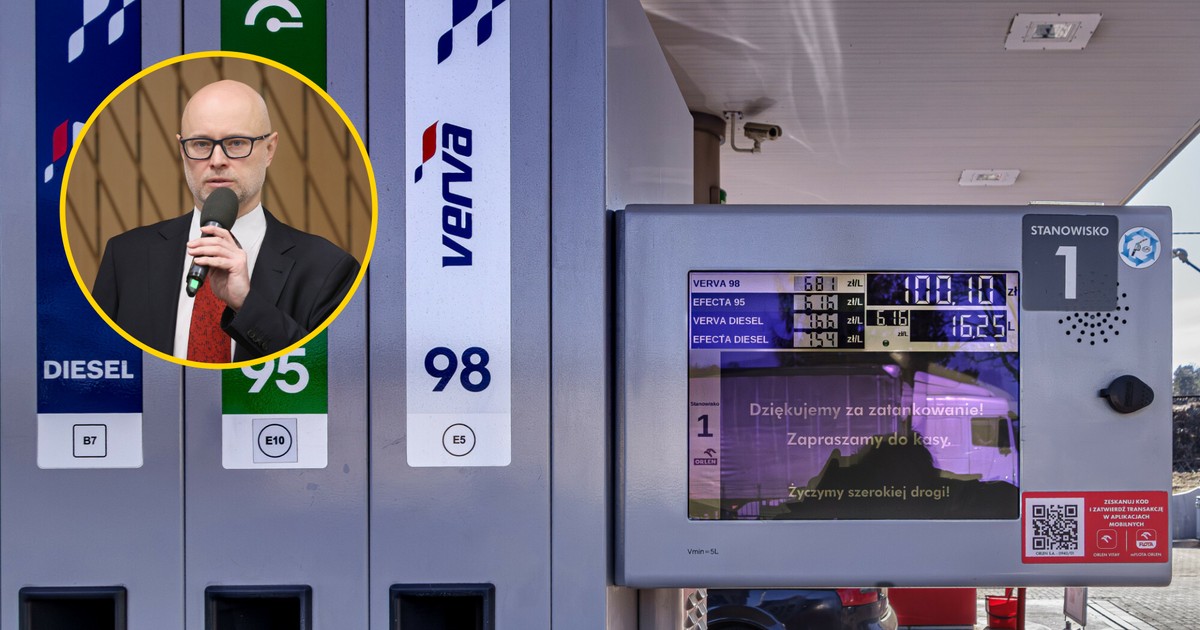
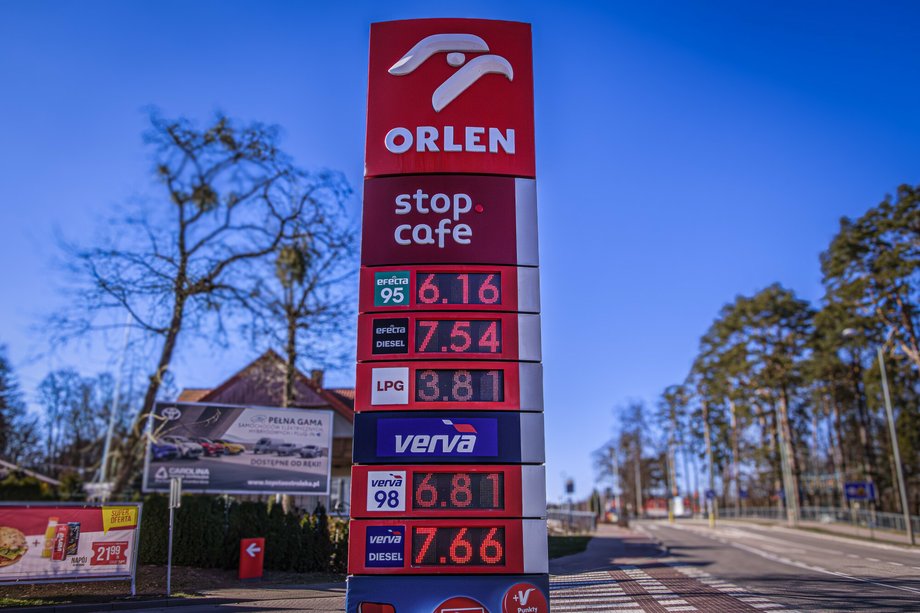
Today, each liter of fuel sold at motorway stations or passenger service points, in areas most often leased from the General Directorate for National Roads and Motorways, generates losses. If the program is to last for a short time, these losses may be bearable, but if the program is continued for longer, the situation for sellers will become much worse. The state cannot protect customers in a way that harms the interests of entrepreneurs.
This happens, for example, in the case of premium fuels. Some companies have their own unique formulations of these fuels – E95, E98 and diesel. The quantities of these various enriching additives are limited, they often have to be imported from abroad, so fuel containing them should be much more expensive. Today, sellers must sell them at the same maximum price as regular fuels. Premium fuels should be excluded from these prices. We would like the Ministry of Energy to officially confirm this, at least through a teleological interpretation. It would be best to introduce statutory changes that would clearly resolve the issue of the scope of application of maximum prices.
Gas station after the introduction of the CPN package
|
Eryk Stawinski/REPORTER / East News
Was there no consultation with the industry when the package was adopted?
The legislative process lasted 26 hours. There was neither time nor opportunity to conduct broader consultations. I was in parliament then; After reading the draft, it was clear to us in the organization that some issues should be corrected. However, the dominant assumption among all parliamentarians was “let's do it first, then we'll improve it”. We are now waiting for a moment of reflection and corrections.
Read also: The Slovak politician uses Poland as a model. There are no restrictions at stations for now
Public opinion is convinced that with high fuel prices, fuel companies must be making a lot of money. That's not necessarily true. Since we import fuels, we also have to pay for them. When large tankers from all over the world arrived, for example, in Hamburg or Rotterdam, Polish companies bought the product on them – most often diesel, which was reloaded to smaller ships that sailed further to the Baltic Sea.
Since the end of February, we have had to pay much more for it, the costs of freight and insurance for sea supplies have also increased, and there are fewer tankers than before the outbreak of the war. There is also enormous speculation on international markets. Financial institutions can buy individual ships; more than 20 large tankers that were bound for Europe changed their routes and sailed to Asia. In some cases, even fuel purchases at a loss are no longer possible. Even with applicable contractual penalties, there is no guarantee that the goods will arrive at their destination.
There is a shortage of fuel all over the world today. Mostly in Southeast Asia – in the Philippines, Vietnam, Laos and Cambodia, but also, for example, in Pakistan. Africa has quite a big problem. Prices are going up even in the US; in California, gas prices went from less than three to over five or even six dollars a gallon. Throughout the United States, average fuel prices increased by 20 percent during the first two weeks of the war, and by 30 percent after a month. We are talking about a country that is an exporter in this area and has an overproduction of oil and gasoline, so theoretically it should be free from such risks.
How do you think European climate policy should change? The congress talks about the need for corrections in the ETS and ETS2 systems, as well as in the regulations regarding increasing the share of renewable energy in transport.
The direction of the green transformation of the entire economy is clear. The problem is that EU policies are based on the philosophy of increasingly higher goals and stricter penalties for failure to meet them. The EU relies mainly on stick policy, while, for example, in the USA, during Joe Biden's government, carrots, i.e. incentives, were used to develop low-emission technologies. The self-imposed pace of development is also highly questionable, and its consequences for our economies may be tragic.
Greening transport can take place, among others: through biofuels. We should make good use of the potential of our raw materials, especially agri-food waste. 29 percent share of renewable energy in transport in 2030, provided for in the RED III directive, is, however, unrealistic, as is 42%. share of green hydrogen in industrial use. So what if officials from the European Commission or politicians in the European Parliament and the Council adopt very ambitious goals if they are detached from reality and cannot be implemented? We suggest spreading the changes over time. Apart from focusing on electromobility, there is no coherent vision of the transition from fossil fuels to biofuels and synthetic fuels. Both will be needed, especially in heavy transport.
Fuel and energy security should be a key guideline for all regulations in these areas. The “stick”, i.e. additional fees for fossil fuels in ETS2, can only be withdrawn when an alternative is widely available. Until we have enough low-emission fuels, such decisions are simply too early.