From Lugoj to Mars. The story of the Romanian woman from NASA who contributed to Artemis protecting the astronauts from the deadly radiation

NASA's Artemis II mission, which sent humans around the far side of the Moon, has been crowned with success. 53 years since man last set foot on Earth's natural satellite, four astronauts completed a full 10-day tour of the Moon. A Romanian woman had an essential role for, from the NASA laboratories. Ramona Gaza is the number 2 deputy director of NASA's Radiation System, and her job is to make sure that people who go into space survive the massive cosmic radiation that Chernobyl was just a “joke”. At the same time, she provides domain expertise to all of NASA's manned exploration programs. In an exclusive interview for “Adevărul”, Ramona Gaza told about her journey from her native Lugoj to the NASA laboratories, AstroRad protective vests and how space research saves lives right here on Earth.
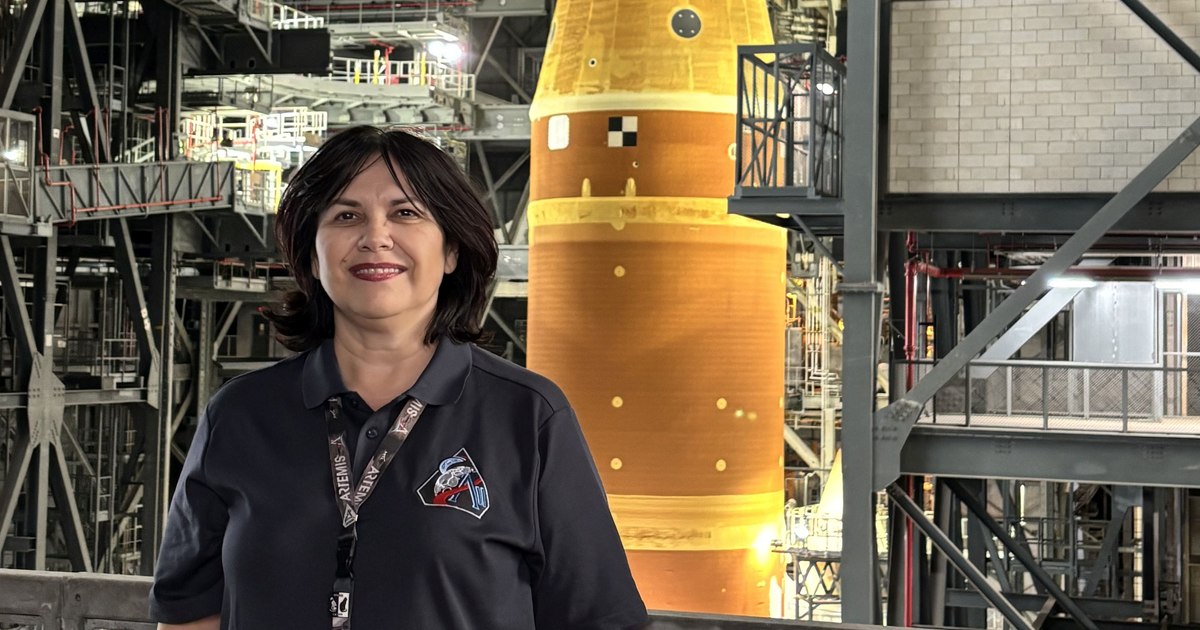
Romanian Ramona Gaza contributed directly to the Artemis missions. PHOTO: Personal archive
The truth: You've been a physicist at NASA for two decades and one of the experts without whom Artemis and the return of man into space would have remained at the intention stage. Looking back, do you dream of NASA and such a career as a child? How was the journey here?
Ramona Gaza: I was born in Lugoj, Romania, attended “Coriolan Brediceanu” high school and graduated from the Faculty of Physics at the West University of Timișoara. In order to continue my studies, I moved to Oklahoma, in the United States of America, where I was accepted as a master's student, then a doctoral student at Oklahoma State University, from where I graduated with a Ph.D. degree in Physics in 2004. When I was very young, my dream was to become a teacher! However, as a teenager I developed a passion for Sci-Fi books and concluded that if there was really a way to understand what I was reading, I most likely needed to study physics. And that, of course, because physics explains everything! (smiles).
While studying at OSU (Oklahoma State University), I started working on what was called “The Astronaut Project”. My research involved unique applications of solid-state detectors, particularly optically stimulated luminescence dosimeters and their potential use to measure space radiation in low Earth orbit (LEO); PhD thesis title: “Space Radiation Dosimetry: An Optically Stimulated Luminescence Radiation Detector for Low-Eatyh Orbit”.
After graduation, I was very grateful for the opportunity to implement my research operationally at NASA Johnson Space Center, where my work focuses on protecting astronauts from space radiation.
The decisive moment
What was the decisive moment in your career that took you from your native Lugoj to the USA, and then to NASA?
Probably immediately after graduating from UVT (Universitatea de Vest Timișoara), when it became clear that I could either follow the planned path and become a teacher, or try a slightly different route and inspire the younger generation not by teaching, but by proving that dreams can come true.
Probably, for many of the young women in Romania who will learn about you, you will become a model. What is the most important piece of advice you would give to a girl who is now looking to the sky and
dream
to work on interplanetary missions?
Always follow your dreams and don't be afraid to aim for the stars! NASA's goals for manned space exploration—to establish a sustainable presence on the Moon and explore Mars—are achievable only with the help of the younger generation. From scientists and pilots to engineers, business experts and legislators, if you are a knowledge seeker, follow your curiosity and join us on this amazing journey!
20 years at the highest level in NASA
You worked at NASA on several major projects, culminating in Artemis. What other big projects have you had and what was the big challenge?
I am the Deputy Radiation System Manager for the NASA Orion Program under the aegis of HHPC/Leidos. My 20-year career with NASA's Space Radiation Analysis Group focuses on crew health and protection from space radiation, while providing domain expertise to all NASA manned exploration programs such as the International Space Station (ISS), Orion Multi-Purpose Crew Vehicle (MPCV), Commercial Crew, Gateway/HALO, Human Landing System (HLS), Extravehicular Activity and Human Surface Mobility Program (EHP) and Commercial LEO Destinations (CLDP). A challenge is supporting several such complex and diverse programs simultaneously; learning how to multitask effectively is a must! (smiles).
It was and is being talked about the radiation barrier, about the fact that without adequate protection man cannot survive in space. What is the biggest challenge in protecting astronauts from cosmic radiation in the long term, when we may have colonies and live on the Moon and Mars?
Radiation from space has three main components: galactic cosmic rays (GCRs), solar energetic particles (SEPs), and trapped protons/electrons (eg the Van Allen belts). Although there is no longer the protection of the Earth's magnetic field in the Moon's orbit or on its surface, exposure to SEPs or through the Van Allen belts is transient in nature and can be mitigated by pre-flight trajectory analyzes or by deploying in-flight solar storm shelters. GCRs (galactic cosmic rays) originating outside our solar system consist of high-energy protons and heavy ions, and are therefore very difficult to screen. Exposure to such particles increases during long missions to Mars (2-3 years).
The advice that his Romanian adviser from the first term would give to Trump. “This is really unfair for Romania”
From Apollo to Artemis
How has monitoring technology changed from the Apollo era to Artemis?
During the Apollo program, passive radiation detectors were used to measure exposure, with readings taken in the laboratory after flight, with no data available during the mission. Today, significant advances in detection technology enable real-time radiation monitoring, capabilities to alert the crew in the event of an unforeseen space weather event, and minute-by-minute telemetry data to the ground.
It was said that studies would show that radiation affects the female body differently than the male body. How does this data influence the design of suits and habitats for the first woman to walk on the moon?
The new generation of spacesuits for exploration will offer increased mobility and flexibility, as well as greater size and adjustability options to fit a wider range of crew members. The new habitats take into account radiation design requirements that will help keep crew exposure below established limits.
Artemis, “testing ground” for Mars
How many of the protective solutions developed for the Moon are applicable to a 6-9 month journey to the Red Planet?
The knowledge gained during the 25 years on the International Space Station, as well as from the Artemis test flights and future missions, will contribute significantly to the radiation mitigation strategy for Mars. Although the environment differs in these scenarios, the overall protection approach will have many common elements.
Regarding lunar habitats, if we were to design a safe base, should we build it under the lunar soil, or are there new materials that can provide sufficient protection?
This is highly dependent on length of stay, with more research needed to determine the protection afforded by surface versus subterranean habitats, as well as the feasibility and sustainability of both scenarios.
Her work also contributes to the treatment of cancer
There have always been naysayers who criticized the budgets allocated to space exploration. How does your research help people's lives?
One of the major contributions involves the development of cancer treatment techniques based on focused heavy ion therapy, which targets the tumor without much damage to the surrounding healthy tissue. Other benefits to life on Earth include contributing to radiation risk assessments on the ground, developing new materials based on innovative shielding approaches, understanding environmental radiation exposure and associated risk at different altitudes (thus helping aviation protection programs), monitoring space weather that could impact GPS satellites and power grids, etc.
Viktor Orbán could call for the election to be annulled if the opposition wins. Romanian analyst from Great Britain: “They could be inspired by us”
When you see the first live broadcast of the Artemis astronauts stepping onto the South Pole of the Moon, what will you think of first: the success of the numbers on the sensor screens or the historical significance for humanity?
Most likely a combination of both! It's always an honor and rewarding opportunity to contribute, and I can't wait to see the NASA crew reach this historic milestone!
“AstroRad Vests”, another successful project
I can't help but ask you about “AstroRad vests”, a specific project you contributed to. What are the big challenges here and where did it start, where did it go and what would be the target?
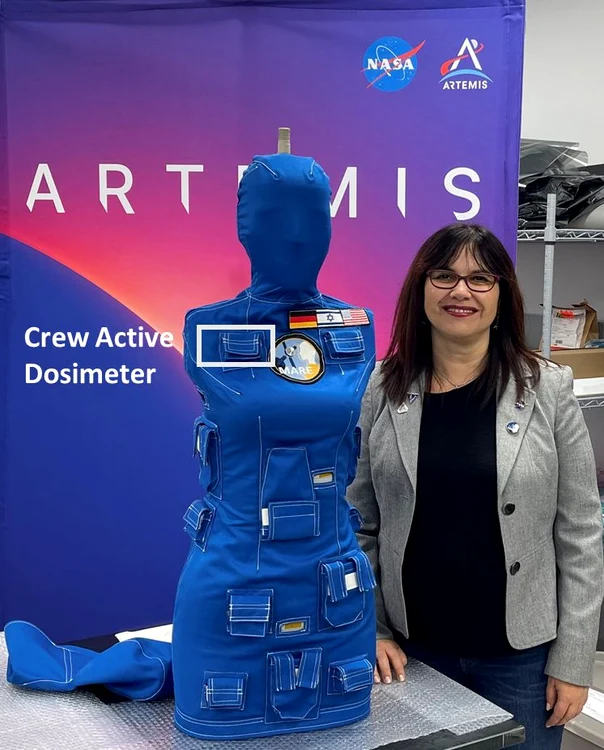
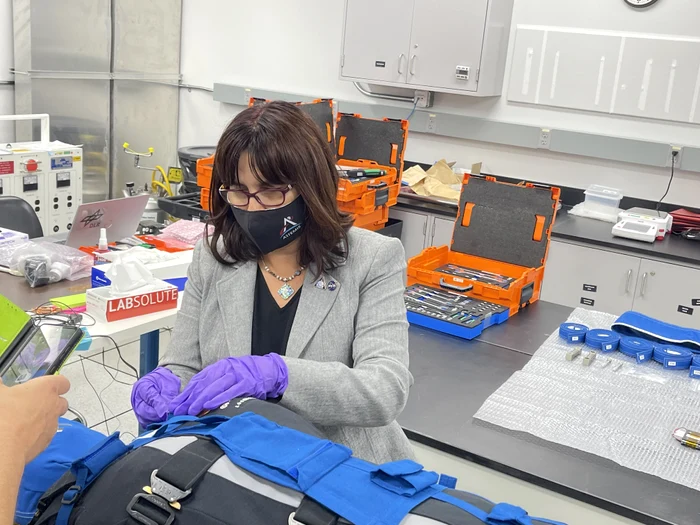
The AstroRad vest was developed by StemRad as part of the MARE (Matroshka AstroRad Radiation Experiment) project, an international collaboration between NASA, the German Aerospace Center, the European Space Agency, the Israel Space Agency and Lockheed Martin. MARE's scientific objectives included: making radiation measurements inside two identical female anthropomorphic mannequin torsos; development of detailed mapping of radiation doses to relevant organs such as brain, bone marrow, lungs, stomach, breasts, pelvis, intestines; and investigating the use of the AstroRad vest as personal protective equipment. The project was successful and the data is being published.
Important first steps towards finding life
Will we ever find life somewhere deep in the cosmos?
Observations from research on Mars have found ice at the polar ice caps, and the latest studies from 2024 suggest a layer of liquid water deep beneath the Martian surface. So, we do everything step by step…
There are voices claiming that sooner or later the future of the human race will be in space. Do you share this idea?
There are still significant challenges beyond radiation exposure to a sustainable and long-term continued human presence in space. I look forward to NASA's future exploration achievements with international partners and the commercial sector!