Americans, take this to heart. When a Brit says he's had enough, what he really means is that he's deeply – really deeply – annoyed.
In this case, it's not just about the British.
British Prime Minister Keir Starmer echoed the sentiment of most Europeans last week when he said he was fed up with his voters and businesses suffering financial losses “because of the actions of Putin and Trump around the world.”
Europe had barely begun to recover from the latest energy shock and inflation surge triggered by Russia's invasion of Ukraine in 2022 when Donald Trump, Benjamin Netanyahu and their war with Iran emerged.
This time it may be even worse.
Analysts predict that if the Strait of Hormuz, a key route for global trade, remains closed to shipping for even another week or two, the global price shock on the energy market will lead to shortages of fuel, fertilizers and industrial raw materialsstarting in Asia and spreading to Europe. Food prices will soar.
By blocking Iran and its exports, Trump is actively contributing to limiting supply, which threatens real economic, social and political problems for European governments. And this at a time when their voters are already very dissatisfied with the cost of living.
Costs of importing fossil fuels by the European Union in just 44 days of the conflict they increased by over EUR 22 billion (PLN 93 billion) – said the President of the European Commission, Ursula von der Leyen, on Monday.
— The Strait of Hormuz is virtually closed and citizens are feeling the effects immediately – at gas stations, supermarkets and utility bills. What we are seeing in the Middle East is not some distant crisis. In a world where everything is interconnected, consequences [kryzysów] they are direct — and immediate,” she added.
The damage to come
Despite these 44 days of higher prices, the true impact of the war on the economy is still to be felt. Most of the oil cargoes that left the Persian Gulf before the conflict began have already reached their destinations. The market was at a “critical crossroads” on Thursday, according to the United Arab Emirates' influential industry minister, Sultan al Jaber. He said that in the name of “global economic stability” it is necessary to reopen the Strait of Hormuz quickly and unconditionally.
His wish did not come true. Negotiations between the US and Iran ended in failure, and Trump announced a blockade of the strait – there is no prospect of resolving the conflict.
The article continues below the video
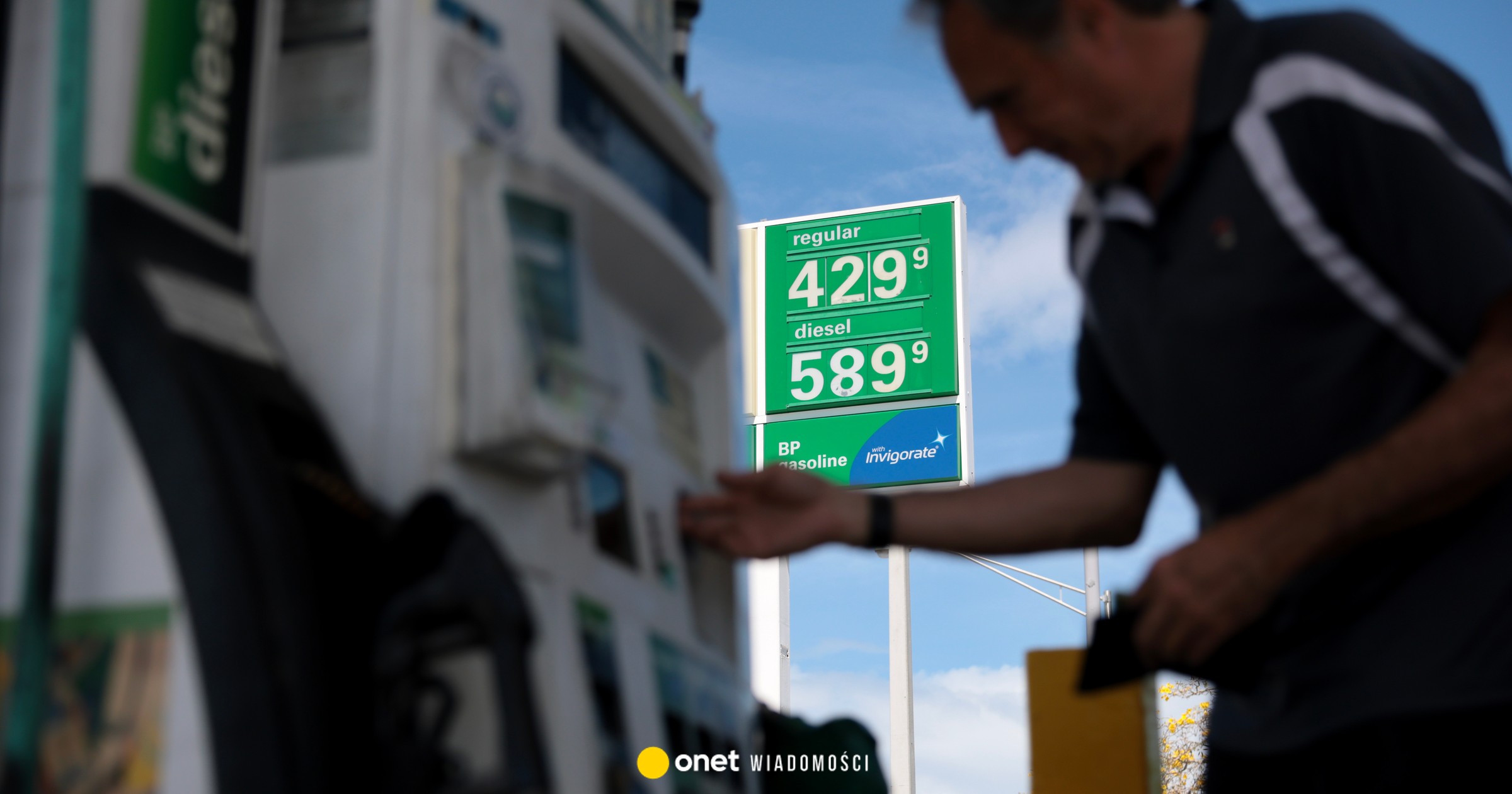
This means this for Europe further increase in prices at gas stations — the price of oil exceeded $100 again. (PLN 360) per barrel. Many European countries also rely heavily on gas to heat homes and power industries, which means high costs for the upcoming heating season.
The Resolution Foundation, a leading think tank in the UK, forecasts that the average British household will lose £480 (PLN 2,334) this year because of the war. — [Szkody] for household finances this year are largely a reality, said James Smith, chief economist at the Resolution Foundation.
Critical points
Painful costs may soon be accompanied by real shortages. Airports warned last week that if the strait remains closed for another three weeks, “a systemic aviation fuel shortage will become a reality for the EU.”
And Europe will face “increasing restrictions” in other areas by the end of April, wrote Robert Pape, a political science professor at the University of Chicago. He said this is because importers in Asia – the region hardest hit by the crisis and which imports the most oil and gas from the Middle East – are “competing aggressively for other sources of supply.” European importers will therefore “have to face both higher prices and limited availability” of raw materials.
Pape predicts that energy-intensive industries such as chemicals, metals and manufacturing may begin to cut production. There is also the issue of food prices, which are affected by rising costs and a limited supply of fertilizers – another casualty of the strait closure.
For example, in the UK, the Food and Drink Producers Association expects food price inflation to reach 10% by the end of 2026, which is an increase compared to the pre-war forecast of 3.2%. And the latest forecast was made two weeks ago and was based on the assumption that the strait would open “within two to three weeks.” And there's no chance of that.
Unfathomable
Some oil market observers fear the worst. Rory Johnston, an analyst at research site Commodity Context, predicted last month that a prolonged closure of the strait would translate into “monstrously high prices” in the West and high-income Asian countries. In his opinion, poorer countries should prepare for “serious physical fuel shortages.”
Such crises have unpredictable political dynamics. In Ireland, an EU member state with one of the highest GDP per capita in the world, the government was forced to announce a 500 million euro (PLN 2.1 billion) cut in fuel taxes over the weekend to calm protesters. They blocked key ports and roads to protest soaring costs – which in turn deepened fears of fuel shortages.
“It is unfathomable that we were on the verge of losing our country's oil refining capacity in the middle of an unprecedented global energy supply shortage,” said Irish Prime Minister Micheal Martin. — What happened makes absolutely no sense.
I’m Ashley Davis as an editor, I’m committed to upholding the highest standards of integrity and accuracy in every piece we publish. My work is driven by curiosity, a passion for truth, and a belief that journalism plays a crucial role in shaping public discourse. I strive to tell stories that not only inform but also inspire action and conversation.