Artemis II returns to Earth at night. The great danger to the astronauts on board and what made NASA stop the problems from the first mission with the Orion capsule


Astronauts from the Artemis II mission have bypassed the Moon, they have arrived at the farthest point and they saw areas of the hidden side of the Moon that no human eye had ever looked at. On the night of Friday to Saturday the crew will return to Earth, after they will pass at great speed through the layers of the Earth's atmosphere. They will have to go through some key moments, loaded with great risk.
NASA's Artemis II mission is scheduled to touch down off the coast of San Diego around 5:07 p.m. local time on Friday, April 10. In Romania it will be 3:07 a.m. on April 11. The time is subject to change and the agency will communicate the changes.
NASA says Day 10 of the Artemis II mission is focused on returning the four astronauts safely to Earth. A final reentry trajectory correction maneuver will occur five hours before docking, which puts Orion on the correct course.
The crew returns the cabin to its original configuration, which means the equipment is stored and the seats are secured. The four will don their spacesuits again for the return to Earth operation.
Maximum speed of 40,000 km/h
One side of the Orion capsule will no longer be needed, so the European Service Module (ESM) will separate 34 minutes before “splashdownThat module was fundamental throughout the mission's 1.1 million km journey, as it houses the main engine, fuel, solar panels and other support systems.
Upon re-entry into the atmosphere, the Orion capsule with the crew on board will reach a very high speed of almost 40,000 km/h or 11 km per second – an incredibly fast speed.
Basically, the astronauts on board the capsule will descend about 120 km in about 13 minutes. When coasting, the safety speed cannot be higher than 32 km/h.
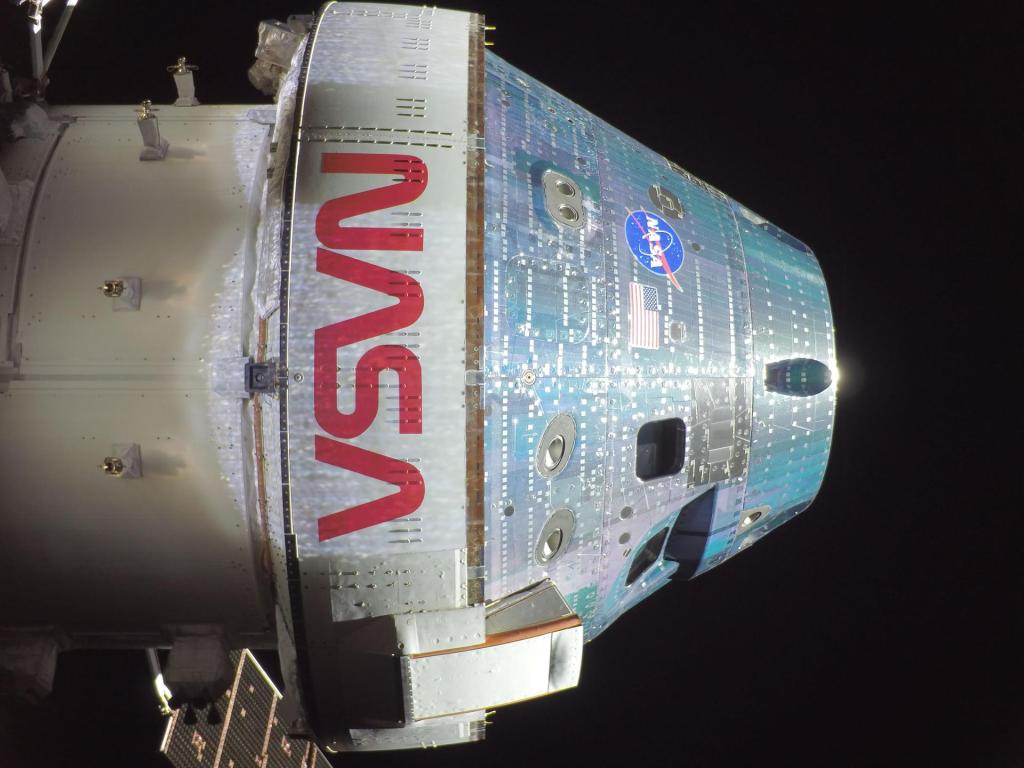
The big challenge. Will the heat shield hold up?
Detachment of the ESM exposes an essential Orion component, one without which a safe return to Earth would not be possible: the heat shield.
The heat shield (in English “heat shield“) is designed to protect the crew and the capsule at times when the temperatures reach the highest values. During the reentry through the atmosphere, due to the high speed with which the capsule interacts with the atmosphere, a large amount of energy is released, released mainly in the form of heat.
How does this shield work? The basic element is a shell that must be consumed at a certain rate as the capsule re-enters the atmosphere when the heat is extreme. It's called ablative shell and takes some of the heat, at the cost of a controlled erosion of that shell. The shield burns, is consumed, protecting the rest of the capsule containing the Artemis II crew.
Several experts warned that NASA was risking the lives of the crew aboard the Orion capsule, because of the heat shield, CNN wrote, but NASA considered it safe and that the crew would arrive safely on Earth, but made an essential change compared to the first Artemis mission.
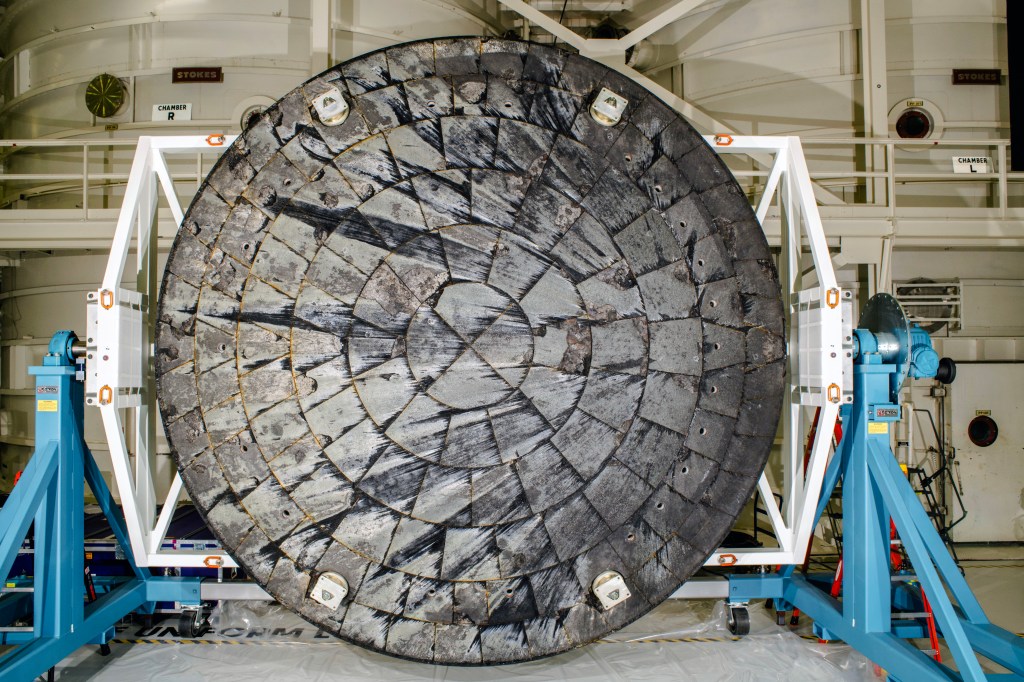
The key change made by NASA
Concerns about the reliability of the heat shield on the Orion capsule arose after NASA noticed, at the end of the Artemis I mission, that this ablative shield behaved differently than the agency had estimated, physicist Claudiu Tănăselia recently explained to HotNews.
Basically, the shield wore out irregularly, more than the initial models estimated, and for NASA it was a problem, because no one understood why this happened.
“If there had been a crew in the Artemis I mission capsule, it would not have suffered due to the heat shield degrading beyond expectations, because usually these systems have fairly wide tolerances. But when it comes to manned flights, NASA wants to understand as well as possible any aspect that can put the crew at risk. Hence the whole discussion about the safety of the Orion capsule,” said the expert.
NASA chose not to change the way the heat shield is built for Artemis II compared to the 2022 mission, but it did change something: the reentry profile through the Earth's atmosphere will be different compared to Artemis I, to subject the capsule to lower thermal stress, thus managing the ablative envelope.
Thus, for the Artemis II mission, NASA optimized the “skip entry” trajectory that was used in the previous mission. Skip entry is a descent technique in which the capsule “bounces” in a controlled manner on the upper atmosphere, similar to a stone dropped on the surface of a lake, before the final descent. This method allows the capsule to travel greater distances and land with much greater precision in a specific area, while also reducing the G-forces exerted on the astronauts.
For Artemis II, NASA engineers adjusted the trajectory and angle of attack to lessen the extreme thermal stresses, while still ensuring that G-forces remain low for the astronauts, while the integrity of the heat shield's protective material is better preserved.

Return to temperatures over 2,000 degrees Celsius
Entry into Earth's atmosphere occurs 14 minutes before descent, and the capsule must decelerate from nearly 40,000 km/h to several hundred km/h in just a few minutes.
NASA explains that temperatures can reach from 1,650 to over 2,700 degrees Celsius in those minutes. After Orion makes it safely through the heat of atmospheric reentry, the cover that protected the forward compartment of the craft will automatically deploy, allowing the parachutes to deploy.
In a first phase, two brake parachutes will reduce the ship's speed to below 500 km/h, and the main parachutes will reduce the capsule's speed to below 30 km/h, so that the impact with the ocean water is not too harsh for the astronauts.
After docking, recovery teams will pick up the crew by helicopter to the USS John P. Murtha.
Once aboard, the astronauts will be examined by shipboard doctors, then taken ashore and picked up by a plane that will take them to the Johnson Space Center in Houston.
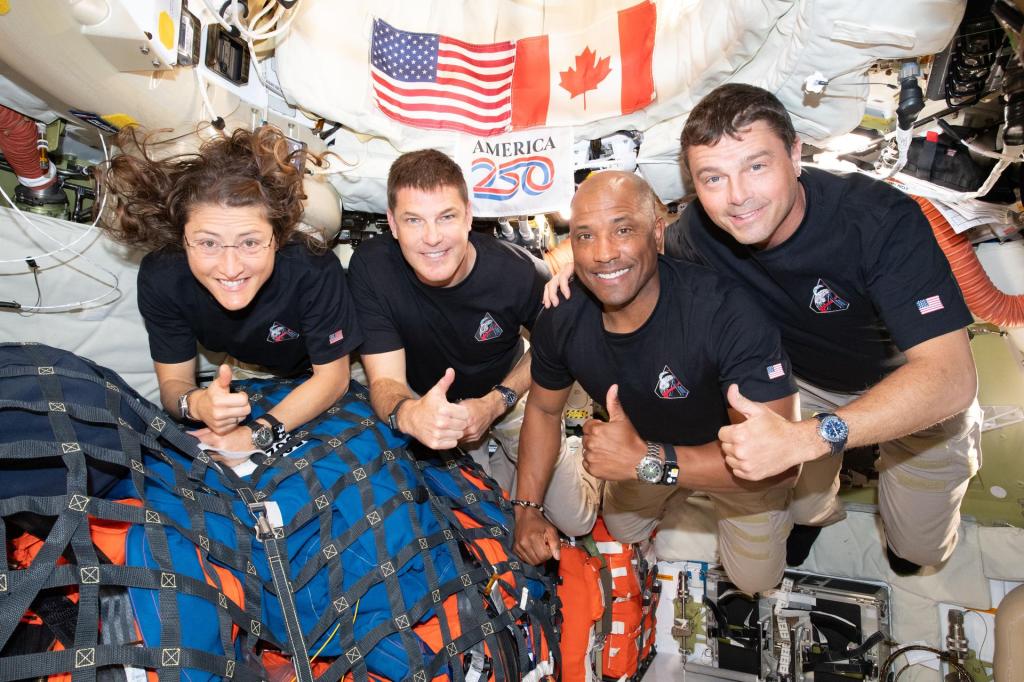
The crew of the Artemis II mission
- Reid Wiseman – Commander, 50 years old
- Christina Koch – Mission specialist, 47 years old
- Jeremy Hansen – Mission specialist, 50 years old
- Victor J Glover – Pilot, 49