The DAX index (German stock index of the largest companies in terms of share in turnover and capitalization) is growing, the price of oil is falling rapidly, as are gas prices. Financial markets react euphorically to the two-week break in the fighting between the US and Iran. For this time, free movement of ships through the Strait of Hormuz is to be ensured, and the agreement is to be negotiated with Pakistan's mediation.
Will this plan succeed and will the enthusiasm on the stock exchanges continue? This remains to be seen. However, two things can already be said. First of all – once again the rule called TACO – “Trump Always Chickens Out”, which means “Trump always cowards” applies. Secondly – everything indicates that the biggest winner of this conflict will be China, because their currency could play a much greater role in the trade of goods of the future than it does today. And outclass the dollar.
Investors often use the acronym TACO to describe the phenomenon that the US president always makes a radical U-turn when the financial markets react to his policies too negatively.
The first and most striking example of such behavior could be observed a year ago. After Trump announced drastic tariffs against almost all US trading partners, stock prices fell sharply and US Treasury bond yields rose sharply. Ultimately, Trump suspended these measures for 90 days – the stock markets quickly recovered, and in most cases the tariffs turned out to be much lower than he announced.
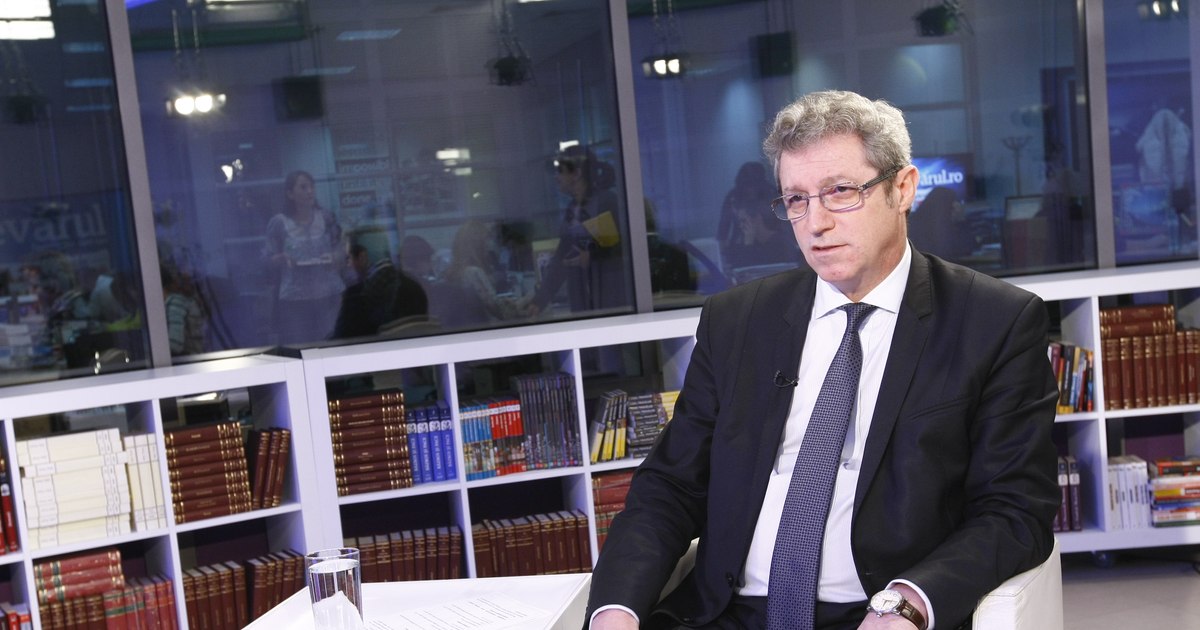
— Investors hope that the war with Iran will not be an exception, and this hope is now coming true, says Jochen Stanzl, chief market analyst at Consorsbank. — The last-minute agreement proves once again that the investors who appealed to TACO were right, he adds. This time, it was probably not the stock markets but oil prices that forced Trump to retreat.
Fears of “Trumpflation”
The drastic increase in oil prices in recent weeks has driven up the prices of virtually all commodities. Information on March inflation in the US is scheduled to be released on Friday – economists expect it to increase from 2.4 to 3.4 percent.
– This compromise [z Iranem] was necessary for the US primarily for internal reasons, to alleviate the enormous pressure related to fuel prices, says Stephan Kemper, chief investment strategist at BNP Paribas. Especially since Trump constantly boasted about lowering prices during the election campaign. Now, withdrawing at the last minute from a massive attack on Iran, he anticipated the public debate about “Trumpflation”, i.e. the inflation caused by his policies.
The article continues below the video
However, this does not solve the problem. — Announcing the “immediate” opening of the Strait of Hormuz has considerable political significance, but logistically it is a real challenge, says Kemper. Currently, there are over a thousand ships waiting on both sides of the strait, including over 400 oil and gas tankers. First they need to get them safely through this narrow passage.
The question is also what will happen next. “Shipowners and insurers will be very cautious about sending new vessels to the area until it is clear whether Iran will try to take control of shipping through 'technical restrictions' or new transit fees,” Kemper says. Especially since it is not certain whether the fighting will not break out again in two weeks.
Therefore, oil prices will most likely remain elevated even if an agreement is reached. — Damage to gas infrastructure and continuing uncertainty will drive up prices, Kemper adds. This will affect the economic situation and profits of enterprises.
The biggest unknown, however, is how an agreement will be reached between the US and Iran in the next two weeks. “The positions of both sides are still very different,” says Thomas Gitzel, chief economist at VP Bank.
Iran demands consent to uranium enrichment and the complete lifting of American sanctions. — The list of demands also includes compensation for war damage, adds Gitzel. It is unlikely that the US will agree to this. — The chances of success in the negotiations are therefore low.
Strengthening China
However, even if an agreement is reached, the biggest winner of this conflict will probably be China — and that's the last thing Trump wants to see. In recent weeks, both China's geopolitical and monetary influence has strengthened significantly.
The ceasefire between the US, Israel and Iran was officially negotiated by Pakistan. He has been India's rival for years. However, their opponent is also China, so in accordance with the principle “the enemy of my enemy is my friend”, Islamabad and Beijing have long had strong relations. Many therefore believe that China was involved in the talks that led to the ceasefire, at least in the background. — It is hard not to notice Beijing's influence on these events, comments Enguerrand Artaz, a specialist managing the LFDE investment fund.
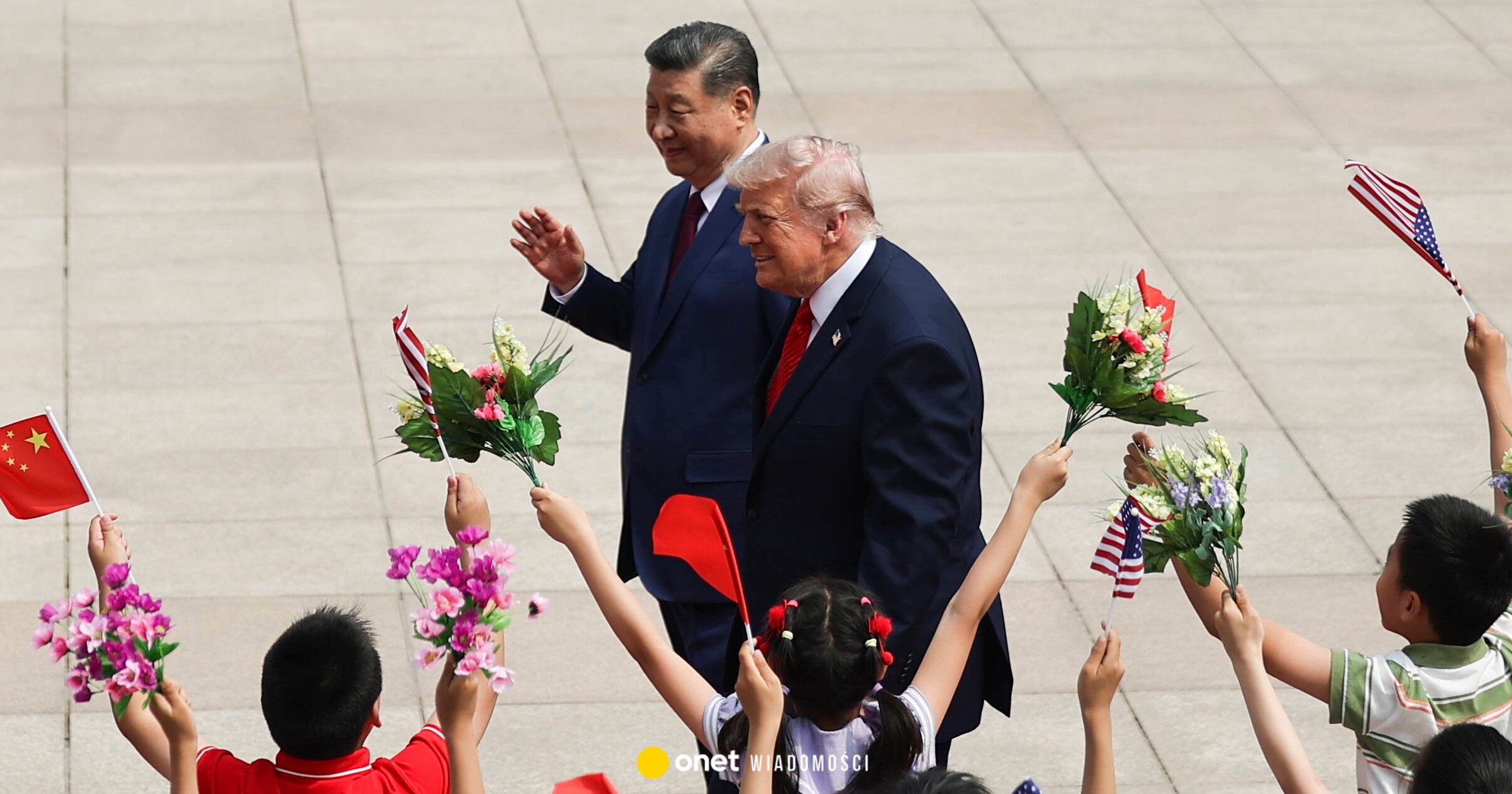
Xi Jinping, Beijing, February 25, 2026AFP
China, of course, had its own economic interests in this. High oil prices may have seriously weakened the competitiveness of Chinese exporters, especially on the European market, where China directs most of its exports following the introduction of tariffs by the US.
At the same time, however, this crisis is working to Beijing's advantage. It made many countries aware of how dangerous dependence on fossil fuels is. – This inevitably increases the need to strengthen energy independence and increase the use of electricity – explains Artaz. — In this area, the Chinese industry is a leader, both in terms of production (e.g. solar panels, civil nuclear energy) and consumption (electric cars).
The global energy transition is likely to accelerate, benefiting the Chinese economy. At the same time, the role of the Chinese currency in commodity trade will also increase. In recent weeks, Iran has already allowed some ships to pass through the Strait of Hormuz, provided that they pay the fee in yuan.
In the future, China will most likely increasingly be able to pay for raw materials in its own currency, and other countries unfriendly to the US may also join this solution.
— This is a key element for Beijing in the process of striving to play the role of a world leader – says Artaz. Because in this way, China can weaken the position of the dollar as a global trading currency and get closer to achieving the goal of making the yuan the reference currency in the world. “It's a long-term process,” Artaz emphasizes. However, events surrounding the war with Iran may significantly accelerate it.
I’m Ashley Davis as an editor, I’m committed to upholding the highest standards of integrity and accuracy in every piece we publish. My work is driven by curiosity, a passion for truth, and a belief that journalism plays a crucial role in shaping public discourse. I strive to tell stories that not only inform but also inspire action and conversation.