We present an excerpt from Gareth Gore's book “Opus Dei. Dirty money, human trafficking and an extreme right-wing church organization” with the consent of the publishing house.
Among the actors and crew members accompanying the famous director at the press conference on the occasion of the premiere of his new film, there were also three unexpected characters, namely an Opus Dei priest and two supernumerary lawyers [świeccy członkowie Opus Dei]. Their presence that day can be interpreted as a testimony to the organization's pride, but also as proof of how great resources it had at its disposal.
Roland Joffé, the creator of the films “The Killing Fields” and “The Mission”, which received Oscar nominations for best director in the 1980s, allowed himself to be brought out of something like retirement after two decades to make a film about Escriva. The production budget was set at $40 million. For Villa Tevere, it was supposed to be the fulfillment of a long-time dream of showing the founder of the organization on the silver screen. Del Portillo sent a representative to Hollywood in the 1990s to set up a company there. His successor, Echevarría, saw a film dedicated to Padre Pio and since then has been obsessively seeking a similar commemoration of Escrivá. The matter gained additional importance after the premiere of “The Da Vinci Code” [w filmie organizacja Opus Dei jest jednym z głównych bohaterów]. A company called The Work LLC was registered in California, and a script was commissioned to develop under the working title “Founder”. However, the text was not appreciated. Hugh Hudson, who directed Chariots of Fire, said it “smacks of Franco.”
Image of Josemario Escriva, founder of Opus Dei, a saint of the Catholic ChurchAlessandro Bianchi / PAP
Alejandro González Iñárritu, known as the creator of the films “21 Grams” and “Babel”, rejected the offer without hesitation. Joffé didn't want to accept it at first, but then he watched old footage and came to the conclusion that Escrivá was a fascinating character. Ultimately, the script was changed and the money for the production was magically found (thanks to two Spanish supernumerary lawyers and a mysterious Spanish foundation, which the people working on the film called “the golden investor”). During the press conference, Joffé spoke in poetic words about “When the Demons Arise” – because this is the title ultimately given to the film – that it is a grand drama about great passion, betrayal, love and religion.
Center of ruthless practices of Opus Dei
In breaks between filming, members of the film crew visited – accompanied by Opus Dei guards – the house of the numeraries in the Argentine capital. These invitations could be interpreted as an expression of courage on the part of an organization that had previously not revealed itself to the world. The change in policy was in line with the organization's success in the face of the “Da Vinci Code” crisis.
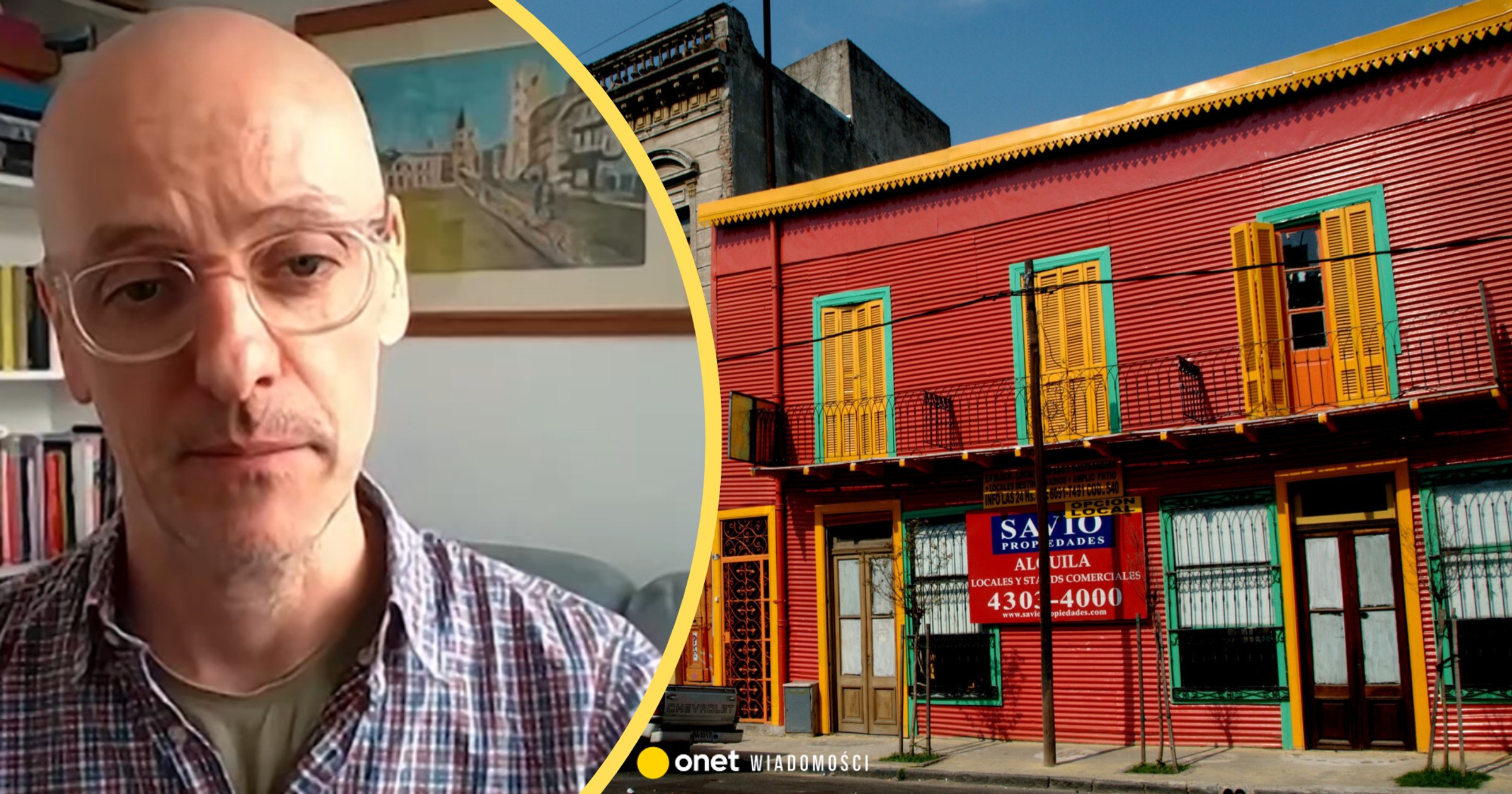
The house in Buenos Aires, where the film crew was now invited, had for years been considered one of the main centers of Opus Dei's ruthless practices of enslaving people and forcing them to work. In fact, the organization received the magnificent property as a gift from the military junta in 1972, which confirmed its warm ties with the brutal leaders of the military forces, thanks to whom tens of thousands of people throughout the country were soon “disappeared” (in fact, these people were first tortured in illegal detention centers, and then, battered and drugged, they were thrown from military planes into the Atlantic Ocean).
12-year-olds in Opus Dei
In the house inhabited by numeraries and students, recruitment went smoothly. The men met every morning and evening to pray together in the large chapel on the ground floor, where Escrivá looked at them from the stained glass window. Nearby, in a house connected to the residence by an underground tunnel, lived sixty women who pursued their vocation as auxiliary numeraries. Some claimed to have joined the organization as early as twelve years old. They came from poor communities in the north of Argentina, Paraguay or Bolivia. They were encouraged to join the organization by numeraries who traveled around the area looking for vocations and promised the girls a better life in Buenos Aires, at a hotel school. Their task was to select suitable candidates and persuade them to cooperate.
One of the girls claimed that she was transported to Buenos Aires on a government plane. Others mentioned that a number from the Ministry of Foreign Affairs assured them that they could cross the border without any problems. The girls were convinced that they were called to join Opus Dei and that if they agreed, their families would be rewarded in heaven, and if they refused, they would be punished in hell. Paradoxically, it was the representatives of this seemingly weakest social group who at one point posed the greatest – almost existential – threat to Opus Dei.
Women lived the life of slaves. Every day at ten to six they were woken up by bells installed on each floor of the block. They were expected to immediately stand up, kneel on the floor and kiss the ground while saying the Latin word: Serviamwhich means “I will serve.” After the morning toilet, they put on their uniforms, hurriedly drank coffee and went to the chapel for prayers. Ten after six they started working in the kitchen or cleaning their own apartments. At seven forty they changed into more formal attire and went to the chapel, where at eight the prayers began as a prelude to mass and communion. At half past ten they had breakfast, then changed their outfits again and headed to work.
The men lived next door, but the two houses were separated by double doors. At this time of day, women were rushing through the tunnel to clean the rooms, bathrooms, and common areas that were at the men's disposal. This is how the time passed until their midday meal. After eating and taking a half-hour break, they cleaned the auditorium and then changed before praying the rosary and having a daily conversation about faith and recruiting opportunities. At three in the afternoon they returned to the chapel to sing together Precessa special collection of daily prayers compiled by the founder. They spent the next hour and a half working in the laundry or ironing room. At five o'clock there was a coffee break, followed by “free time” intended for confession or study. If the superior agreed, visits to candidates for auxiliary numbers were also possible, although they rarely went out alone.
Dinner was eaten at eight, after which the women returned to their rooms to change into their work clothes and serve the meal to the men. Some of them were allowed to have contact with men, but they were subject to strict rules of conduct, especially the ban on raising their eyes. When the meal was over and everything was cleared away, the women met for a fifteen-minute group conversation, then retired to the chapel and then to bed at ten o'clock. They led a strenuous life full of hard work, strictly in line with the ideas of the founder of Opus Dei. Exploitation, abuse of power and deprivation of basic rights were presented to them as “sacrifice” to God. However, the biographical film that was being made on the other side of the city made no mention of their everyday reality.

Cover of the book “Opus Dei. Dirty money, human trafficking and an extreme right-wing church organization”Prószyński i S-ka
They even tried to take their own lives
Women faced enormous pressure to complete their assigned tasks, not least because of the number of shirts they had to iron and the bathrooms they had to clean. They had no free time and little time for themselves. In this situation, it is hardly surprising that some people tried to take their lives. Many of them could count on any manifestation of Christian compassion only from a priest who celebrated mass and heard confessions.
Danilo Eterovic, because this is him, often turned a blind eye to minor violations of the rule of Opus Dei, which other superiors scrupulously enforced. One of the auxiliaries wanted to borrow a book she noticed on a shelf in the men's house. She was denied consent because the text was considered inappropriate for a person of her status. So the woman took the book without permission, and when it came time to put it back, she panicked. She confessed her sin to Father Danilo, who offered to do it for her – a show of mercy uncharacteristic of this household.
Shortly thereafter, the priest was released from all duties towards members of Opus Dei, and after some time he was released the body was found nearby by the railway tracks along with a letter in which the deceased asked the police to notify the organization about his suicide. The police went to the Opus Dei headquarters, but the officers were informed that no father of Danilo had ever lived there and no one had ever heard of him. The life of the auxiliary numeraria – and life in Opus Dei in general – remained a mystery to the actors and members of the crew nearby working on the biographical film about Escriva. It would be another ten years before the truth finally came to light.
After the Argentinian stage of filming “When the Demons Awake” ended, the crew returned to Europe. Post-production took over a year, but the day of the international premiere finally arrived. It ended up being a complete failure.
Amidst the gloomy pomp, it is difficult to see even a glimmer of emotional or spiritual life in this film. There is only pompous posturing
– said the New York Times reviewer, who assessed the film as “disastrous” and “flattering”.
“When the Demons Awake” is a picture detached from physicality, saturated with empty words and identifying devotion with faith.
-the commentator from “Village Voice” did not spare criticism.
Joffé's incomprehensible admiration for maudlin Catholic mysticism makes watching “When the Demons Awake” a greater torment than reciting a hundred Hail Marys.
Opus Dei did everything it could to save Escrivá's reputation and present him to the world as an embodiment of holiness. Joaquín Navarro-Valls, numerary and long-time spokesman of Pope John Paul II, solemnly declared that Villa Tevere receives thanks almost every day – from divorcees who were inspired by the film to rebuild their marriage, from parents and children who reconciled after many years, and finally from various other people who found their lost faith. The financial results of the production did not confirm this. Almost the entire $40 million budget was wasted. The film grossed just $4 million worldwide. In the Vatican, Opus Dei has become the subject of ridicule and jokes. One of the jokes was: “The demons may awaken, but there will definitely be no Oscars.”