Why does China remain a “cautious actor” in the Iran conflict? The explanations of the expert Andreea Brînza: “He learned from the failures of the USA”

Why China remains a cautious actor in the conflict in Iran, preferring economic and diplomatic influence instead of military intervention, explains Andreea Brînza, analyst with expertise in geopolitical dynamics in the Asia-Pacific.
China prefers not to intervene directly in the conflict in Iran. PHOTO: Profimedia
Security analysts say the duration and fate of the conflict in Iran will also depend on the help Iran receives from China. The Chinese government avoids getting directly involved in the conflict, but already has the experience of providing indirect aid to countries in indirect conflict, as it has been doing with Russia for four years.
Despite the fact that the Chinese economy was expected to suffer a shock from the Iran war, international analysts believe that China is better prepared than other major economies to deal with the crisis situation. Due to the diversification of energy sources and investments in renewable energy, the impact on economic growth is estimated to be less than in the case of the US. China was among the few countries whose oil tankers are allowed to transit the Strait of Hormuz.
Chinese shares are fast becoming a relative safe haven as the month-long war in the Middle East undermines global risk sentiment, with investment banks growing bullish on a market that held up better than its regional rivals in March, Reuters reported today.
At the same time, the Chinese economy is showing signs of resilience: industrial activity returned to growth in March 2026, even as there are fears that a prolonged conflict could affect supply chains and global trade.
Diplomatically, China continues to promote negotiations and oppose regime change in Iran, insisting on respecting the sovereignty of states and avoiding escalation.
“Adevărul” spoke with Andreea Brînza, an expert in international relations recognized for her expertise in China's foreign policy and geopolitical dynamics in the Asia-Pacific, about China's relationship with Iran and its potential direct involvement in the war.
Andreea Brînza is vice-president of The Romanian Institute for the Study of the Asia-Pacific (RISAP), a think tank dedicated to the analysis of relations between Europe and the Asia-Pacific region.
His work focuses on the analysis of China's global influence, initiatives such as the Belt and Road, and relations between the European Union and China. Throughout his career, he has published numerous articles and analyzes in the international press and participated in conferences and debates on security and foreign policy issues.
“China's interests do not align with this kind of external military intervention”
“The Truth”: What was China's relationship with Iran before the war? Has China helped Iran since the start of the war?
Andreea Brînza: China and Iran were primarily economic partners and allies. As China imported from Iran somewhere between 10-15% of all its oil imports, China was Iran's main trading partner, while Iran was only a major economic partner. But while both China and Iran were allies opposing the US-promoted global order, they had not signed any mutual defense agreement. Moreover, apart from North Korea, China does not have defense agreements with other states that could be considered allies, as China's interests do not align with this type of external military interventions.
At the moment, although there are some sources that point to a possible Chinese arms sale to Iran, it is not 100% certain information. But China certainly helped Iran indirectly by continuing to buy its oil.
Under what conditions would China become an actor directly involved in the conflict? Do you think we can talk about military aid to Iran?
China will not get directly involved militarily in the Iran war, as such involvement would not bring any benefit to it. China has never been driven by the “guardian of the world” sentiment, as was the case with the US, and therefore guides its foreign policy only according to its geopolitical and political interests. In addition, China is said to have learned from the military failures of other powers (US in Vietnam, USSR in Afghanistan, etc.) and understood that a military involvement in a conflict that does not directly target it can only weaken it in the long run.
The oil crisis could accelerate the transition to electric cars, to the advantage of Chinese manufacturers
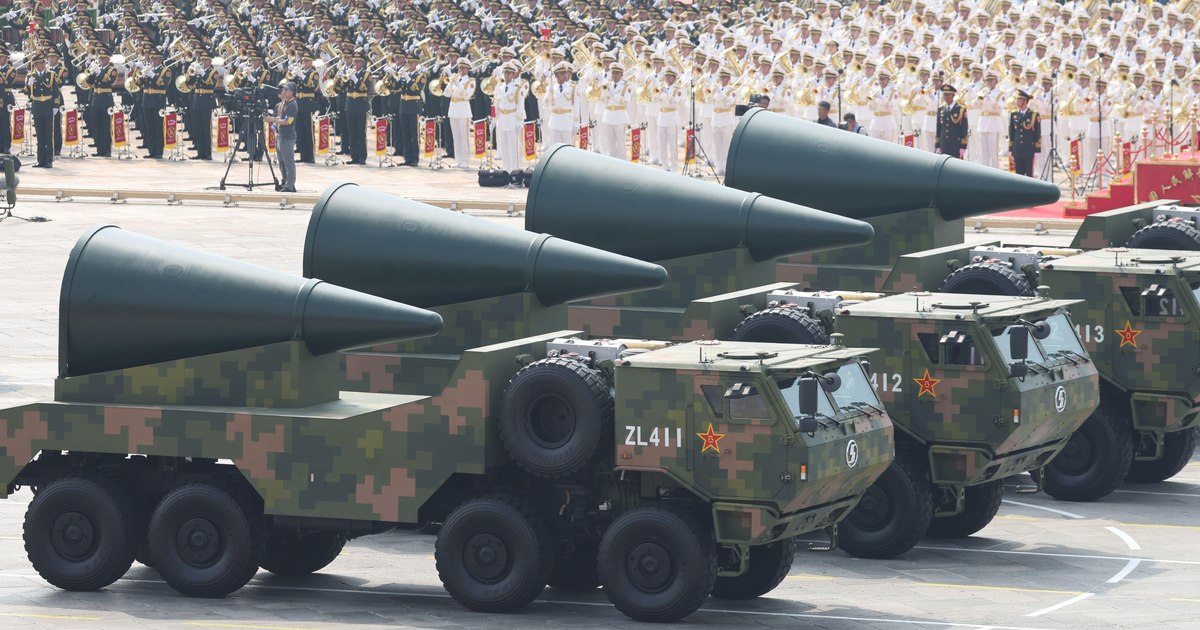
Looking at military aid, having the experience of helping Russia, when it comes to such a high-profile conflict, China prefers not to get involved directly, and it is possible to sell weapons and dual-use technology to Iran through third parties.
What does the US and Israel attack on Iran mean for China?
Although, theoretically, China should not be geopolitically affected by this conflict, but only possibly economically, if we look from a panoramic perspective, we will see that Iran is another geopolitical partner of China, after Venezuela, which will be weakened enough that China can no longer count on it to strengthen its global power. Therefore, one by one, the number of China's allies is reduced, which in the long run may create a great power disadvantage for Beijing in the global arena.
On the other hand, this military conflict affects the balance of power in the East Asian area, the US reducing its military presence in the region, by relocating weapons and aircraft carriers to the Middle East area. The most famous case is that of the American THAAD defense shield, which was in South Korea to protect it from North Korea and which China feared: there are reports that some launchers have been moved to the Middle East.
“This war will only further accelerate China's preparations for a future conflict”
How do you interpret China's positioning in the Strait of Hormuz crisis? Could China benefit economically from a potential blockade in Hormuz?
Blocking the Strait of Hormuz is also to China's disadvantage, considering that it was the main consumer of Iranian oil, but especially since 40% of the oil and gas it needs pass through this strait. Precisely because of this, China's ambiguity, wrapped in the veil of neutrality, has allowed it to continue to have good relations with all the riparian states of the Persian Gulf, and therefore it is the only state that was allowed access through the strait after the imposition of the Iranian barricade on the strait.
How could this crisis accelerate the strategic rivalry between China and the US?
US military hyperactivity at the global level could accentuate China's security fears regarding the American presence near its territory (South Korea, Japan, Philippines), which could accelerate the arms race and generate even more economic and military tensions at the regional level, especially in the South China Sea, the Taiwan Strait or the East China Sea. Conversely, the sudden shift of US attention back to the Middle East may raise fears among its East Asian allies and reduce deterrence against China. These hotspots in the Asia-Pacific region could be tomorrow's future global conflicts. Therefore, this war will only further accelerate China's preparations for a future regional or global conflict.
What are Beijing's “red lines” in the Middle East?
China's red lines are strictly related to its internal politics and its territorial claims (from Xinjiang and Tibet to Taiwan or the South China Sea). Therefore, if Chinese citizens or Chinese embassies in the region are not targeted, China would have no reason to take a hard line on a particular event or even intervene militarily.
International experts analyze the turning point of the world order in Beijing. China up to date
Can Beijing play a real mediating role?
Beijing could play a mediating role, as it proved it could when it mediated the Iran-Saudi Arabia conflict. The problem is that neither the US nor Israel will ever accept such Chinese involvement.
“China's Involvement in Iran War Unlikely”
What role does Russia play in the China–Iran–US equation and how do the interests of these actors align?
I'm not an expert on Russia and I don't want to issue opinions that are not fully informed. All I can say is that at the moment, China's allies, led by Iran and Russia, are heavily affected by the wars they are involved in, while other allies, such as Venezuela or Cuba, are too weak.
How would China's involvement affect the global security architecture?
If you are referring to China's involvement in the Iran war, in my view, this is unlikely, but the effects of this conflict will certainly reverberate on the global order and China's ability to alter that global order.
And if we were to think regionally, the perception that the US is no longer prioritizing the Asia-Pacific region will only increase the likelihood of a Chinese military intervention in Taiwan and even demoralize or destabilize US allies such as Japan and South Korea, which suffered economic repercussions when they decided to host various US military defense equipment (such as THAAD), only to eventually be dispossessed of them.