The forgotten stations of the former rack railway. What was chosen for the line that connected the historical regions of Transylvania and Banat

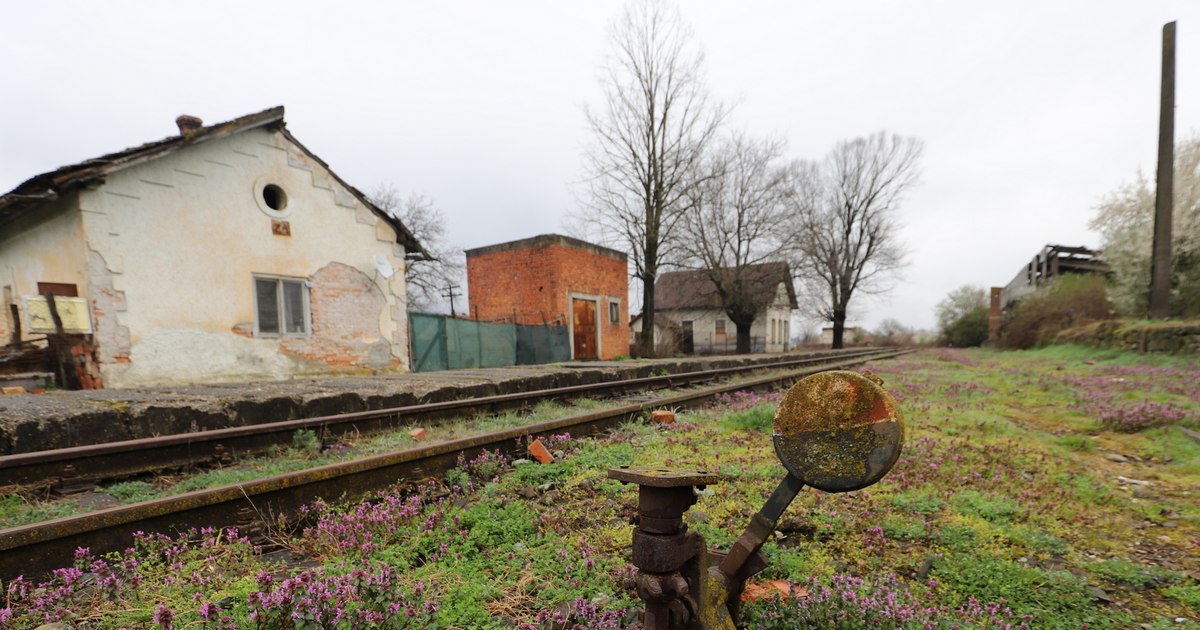
Built in the early years of the 20th century, the Hațeg – Caransebeș railway had an important role in the region of southwest Romania in the past. It was gradually decommissioned until 2012 and its stations and stops were left to fall into disrepair.
Hațeg – Caransebeş railway. Photo: Daniel Guță. TRUTH
Almost 15 years after the closure of the last section of the Hațeg – Caransebeş railway, with a length of 80 kilometers, most of its more than 20 stations and bus stops have been decommissioned.
The carriageway remained for about half of the route, at its ends, between Caransebeș and Bouțari (40 kilometers) and Subcetate and Hațeg (five kilometers), along with the steel railway bridges and other works of art appreciated in the past. Instead, many of the railway buildings were abandoned, and the passage of time and lack of care decided their fate.
The deserted stations on the Hațeg – Caransebeş railway
Hațeg city station was built in the early years of the 20th century and was inaugurated in 1908, with the opening of the Subcetate (Hațeg) – Caransebeș route. It was used until the 2000s, when the last trains stopped running on the Subcetate – Hațeg – Sarmizegetusa segment, about 20 kilometers long.
Some locals asked the authorities to preserve this mini-section, to be used for tourist purposes, as a landmark of the Hateg Country, rich in historical and natural monuments. After the closure of railway traffic, the Hațeg station reached an increasingly precarious state.
The 120-year-old building has not been restored, and its abandonment has affected it. In front of the station, the six railway lines were covered by vegetation, and on the route to Subcetate, in the past years, thieves cut the lines in several places and stole the metal installations, to sell them as “scrap”.
Located at the end of the old line and approximately four kilometers from Hațeg, the Subcetate Station, former railway junction between the Hațeg – Caransebeș and Simeria – Petroșani lines, has remained functional. The station is located on the “coal railway” Simeria – Petroșani, which connects the highways of the Transylvania region with Valea Jiului and Oltenia. Its old depot, along with its other buildings, have fallen into disrepair, however, and the number of passengers using the Subcity station has dropped dramatically.
On the decommissioned route in the 1990s between Hațeg and Sarmizegetusa, from Hunedoara, only the embankment of the former railway was preserved, with the carriageway removed. The buildings of the bus stops remained abandoned and fell into ruin. Beyond Sarmizegetusa, the route of about 20 kilometers, which goes up through the Iron Gates of Transylvania and descends in Bouțari commune in Caraş-Severin, was decommissioned at the end of the 70s.
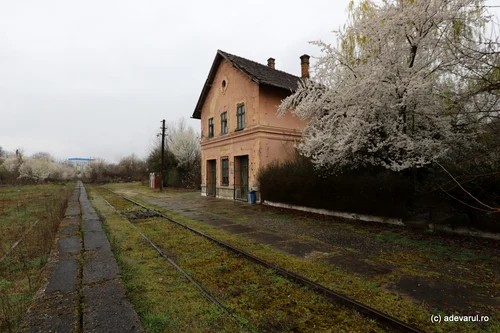
Image 1/16:
Hațeg Caransebeș railway Photo Daniel Guță THE TRUTH (6) JPG
The old railway route, which passes through the forest, above the National Road 68 Hațeg – Caransebeș, was laid out as a Via Transilvanica path and can be crossed on foot or by bicycle.
Kilometers of the former railway have given way to andesite monuments, adorned with sculptures, on the hiking trail that crosses the Carpathian Mountains. Travelers can thus see, once again, the places through which the steam locomotives (steam locomotives) used to pass, equipped with a row of toothed wheels, which connected them to the rack installation, in order to be able to traverse the slopes of the pass between Transylvania and Banat. The remains of the Portile de Fier halt of Transylvania remind of the railway, but also of the Dacian settlement of Tapae, identified here by archaeologists, the site of the great confrontations between the Dacians and the Romans.
The only cog railway in Romania connected two important regions. How the spectacular railway route disappeared
Caransebeș, railway junction
Although the last 40 kilometers of the Hațeg – Caransebeș railway (video) were closed to traffic in 2012, and the railway still remained on the route, most of the railway stops reached the verge of ruin. In Bouțari, the train station has been used in recent years as a shelter for poor families. At Voislova, the vintage train station was closed and abandoned, and its ceilings collapsed.
On the rest of the route, up to Caransebeș, the railway station buildings remained unused, and the railway was preserved and maintained in some areas, such as Oțelu Roşu, where it could be reused.
In Caransebeș, the other end of the railway that connected Banatul Montan with Hațeg, the CFR station is on the route of other important railway routes, both electrified: Timișoara – Orșova, from the 19th century and Reșita – Caransebeș (since 1939).
Built a century and a half ago, the Caransebeș – Lugoj – Timișoara – Arad railway, 162 kilometers long, connects the main cities of the historical region of the Romanian Banat. Its first section, Timișoara – Arad, was inaugurated in 1871, and the Caransebeș – Timișoara line, in 1876.
In 2022, the highway entered the construction site, through a project estimated at almost nine billion lei, financed with European funds, through the National Recovery and Resilience Plan. After the completion of work on its four segments, passenger trains will be able to run at speeds of up to 160 km/h, and freight trains at up to 120 km/h.
Used for over a century
The Hațeg – Caransebeș railway was planned since the middle of the 19th century, together with the first railways built on the current territory of Romania, in the Banat region. The construction of the railway line was motivated by the rich coal resources in the Jiu Valley, exploited since the end of the 19th century by a Hungarian company (Salgótarján), which were to be more easily exploited in the Banat and the Danube Valley.
Western highways enter the age of speed. Over 300 kilometers of railways built for high-speed trains
The residents of Caransebeș had, in turn, an important role in the construction of the railway, pressuring the authorities to start the investment. Construction of the section began in the early years of the 20th century.
The Hațeg – Caransebeș railway, which crossed the Iron Gates of Transylvania, was to connect the Hațeg County and the Jiu Valley coal basin with the metallurgical center of Reșita and the first coal railway from Banat, Oravița – Bazias, built in the middle of the 19th century. The new railway line was intended to make the natural wealth of Caraș-Severin and Hunedoara counties, the iron mines of Oțelu Roșu, the marble quarries of Bucova and Ruschița and the vast forests of the region accessible to the world market, thus considerably increasing their economic value, the press reported at the time.
The railway was a unique route, as the trains crossed the “Iron Gates of Transylvania” through a nine-kilometer sector equipped with a rack (complex installation that helped the locomotives go up and down the slopes). At the end of 1908, the almost 80 kilometers of the railway section were put into use, three years after the start of construction.
Over time, floods in the valleys of Bistra (Caraș-Severin) and Streiului (Hunedoara) often caused destruction along the route. The railway on which the steam locomotives ran was rebuilt every time and worked until 1978, when the cogwheel section in the area of Portilor de Fier, between Bouțari and Sarmizegetusa, was decommissioned. The special steam locomotives were then withdrawn to the depots in Petroșani and Subcetate, and over time some disappeared. In 1995, the Hațeg – Sarmizegetusa section was closed, and in 2000, the Subcetate – Haţeg segment. In 2012, its last segment, between Bouțari and Caransebeș, was also closed.