A ship of a French company has crossed the Strait of Hormuz, the first time since the blockade of the maritime corridor by Iran

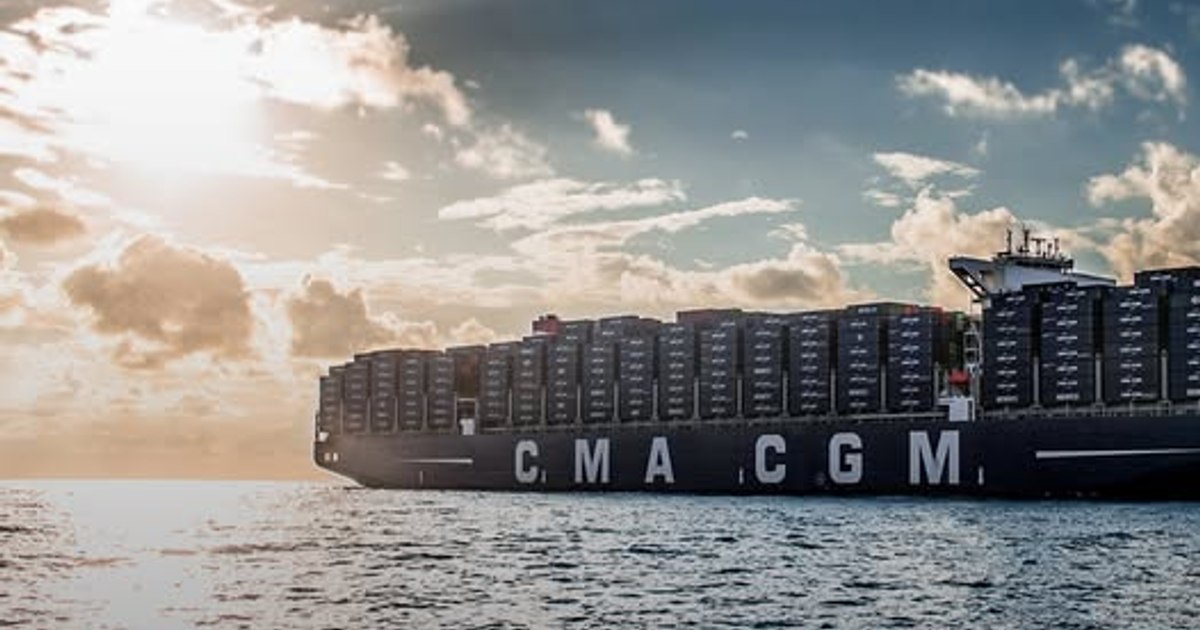
A container ship operated by the French company CMA CGM crossed the Strait of Hormuz on Thursday, displaying in its navigation system the mention “French owner”, according to maritime monitoring data published by the MarineTraffic platform.
The Maltese-flagged vessel Kribi crossed from west to east during the afternoon and was off Muscat, the capital of Oman, on Friday morning. The message “owner France” continued to be transmitted instead of its usual destination, according to French publication Le Parisien.
Ship of the French company CMA CGM. CMA CGM FB archive PHOTO
The passage of this ship through the Strait of Hormuz appears to be the first known transit of a ship belonging to a large European carrier through this strategic route, heavily affected by the conflict in the Middle East, which has drastically reduced commercial traffic.
Strait of Hormuz, controlled by Iran
According to navigation data, the container ship passed north of Larak Island, near the Iranian coast, following a route deemed “approved” by the Revolutionary Guards. Iran has instituted a registration system for ships authorized to transit the area, a system that involves the payment of significant fees. Larak Island was nicknamed “tthe passage axis of Tehran” by the analysis company Lloyd's List Intelligence.
Recent maritime analysis shows that the few merchant ships that have crossed the strait in recent weeks have followed the same route close to Larak.
In early March, several ships began displaying a “link” to China in their signals, a strategy experts interpreted as an attempt to reduce the risk of being targeted by Iran. Beijing confirmed on Tuesday that three Chinese ships had recently passed through Hormuz and relayed “gratitude” the parties involved for cooperation.
Under normal conditions, approximately 20% of the world's crude oil and liquefied natural gas traffic passes through the Strait of Hormuz, critical to global trade.
The situation deteriorated rapidly after February 28, when the United States and Israel launched attacks on Iran. Iran responded with strikes in the region and severely restricted access to Hormuz, turning the area into a flashpoint for regional tensions.