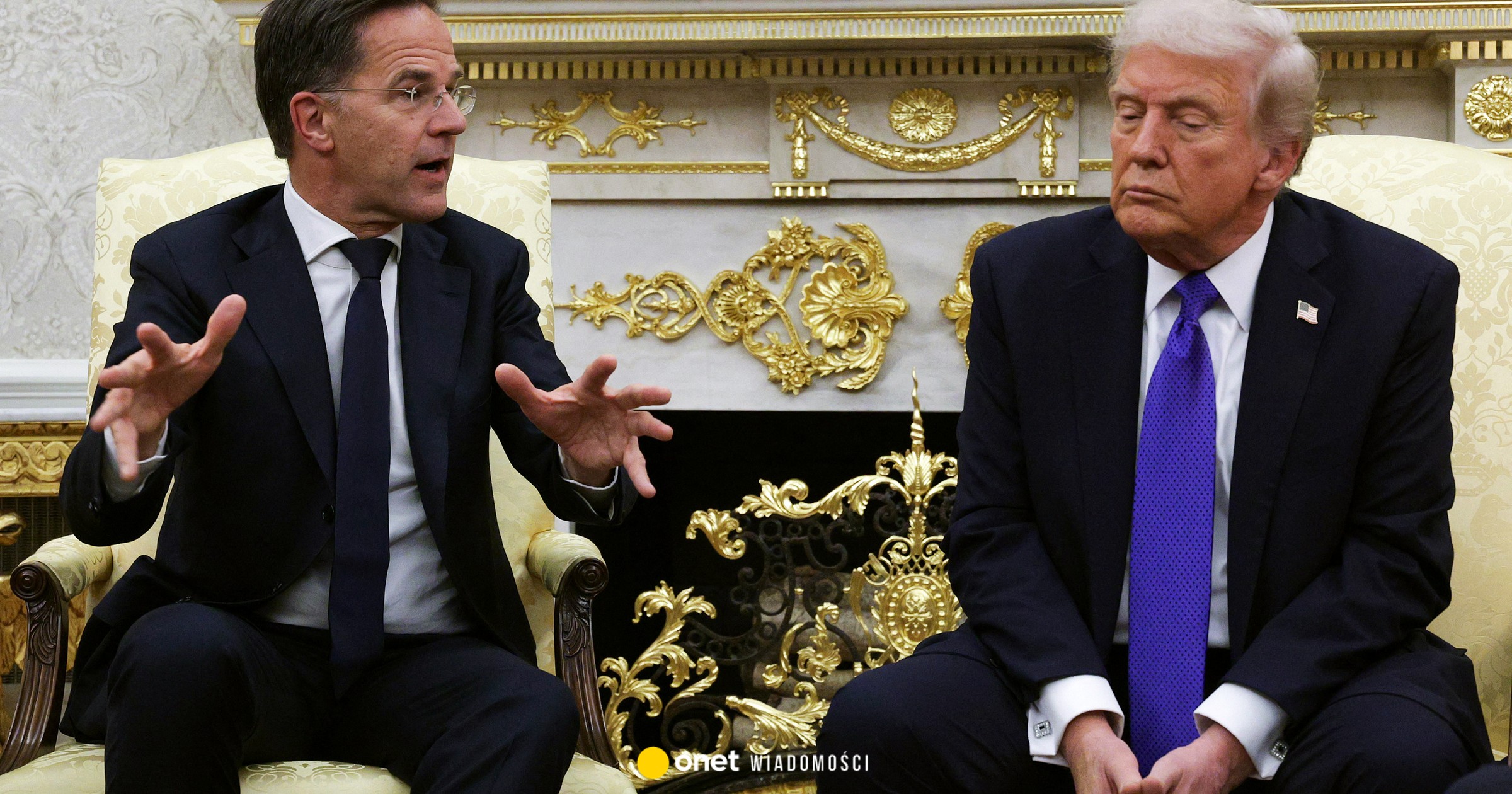
Despite all of President Donald Trump's threats and anger over the refusal of allies to support the US military campaign, his rhetoric has yet to be accompanied by any signs of concrete action.
NATO diplomats, congressional advisers and defense officials say the administration has failed to carry out talks necessary to leave an alliance that has existed for almost eight decades.
The United States has not initiated any debate within the alliance or issued specific guidance on Washington's role, according to two NATO diplomats. The Trump administration has not informed Capitol Hill of its planned withdrawal, according to a senior Senate aide. There is no talk in the Pentagon about the US withdrawing from the alliance, a defense ministry official adds.
“There is no evidence that this is true,” the adviser says.
This could be a smart strategy for Trump.
The road to leaving NATO would be paved legal obstacles and would likely face opposition hawks in Congress who say the president must abide by a 2023 bill requiring a two-thirds vote in the Senate before the United States leaves the alliance.
— Trump's violent statements rarely translate into a structural break with NATO, says one NATO diplomat. — Let us not forget that the alliance still serves the basic strategic interests of the United States.
Some allies who have watched Trump exploit American leverage by considering annexing Greenland and demanding Europeans buy American weapons wonder whether his comments conceal an attempt to get help to end Iran's blockade of the Strait of Hormuz.
Pressure on Europe
The president's rhetoric was aimed at “forcing visible actions from NATO allies”including assistance from France and the UK on the strait issue, according to a second NATO diplomat.
Trump's threat looks like “another bluff,” the first official says, and is part of a pattern of increasing U.S. pressure on Europe during crises.
The article continues below the video
But Trump's latest rhetoric regarding U.S. participation in NATO has been extremeeven by his standards. “I would say yes [to] it goes beyond reconsideration,” he said in an interview published Wednesday in The Telegraph. “NATO has never convinced me. I always knew it was a paper tiger.”
Just hours after the interview was published, Finnish President Alexander Stubb, one of Trump's key European supporters, said he called the US president and had a “constructive conversation.”
— President Trump has made his views clear disappointment with NATO and other allies White House spokeswoman Anna Kelly said in a statement. — And as the president emphasized: “The United States will not forget this.”
NATO and the Pentagon did not respond to a request for comment.
“A Reckless War of Choice”
Trump's latest comments caused a stir quick responseincluding a bipartisan statement from Republican Senators Mitch McConnell and Democrat Chris Coons, who firmly stated that the United States will “remain” in NATO and called the alliance the most successful defense pact “in history.”
Other top politicians have pointed to the restrictions they have put in place, which require a two-thirds vote in the Senate or a separate bill from Congress to withdraw the United States from NATO. The co-author of this bill in the Senate was the current Secretary of State in the Trump administration, Marco Rubio.
“I can promise you one thing: The Senate will not vote to leave NATO and abandon our allies just because Trump is unhappy that they did not agree to his reckless war of choice,” Senate Minority Leader Chuck Schumer wrote on X, giving Rubio credit for the bill.
US President Donald Trump, April 1, 2026ALEX BRANDON / POOL / AFP
Even former Trump administration officials were surprised that the White House tried to force NATO countries to cooperate in the US-Israeli war after demanding that they greater involvement in the defense of their own continent.
— After a year of telling Europeans that they “need to do more in Europe,” now would be the worst time to step in and say, “Actually, we're just going to back out of this whole project,” notes a former Trump administration official. — This would be a huge obstacle to achieving any of these goals.
Even some Republicans think it would be dangerous political game. — If he really intends to withdraw us from NATO, I think his presidency will never recover from that, admits Republican congressman Don Bacon, a hard line on defense issues who co-authored the bill blocking the withdrawal from NATO. — Republicans also won't be able to field a winning team at the national level for several more terms.
An uncertain fight
Trump always could ignore the law and withdraw from NATO without congressional approval, as he did during his first term. In 2020, the president withdrew from the Open Skies Treaty — which allowed the United States and 34 other countries to conduct unarmed military surveillance overflight missions — without notifying Capitol Hill.
But even if Congress takes no action, Trump could find himself at a disadvantage in court. The law expressly prohibits unilateral withdrawal from the North Atlantic Treaty, NATO's founding document, which would leave the U.S. administration in a precarious position in appeals if Democratic-led states or U.S. citizens with economic interests in Europe decide to sue.
“If President Trump does this, he will face a legal battle, and it's not at all clear that he will win,” said Scott Anderson, senior editor at Lawfare, a nonprofit that covers law and national security issues.
European officials fear Trump may try a different approach: stay in the alliance but deprive NATO of high-level attention and military resources. They worry that the president's rhetoric has already made NATO irrelevant.
— With Trump in office NATO is useless says a German official. — We may have NATO, but we no longer have an alliance. We are waiting for the right moment, but the damage is enormous.
I’m Ashley Davis as an editor, I’m committed to upholding the highest standards of integrity and accuracy in every piece we publish. My work is driven by curiosity, a passion for truth, and a belief that journalism plays a crucial role in shaping public discourse. I strive to tell stories that not only inform but also inspire action and conversation.