Testimony of Ukrainian sailors recruited for Russia's shadow fleet: They called us with British numbers

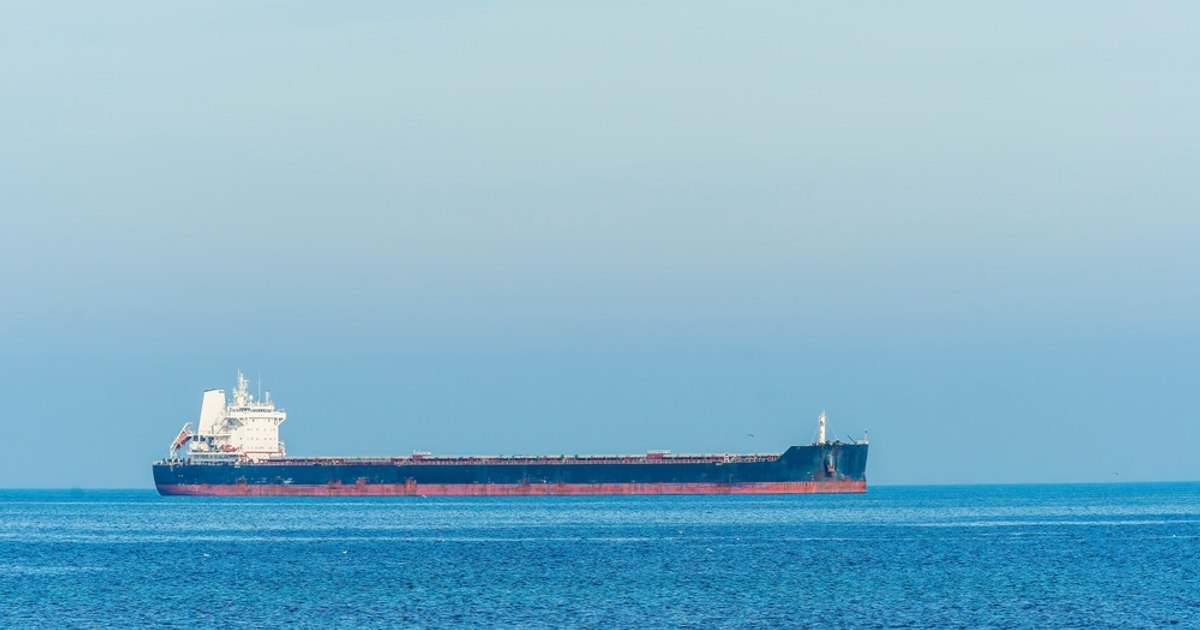
The ships are old, with rust-riddled hulls and owners hidden behind shell companies. But these tankers, which form Russia's so-called “ghost fleet”, are at the heart of a vast network of transportation of sanctioned oil around the world, a Kyiv Independent investigation has found.
Photo shutterstock
Despite their shabby appearance, the fleet is based on the latest Western technology. A Kyiv Independent investigation found that tools such as Internet via Starlink satellites help these ships stay connected and operational.
To understand how the system works, the Ukrainian publication spoke to Ukrainian sailors who claim they were unknowingly recruited into this fleet – a key source of funding for the Kremlin in the context of the full-scale invasion of Ukraine.
“We didn't know we were recruited (by Russia's ghost fleet), because we didn't know who recruited us either,” revealed a Ukrainian crew member. “We arranged everything over the phone, they sent us the documents, we signed them, sent them back, they gave us the tickets.”
“They called on WhatsApp using British phone numbers,” he said.
The sailors, who requested anonymity amid ongoing investigations, described a clandestine but extremely well-organized system. Job offers are published on WhatsApp, Telegram or Instagram groups, sometimes accompanied only by a brief job description and a departure date. Other times, recruitment is more informal.
“Let's go and work together,” said one crew member.
“They called me exactly as you call me, we talked for a while and they offered me a position, they said: “look at the ship”, said another.
Formal interviews are rare. In the case of many of them, employers are content to ensure that seafarers have the necessary certifications, while on the other hand, the promise of a stable income is sufficient.
Western technology on board
According to Maritime News, Russia's ghost fleet numbered 3,240 ships in October, carrying about 337 million barrels of oil per month. Although hundreds of vessels have been sanctioned by the European Union, Britain and the United States, the network continues to operate.
This is based on the use of Western technology for communication between tanker crew and owners. Ukrainian sailors told the Kyiv Independent that satellite phones and Starlink terminals are frequently used on board – a claim separately confirmed by two other sources who worked on these tankers.
“It can be bought through an intermediary company,” explained a crew member. “As far as I know, it's difficult to buy Starlink in Ukraine now. In other parts of the world, you can just order it and get it in the mail.”
“It's not a weapon, anyone can buy it,” he added.
The crew's access to Starlink is often limited, while the captain can use it without restriction, which allows him to communicate directly with the ship's owners and intermediaries during the voyage.
The revelations, reported for the first time, come in the context of wider concerns about the use of Starlink, especially for military purposes. “If Starlink is used to avoid sanctions or circumvent maritime safety rules, this is unacceptable,” commented Vladyslav Vlasiuk, the Ukrainian president's representative on sanctions policy.
“We expect SpaceX to carefully review this matter and take steps to prevent the use of Starlink by the ghost fleets of any country, including Russia, Venezuela or Iran,” he added.
SpaceX did not respond to a request for comment by the time of publication.
Payments in cryptocurrencies and cash
The financial mechanism that supports the fleet is equally opaque. Wages are often paid in cash or cryptocurrency, adding another layer of anonymity to operations.
Richard Sanders, an independent advisor to intelligence and law enforcement agencies, analyzed payments to dozens of crew members and found that most were made in Tether (USDT).
“I know they use USDT to pay the crew,” Sanders said, noting that monthly wages on the lower end range from $2,000 to $3,000.
According to his findings, funds often originate from Bitcoin mining, are converted into stablecoins, and then distributed to digital wallets controlled by crew members. He also identified overlaps between the ghost fleets of Russia, Venezuela and Iran, which would share a common financial infrastructure.
Two sailors confirmed that salary expenses for a ship with a crew of about 30 can reach around $120,000 a month, nearly $1.5 million annually.
Some have described shipboard work as “easy money,” largely because the ships frequently avoid port inspections. Instead, tankers transfer oil from ship to ship at sea, sometimes with their tracking systems turned off, and can remain at sea for months waiting for buyers.
The case of the oil tanker Bella-1
The risks became apparent in the case of the oil tanker Bella-1, which attracted international attention.
A few days before the US military operation in Venezuela, the ship appeared in the Caribbean, where Washington imposed a blockade on ships illegally exporting oil.
Sanctioned by the US in 2024 on charges of illegally transporting cargo for a Hezbollah-owned company, the ship ignored orders from the US Coast Guard and fled into the Atlantic, triggering a two-week manhunt.
During this period, the tanker tried to avoid capture by changing its name to Marinera and its flag to a Russian one. US authorities eventually obtained a seizure warrant, citing the vessel's involvement in transporting Iranian oil linked to terrorist groups.
Twenty-eight crew members were arrested; 26 were later released and the remaining two were charged.
17 of those on board were Ukrainian citizens, who are currently, according to some sources, being investigated by the Security Service of Ukraine.
Sailors interviewed insisted they had no knowledge of the ship's role in the ghost fleet.
“Maybe if you're the captain of the ship, you might know. But if you're an ordinary crew member, what can you know?” said one of them.
Contracts usually mention regular transport operations and final destinations are vague or subject to change. According to the crews, only three people on board – the captain, the chief engineer and a senior officer – know all the details of the voyage,
“We all live in Europe and it's expensive. We have to help at home, help our parents. We have to support the Armed Forces of Ukraine,” explained the sailor.
“I spent eight months on this ship and for six months I had no reason not to work. It was a regular job, nothing different from other companies I've worked for,” he added.
Suspicions arose only in the last part of the journey.
“When they told us we were going to Venezuela, we said, 'We don't want to go.' They said, 'Go to Curaçao, where the whole crew will be changed,'” revealed one sailor.
“Then, after there were rumors that the ship would change its registration to a Russian one, I refused again. Later the pursuit began, which ended with the arrest of the ship.”
With the Coast Guard on their trail, the situation on board became difficult.
“I refused to perform my duties from the first day of the pursuit,” said another sailor.
“We burned all the documents and deleted the correspondence. What happened on the ship was terrible, because they said they would destroy all the contracts and the rest, they wanted to escape,” revealed a crew member.
The ship had its own security team. “They had their own security department on the ship, their own 'reshaly' (troubleshooters),” said one sailor. “At first I was surprised, but then I realized it's not my job to ask questions.”
According to another witness, these security guards were also Ukrainians.
“When the chase started, they took over and it was their fault,” he said. “Ironically, the Americans let them go, but the Security Service of Ukraine is looking for them now, as far as I know.”
“From what I understand, they had a plan – if the ship became Russian, the Americans would let us go,” another crew member said. “It was naive of them to believe that.”