The message sent by the governor of the National Bank of Romania, Mugur Isărescu, at The Economist event in Romania: “Sustainable growth cannot be achieved on the basis of economic imbalances”

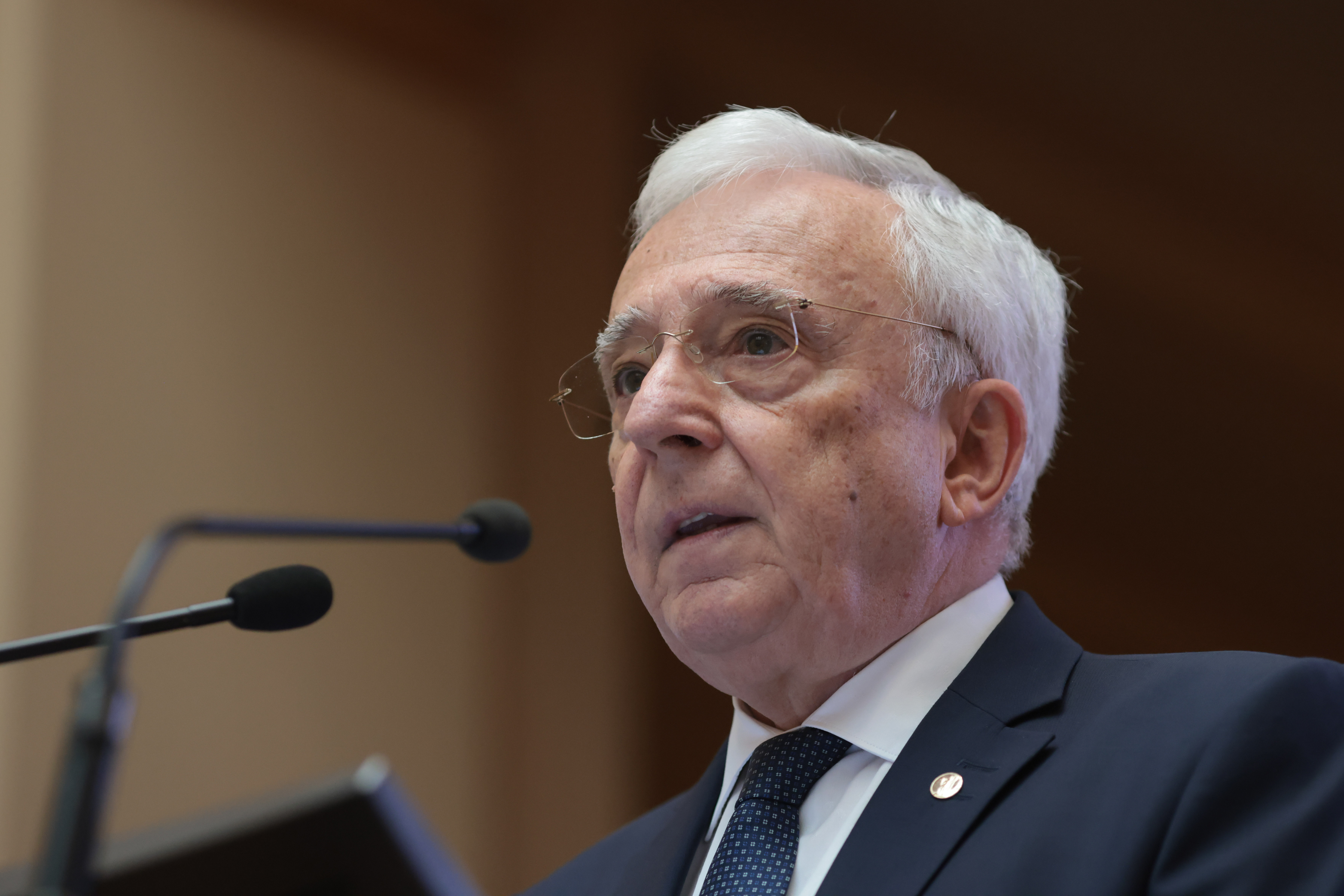
The Governor of the National Bank of Romania (BNR), Mugur Isărescu, stated, on Monday, at The Economist conference, that the junction between monetary and fiscal policies requires a delicate balancing act in order to preserve fiscal discipline, to support sustainable wages and increase productivity. He added that we are in challenging times for all economies and for all sectors, which are marked by an increased level of global uncertainty, writes News.ro.
- The Economist conference takes place between March 30 and April 1 in Bucharest and brings together government officials, NATO and EU representatives, former heads of government, diplomats and business leaders. Special guest is Daron Acemoglu, award-winning economist for his contributions to understanding how institutions influence economic development.
- HotNews is the media partner of the event.
“There is a huge shock in terms of geopolitical conflicts, trade tariffs and all of these affect monetary policies. At the same time, this juncture between monetary and fiscal policies requires a delicate balancing act to preserve fiscal discipline, to support sustainable wages and productivity growth and also to encourage investment while preserving price stability and financial stability. Indeed, we are in challenging times for all economies and all sectors, these being marked by an increased level of global uncertainty and, from a logical perspective, the political tensions and military conflicts in our area, in the neighborhood, the fragmentation of diplomatic relations, as well as the reconfiguration of strategic alliances, all of these are redefining the environment in which companies and banks operate”, stated Mugur Isărescu.
He emphasized that ensuring economic stability is an active objective.
“Sustainable growth cannot be achieved on the basis of economic imbalances. Stability is not achieved by itself, but is a fundamental pillar in which investments, innovation and social progress can grow and develop”, the BNR governor also declared.
He stated that, despite the overlapping shocks of recent years, monetary policies were adequate and inflation moderate.
“The post-COVID economic restart also led to inflationary shocks, followed by successive crises. Central banks and emerging economies are experiencing the major cycles of change in recent decades. In addition, the war in Ukraine has put additional pressure on economic stability. Despite these overlapping shocks, monetary policies have been broadly appropriate and inflation has been moderate. However, as a result of volatility and shocks geopolitical issues remain to be resolved. And there is still a negative social impact, at least partially. The economies of South-Eastern Europe are strongly integrated into the European Union, becoming more convergent.
The first edition of the Economist Romania Government Roundtable 2026 started, on Monday, in Bucharest, with an ambitious program that brings together political, institutional and business leaders from Romania, Europe and the United States, to discuss the most important topics for the stability, security and development of the South-Eastern Europe region, in the current geopolitical context at the international level.