An “indispensable asset” of the US forces was destroyed by the Iranians in Saudi Arabia. Why analysts are worried

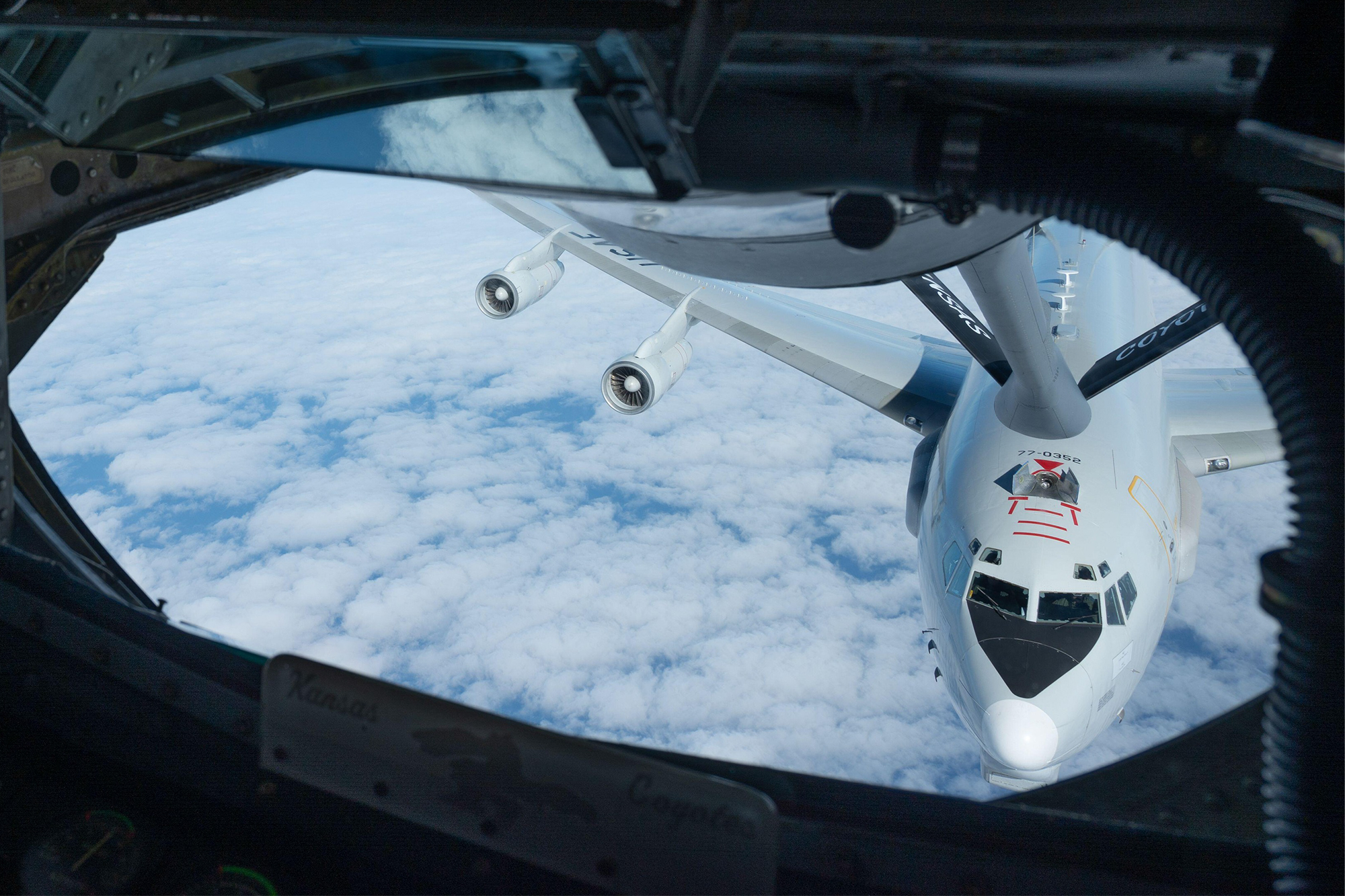
The destruction of a U.S. Air Force E-3 Sentry plane following an Iranian attack on Saudi Arabia's Prince Sultan Air Base may affect the United States' ability to remotely detect Iranian threats, analysts polled by CNN say.
Images of the wrecked aircraft, broadcast by Russian state media and geotagged by CNN, show the severed tail and the rotating radar dome — a key component of the Airborne Warning and Control System (AWACS) — crumpled to the ground at the Saudi Arabian air base.
The loss of the AWACS is “a serious blow to (US) surveillance capabilities,” said CNN military analyst Cedric Leighton, a former US Air Force colonel who flew the type of aircraft.
“It has the potential to affect the (U.S.) ability to control combat aircraft and direct them to targets or protect them from engagements with hostile aircraft and missile systems,” he explained.
🚨 #BREAKINGNEWS Iran had the exact location of USAF E-3 Sentry and destroyed it. Almost billion dollar aircraft that US only has 16 total. The strike showed the US can't defend all fronts and can be exposed. 🚨pic.twitter.com/NC7nvGMMZP
— Ford News (@FordJohnathan5) March 29, 2026
AWACS enables aerial monitoring of a battlespace of up to approximately 310,800 km² (from the ground to the stratosphere) and has been a vital component of the US military for decades. The fleet of 17 E-3 aircraft and the experience gained by the US in their use are considered by analysts to be a major advantage for Washington.
Images of the destroyed aircraft began to appear on social media over the weekend. CNN geolocated the images as coming from the air base in central Saudi Arabia, comparing them to a satellite photo taken on March 11 that showed an E-3 aircraft in the same location.
CNN previously reported that the attack on the base injured at least 10 US servicemen. No deaths were reported. A US Air Force tanker plane was also damaged, according to sources.
Why an E-3 “Sentry” aircraft is so important to the war
The E-3 aircraft is, in itself, both a powerful aerial command post and a surveillance platform. It can simultaneously track around 600 targets – from other aircraft and missiles to large drones and even tanks on the battlefield.
Personnel aboard the E-3 can transmit this information in real time to commanders in the theater of operations on land, to ships at sea, or to the Pentagon.
At the same time, controllers aboard AWACS can direct interceptor fighters to threats or send attack aircraft to support ground troops under fire.
A report released this month by the Center for a New American Security think tank calls AWACS the “coordinator” of the battlefield, “agilely providing critical situational awareness and real-time coordination that transforms individual missions into a dominant force.”
The report describes AWACS as “an indispensable asset to US military operations today and into the foreseeable future.”
Airborne radars can detect threats much faster than ground-based ones
Peter Layton, a former Royal Australian Air Force officer and researcher at the Griffith Asia Institute, said airborne radars exponentially increase the time to detect threats.
In the current conflict, an E-3 could detect an Iranian Shahed drone launched from about 200 miles away about 85 minutes earlier than ground-based radars, Layton said.
Because they are mobile, AWACS aircraft can move quickly to new crisis areas and are more difficult targets for adversaries to hit than fixed ground-based radars.
Analysts questioned Monday how the US military could have allowed the E-3 to become vulnerable to an Iranian attack.
“Extraordinary measures are usually taken to protect it from enemy fire when it is in flight. It sometimes receives fighter escort and is never allowed to fly over hostile territory, just to keep it safe,” Leighton said.
He called the loss of the E-3 on the ground “a serious breach in our force protection efforts.”
Leighton also said the attack could indicate that Iran is receiving help to target key US assets.
“Most likely, Russia provided Iran with geographic coordinates and satellite images that provided the exact location,” he said.
A resounding success for an Iranian drone strike
Kelly Grieco, an analyst at the Stimson Center think tank, wrote on the “X” network that the attack shows how Iran selects its high-value targets strategically, using the limited forces at its disposal.
She also recalled attacks on radar and satellite communications infrastructure at other US bases in the region since the beginning of the war.
“Iran is targeting the radars that detect threats, the tankers that keep aircraft in the air, and the AWACS that coordinate the fight. It's a counter-air campaign. Tailored to what Iran can actually do. And the damage is real,” Grieco wrote.
Analysts also noted the size and age of the US E-3 fleet, as well as the pressure Middle East operations are putting on it.
The E-3 is available in limited numbers in the US fleet – just 17 units at the start of the year, according to FlightGlobal.com. This is less than the number of B-2 Spirit bombers (20).
And they are old. The first aircraft entered service in 1978, and the US fleet has dwindled from 32 aircraft available in 2015.
A rare US Air Force asset
The four-engine planes, based on the commercial Boeing 707 platform, have a flight crew of four, plus 13 to 19 mission specialists. The number can vary by mission, according to the Air Force.
The aircraft cost about $270 million (in fiscal year 1998 dollars), or about $540 million today.
In addition to the US, Saudi Arabia, France and Chile operate the E-3, and NATO has its own joint fleet of 14 such aircraft.
The US Air Force is considering replacing the aging fleet, but the Pentagon has not yet chosen a platform, although some prototypes are in development.
The US Navy operates a similar but much smaller air warning and control aircraft, the E-2 “Hawkeye”, which can take off from aircraft carriers and is used to monitor the battlespace of naval strike groups.
But “Hawkeye” cannot easily replace “Sentry”. Being smaller, it has fewer personnel to monitor the battlefield and, being a propeller (turboprop) aircraft, it cannot climb to as high altitudes as the Sentry, meaning its radar cannot cover as wide an area.