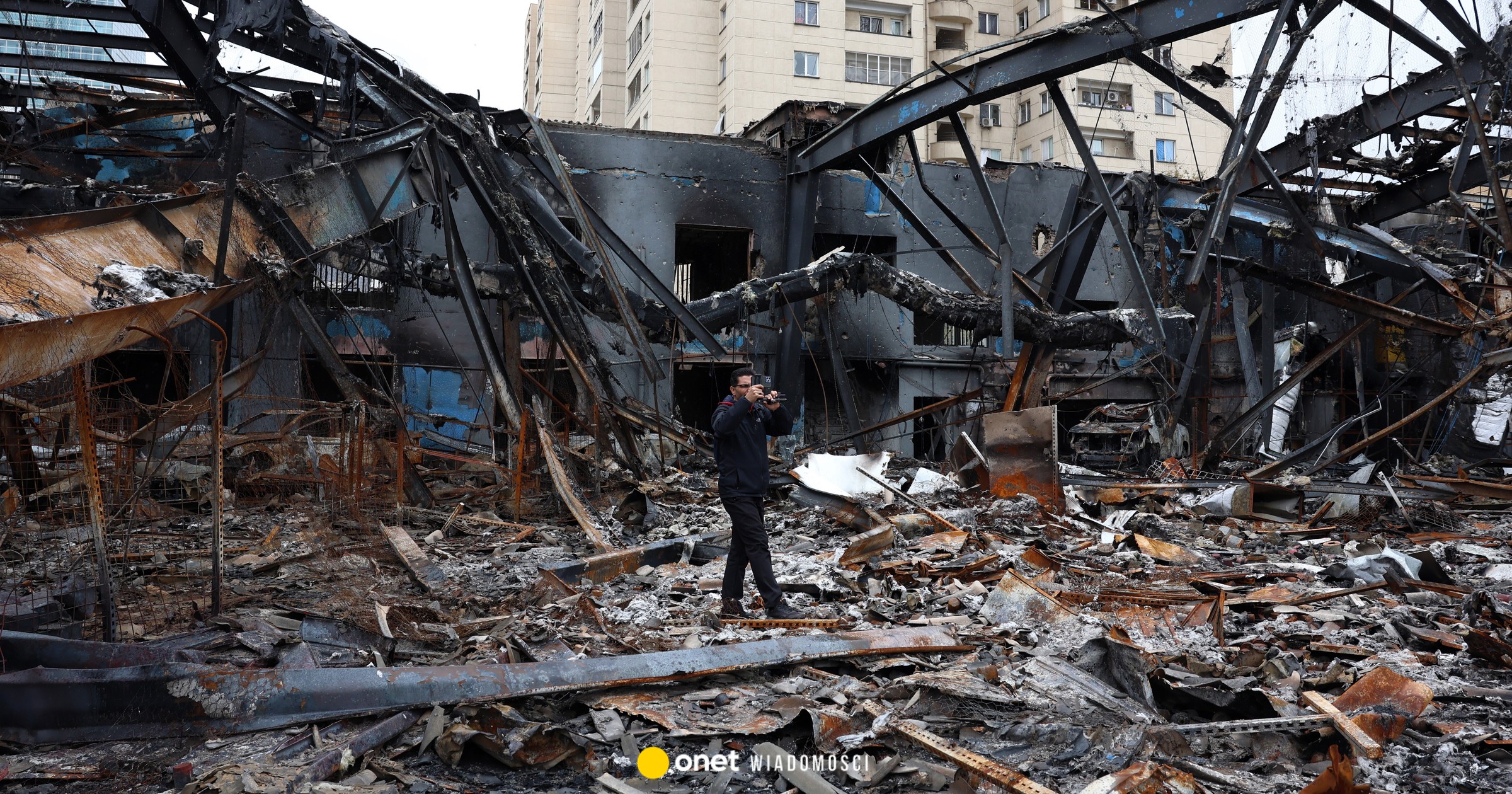
In a sense, the commander brought death upon himself. He “invited” American soldiers to try to capture Iranian islands in the Gulf. “We have already prepared graves for the infanticidal aggressors on all the islands!” Rear Admiral Alireza Tangsiri wrote on social media on Monday.
Three days later, the naval chief of the Islamic Revolutionary Guard Corps was killed in an Israeli airstrike. He was responsible for the blockade of the Strait of Hormuz. However, everything indicates that this strategically important sea route is still blocked as stable as the entire Iranian defense. This is a factor that cannot be underestimated in the strange spectacle that US President Donald Trump and the leaders in Tehran are putting on when it comes to negotiations.
On the sidelines of the government meeting on Thursday Trump tried to emphasize that serious talks were taking place with the Iranians: — They will tell you: “We are not negotiating.” But of course they lead, we finally destroyed them.
In this way, the president apparently wanted to suggest that Iran's leaders have become so weakened and unable to respond militarily that they have no choice but to sit down and talk.
The article continues below the video
Moments earlier, Iranian state television announced that Tehran had rejected the offer of talks submitted by Pakistan on behalf of the US. Iran's leaders have “end the war on their own terms and only when their demands are met”. Foreign Minister Abbas Aragchi said Iran had “no intention to negotiate at this time.” However, everything indicates that this is not entirely true.
According to “Die Welt” However, talks between Iran and the USA are conducted through third countries. On the other hand, it seems likely that Tehran does not feel that it is under military pressure that threatens its existence.
The Iranians managed to surprise Israel and the US
Already on the second day of the war, on March 1, the Israeli government announced that 90 percent of the city had been destroyed in the first waves of attacks. Iranian missiles and 60 percent combat drones. Almost a month has passed since then, and Iran is still firing more missilespreventing tankers from passing through Hormuz, which usually transports 20 percent of world amount of oil. The lack of this quantity on global commodity markets resulted in a sharp increase in fuel prices. Warnings of an economic slowdown are becoming more and more emphatic.
Meanwhile, it is still unclear how it is possible that Iran's missile fire continues for so long. It cannot be ruled out Israel and the US made a mistake in their estimates of the size of Iran's missile arsenal. On Friday, Reuters, citing Pentagon sources, reported that the US military could confirm the destruction of only one third of the Iranian missiles, and the fate of the remaining missiles remained unknown.
Smoke billows above the presumed headquarters of a branch of the Islamic Revolutionary Guard Corps. Tehran, June 23, 2025Elyas/Middle East Images/ABACAPRESS.COM / PAP
The number of available rockets is estimated, among others: based on famous factories. After the destruction from the previous war with Israel and the US, the Iranian authorities were able to rebuild production capacity faster than expected. It is certain that Iran then very quickly began producing new missilesand he transferred some of them to allied militias in the region.
According to military experts, part of the explanation also lies in wide dispersion and good camouflage of Iranian launchers. The army commands of the attacking countries were convinced that they knew most of Iran's missile sites. In reality, however, many more launchers were located underground.
Following the example of Hezbollah, which cooperates with Iran, The Revolutionary Guard Corps can hide launchers under small buildings. The roofs can be easily removed before launching the rocket. The Iranians are also well prepared to quickly excavate buried missile wells.
Will Iran run out of missiles? All they need are mines and drones
However, Iran's missile resources will eventually run out. Airstrikes have destroyed many of its factories, and supply chains are complex and susceptible to disruption by precision strikes.
Drones, on the other hand, are much easier to produce. And to block Hormuz, Iran does not need missiles – it only needs sea mines, which are difficult to remove, and drones, which are very difficult for Western ships to detect and shoot down using available defense systems.
However, the most vulnerable element of this economic war is insurance companies securing merchant ship voyages. One successful attack in the Hormuz area is enough for insurance premiums for all ships to skyrocket and transport in this area to become unprofitable.
Therefore, it may still be a long time before Tehran is forced to enter into negotiations.
I’m Ashley Davis as an editor, I’m committed to upholding the highest standards of integrity and accuracy in every piece we publish. My work is driven by curiosity, a passion for truth, and a belief that journalism plays a crucial role in shaping public discourse. I strive to tell stories that not only inform but also inspire action and conversation.