Today, Poland is turning towards the sea – also in energy. In four years, wind farms in the Baltic Sea will provide the system with almost 6 GW of zero-emission power with the most stable production profile of all weather-dependent renewable energy sources. There is simply a lot of wind at sea, so the windmills placed there are supposed to work up to 50 percent of the time. year.
The rest of the article is below the video:
This will be especially useful in winter, when photovoltaics work less well, conventional power plants are heavily loaded, and heating devices such as heat pumps increase the demand for energy. The long-term scale of investments in offshore is not yet known, and the related goals will probably be defined by the National Energy and Climate Plan, but we already know about projects from the so-called the first and second phases, which will bear concrete fruit by 2030 and beyond, respectively.
Read also: The first offshore auction is behind us. Electricity from offshore windmills will not be cheap
Polenergia's offshore wind farms. “One of the pillars of the system”
In addition to public companies such as Orlen, Orlen Neptun and PGE Baltica, private Polenergia is also participating in both phases. The company, associated with Dominika Kulczyk, who currently heads the supervisory board and is the main shareholder, together with the Norwegian Equinor, is currently implementing two projects in the first phase, which are to be ready in 2028. These are the Bałtyk 2 and Bałtyk 3 offshore wind farms with a total capacity of 1.44 GW. As Polenergia's press office tells us, the company is convinced that the installations “will be one of the pillars of the energy system in Poland and the changing energy mix.”
“In conditions of growing demand for energy, both the diversification of generation sources and the balancing capacity are becoming crucial, and offshore wind energy significantly responds to both of these challenges,” Polenergia states in a comment for Business Insider. The company indicates that the development of the entire offshore industry will reduce Poland's dependence on gas imports, thus strengthening national energy security.
“Energy from our own locally available renewable sources means greater resistance of the Polish system to geopolitical turbulences or fluctuations in global raw material markets. This is proven by the example of recent events in the Middle East“-adds the company's press office.
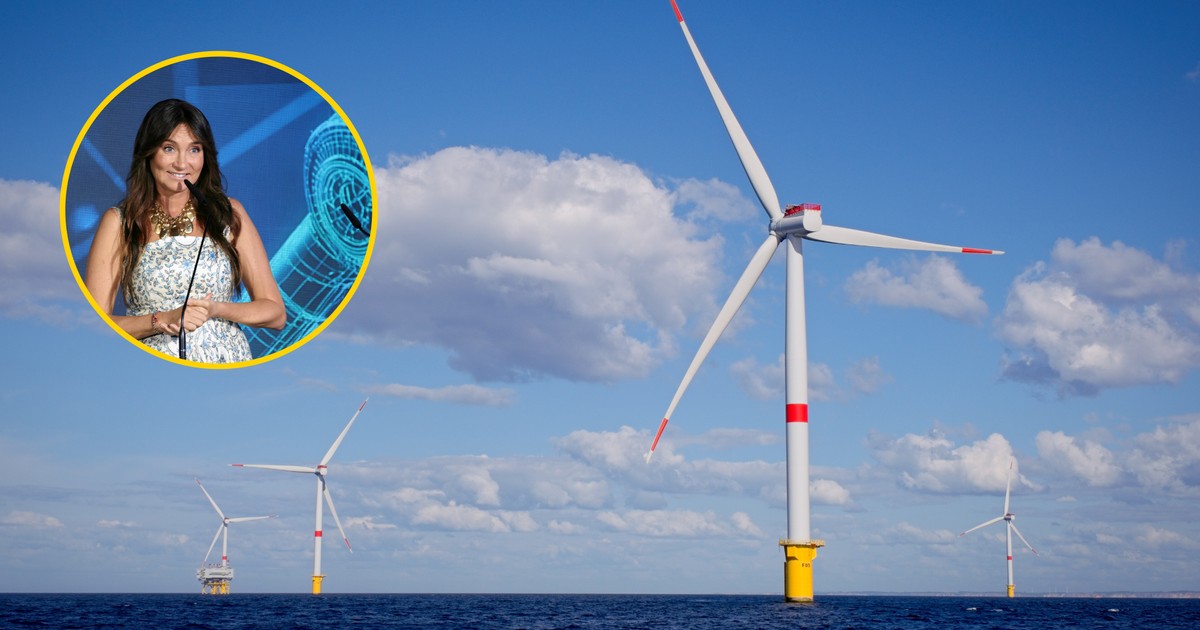
Offshore wind farm. Illustrative photo
|
fokke_baarssen / Shutterstock
Both farms will have 100 turbines each and will be located 37 km and 22 km from the shore (Baltic 2 and Baltic 3, respectively). The beginning of work on them, i.e. issuing location decisions and marine environment research, dates back to 2012, but the real breakthroughs occurred nine years later when the President of the Energy Regulatory Office granted support under the contract for difference (guarantee of energy sales in the contract for difference at the level of PLN 319/MWh; the amount will be adjusted for inflation) and with the subsequent final investment decision of May 2025.
Offshore wind farms. The foundations are being built
How is work on both farms progressing? Polenergia informs that “according to schedule“. “The construction of infrastructure on land is underway, and work at sea has also started. In the coming months, foundations for all wind turbines, elements of offshore power stations, marine export cables and associated infrastructure will be installed,” the company says.
In terms of specifics, this year more than 20 vessels will appear on the offshore construction site, including one of the world's largest installation ships – the Dutch Thialf, used many times by Equinor so far. Smaller units will provide the floating giant with assembly elements. After completing the construction of foundations and cables, anti-corrosion protection systems will be installed. 2027 is to be spent on further installation of turbines, equipping marine power stations and launching the infrastructure that will deliver electricity to land from 2028.
“This year, the construction of the Equinor operational and service base in Łeba will also be completed, which will serve as a center for coordinating vessel traffic and maritime works for the Bałtyk 2 and Bałtyk 3 projects. The construction stage has been completed, finishing works are underway,” adds the Polenergia press office in the information provided. Nearby, on the bank of the Łeba River, there is the base of Baltic Power, a joint offshore company of Orlen and Northland Power. Last September we had the opportunity to visit her.
Read also: I saw the construction of the first Polish wind farm at sea. Baltic Power is impressive
In the second phase, Polenergia and Equinor intend to build the Bałtyk 1 wind farm, which will have up to 104 turbines and approximately 1.56 GW of installed capacity. It will also be located much further from the Polish Baltic coast than the two previous projects, 81 km. The project received support under the contract for difference relatively recently, i.e. in December 2025, during the first competitive offshore auction – the obtained energy sales price for Bałtyk 1 will be PLN 492/MWh and will also be indexed. The project does not have a final investment decision yet, however, Polenergia's press office informs us that according to the schedule submitted for the auction, the decision, as well as obtaining a building permit, will take place in 2027.
How many domestic companies are in offshore wind energy?
Like the entire offshore industry, Dominika Kulczyk's company also emphasizes care for the so-called local content, i.e. the national component – the participation of Polish companies is increasingly promoted not only in this renewable energy sector, but also in nuclear and conventional energy and in other infrastructure investments.
“We treat offshore not only as an energy project, but also as an impulse to build a new economic sector, with new jobs and real business opportunities for domestic companies,” the company declares. Initially, however, the involvement of domestic business will not be huge, but rather consistent with the average for the entire first phase of the development of offshore wind energy in Poland. At the construction stage of the Bałtyk 2 and 3 projects, the share of domestic suppliers will not exceed 20%.
Polenergia's press office argues that local content will become more and more important. “At the operation stage, i.e. the longest part of the life cycle of this type of investment, this indicator would be much higher, ranging from 60 to 80 percent. Currently, we cooperate with domestic partners such as Tele-Fonika Kable, Enprom, Erbud, Projmors, ZRB Janicki and MEWO” – is the answer to Business Insider's questions.
The above-mentioned companies provide cables for power transmission from farms, carry out construction works on land, advised on obtaining permits and conducted seabed and environmental research. Polenergia assumes that the number of domestic enterprises will also increase in the next stage, which will start after 2030. “In the second offshore phase, we expect further growth of local content as the market matures and development of competences and infrastructure in Poland. Even approx. 45% is assumed for the Bałtyk 1 project. participation of Polish companies“.
Read also: Would Lech Wałęsa build windmills today? The offshore industry gives shipyards and ports a second life
Are offshore wind farms an expensive source of energy?
How much will we pay for energy from the sea? As we have already mentioned, offshore farms will be entitled to contracts for difference at the level of PLN 319/MWh for projects from the first phase (including Bałtyk 2 and Bałtyk 3) and, in the case of Bałtyk 1 from the second phase, at PLN 492/MWh.
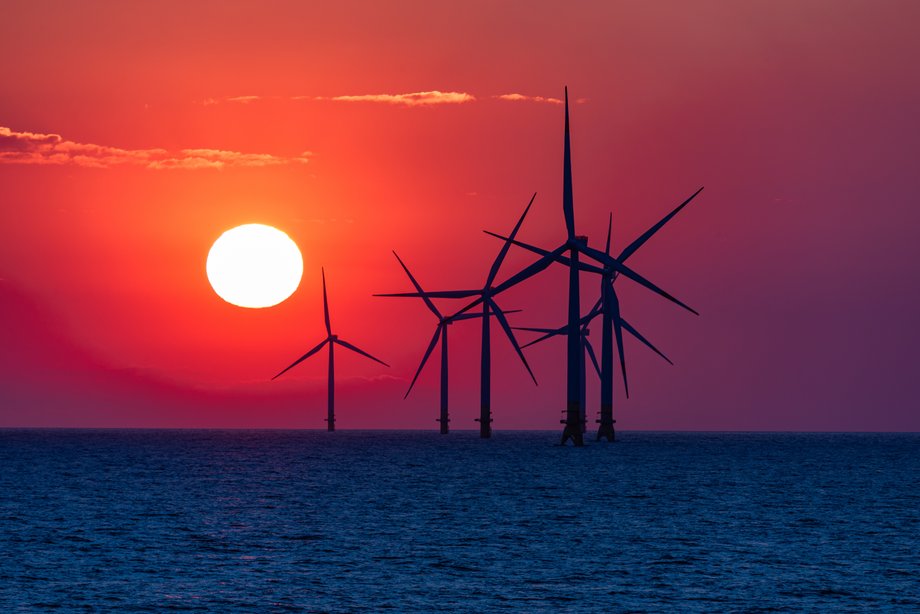
Offshore wind farm. Illustrative photo
|
Giorgia Wollner / Shutterstock
A bilateral contract for difference is a popular mechanism that has been used by onshore renewable energy installations for years and is also planned for a nuclear power plant – the beneficiary concludes an agreement with the state to sell electricity at a specified price. When the market is cheaper than this price, the state pays the difference to the producer, and when it is more expensive, the producer reimburses the difference to the state. The funds currently come from fees that energy consumers pay as part of their bills (although the public debate also includes the idea of covering these expenses from the budget). Relatively high contract rates, especially in the second phase, raise concerns that offshore wind farms will be a significant financial burden for households and companies.; They are raised by, among others, the president of Polskie Sieci Elektroenergetyczne, Grzegorz Onichimowski.
We asked Polenergia to comment on these issues. The company's press office replies that “offshore wind energy is one of the most competitive energy sources in the long term.” “(…) The development of technology, the growing scale of investments and experience in this sector will contribute to a decrease in expenditure,” says Polenergia, hoping that construction costs will be lower in the second phase.
The company also argues that offshore is free from typical risks associated with fossil fuels – high prices of CO2 emission allowances and the prices of the raw materials themselves. “Especially the latter are highly dependent on global changes and world politics, which we have no influence on. Energy from offshore wind farms is resistant to these factors,” he argues. By reducing dependence on fuel imports, investments in offshore wind energy are also intended to strengthen Polish energy sovereignty.
Offshore investments. What's next?
The current regulations assume that the next offshore auctions, which will select projects covered by the contract for difference (without such support, the investment would not be possible), should be held in 2027, 2029 and 2031. Who will take part in them? Polenergia does not announce any plans at the moment and declares to focus on those projects that are already “on the way” — relatively close to the finish line like Bałtyk 2 and Bałtyk 3, or further like Bałtyk 1.
“Polenergia's priority is the timely implementation of ongoing projects. It is worth emphasizing that it is estimated that after the completion of the construction of all farms currently under construction, including the projects selected in the December auction, new offshore power plants may collectively cover approximately 20% of the national demand for electricity from wind” – the company's press office answers the question about its long-term offshore intentions.