The world's governments are rushing to stock up on fertilizer to avoid a food crisis. Competition for supply is intensifying

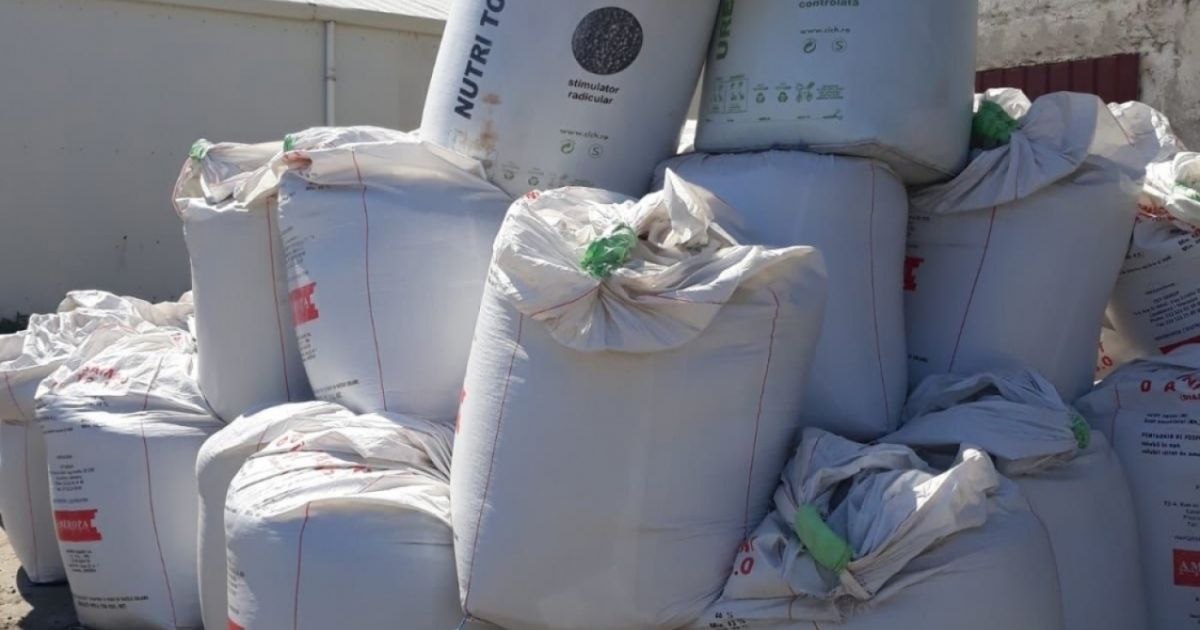
Governments are racing to secure supplies of essential nutrients for agricultural crops ahead of spring sowing as war in the Middle East disrupts the flow of raw materials and heightens fears of a global food crisis.
Fertilizers highlight the close link between energy and food prices, being fundamental to crops around the world. The Middle East is a vital supplier, rich in both mineral reserves and the gas needed to produce nutrients for staple crops such as corn, wheat and rice. With the Strait of Hormuz effectively blocked, shipping has ground to a halt as Iran, the US and Israel trade blows over energy infrastructure, Bloomberg writes.
As a result, the price of urea — the most widely used nitrogen-based fertilizer — has risen sharply, and phosphate supplies are also under threat. Much of global stocks depend on the Persian Gulf, and panic is spreading across major agricultural economies.
China and Russia partially limit sales of crop nutrients
Top exporters China and Russia are partially limiting sales of crop nutrients, while the US is easing shipping restrictions to facilitate domestic flows. India, the biggest buyer of urea, is facing supply difficulties and is considering launching an auction. Greece and France increased financial support for farmers, and in Africa, Ghana launched a free fertilizer program.
“Farmers should not bear the burden of a crisis,” Indian Prime Minister Narendra Modi said in Parliament Tuesday, March 24, commenting on the conflict in the Middle East and announcing measures to shore up fertilizer stocks. “The government is with them.”
Rising fertilizer prices could raise the cost of food just as farm inflation was starting to moderate after years of shocks — from the pandemic to the war in Ukraine and extreme weather. Although usually excluded from leading indicators, these fluctuations put central banks in trouble. Bank of England Governor Andrew Bailey warned of fresh price pressures amid holding interest rates steady this month.
At the same time, countries are trying to protect farmers already hit by low crop prices, high input costs and tariffs imposed by US President Donald Trump.
Competition for supply is intensifying
Earlier this month, the Trump administration lifted sanctions on Venezuelan fertilizers to “reduce the impact on American farmers,” White House spokeswoman Anna Kelly said. Colombian state-owned Ecopetrol SA is seeking access to the same stocks and is considering a bid for Monómeros, a strategic plant on the Caribbean coast.
Further south, Brazil is ramping up purchases from Morocco and the Gulf countries and is exploring a joint fertilizer and energy project with Bolivia, according to a senior Brazilian official. Also, a legislative act was recently approved that reduces taxes on chemical inputs used in the production of fertilizers.
“Everybody's on the trail of supply,” said Randy Place, senior grain analyst at The Hightower Report.
In many ways, the war in the Middle East marks a more dangerous time than Russia's 2022 invasion of Ukraine, which has disrupted supply chains, in part because a larger share of the nitrogen-based fertilizer trade is now at stake. The region accounts for over a third of urea exports and almost a quarter of ammonia, another crucial ingredient. About half of the sulfur trade – used in the production of phosphate fertilizers – also passes through the Strait of Hormuz.
The shocks generated by the war in Ukraine showed the risks of dependence on imported nutrients. Efforts begun four years ago to bolster supply have gained increased urgency in recent weeks. Unlike 2022, when Russian goods were diverted, the closure of the Strait of Hormuz is much more restrictive, physically blocking shipping at a critical maritime point.
India is under particular pressure
Fertilizer production is the country's largest consumer of gas, and some plants have closed due to dwindling supplies of fuel needed for the nitrogen-based nutrient. To cover the shortfall, authorities are turning to China for supplies and have approved at least one type of alternative fertilizer.
What weapons does Iran have left after a month of war with the US and Israel
In recent days, some urea producers have held daily meetings with farmers to curb overuse, according to industry sources.
Sushil Kumar, a 42-year-old farmer from Haryana, is feeling the pressure. He grows canola, wheat and rice on about 8 hectares of rented land, but has been unable to find diammonium phosphate, an essential nutrient for sowing. Local merchants are out of stock.
“Fertilizer is never available in time, when we need it,” says Kumar.
To make sure they get the supplies, buyers pay premiums. Saudi Arabia and Morocco sold cargoes to Latin America at high prices. Dangote Fertilizer Ltd., one of Africa's largest suppliers, reports growing demand. Russia suspended some exports on Tuesday, but the Kremlin said last week it remains one of the few states able to meet global demand.
“We are talking about an agricultural input that plays an important role in food security,” says Ticiana Alvares, technical director at INEEP, a Brazilian energy research firm. “Those who don't protect their national interests and look to regional supply chains instead of global ones will be in serious trouble.”
If the conflict continues until the middle of the year, the whole world could lose. Big crop producers such as the US, Brazil and India are already seeing tight margins, raising the risk of wider increases in food prices. Richer countries can support farmers with subsidies, but poorer countries face tight budgets.
The risks are greatest in sub-Saharan Africa and parts of South Asia, where dependence on food imports is high and hunger is already a problem. Nigeria, for example, is reporting delays in deliveries from Russia and China. Some West African states are “extremely concerned” about protecting export crops such as cocoa and cotton, says Ashish Lakhotia, CEO of ETG Fertilizers and Agricultural Inputs.
Even Gulf producers cannot fully capitalize on high prices as long as the Strait of Hormuz remains closed, according to Nick Kraft, senior agriculture analyst at Eurasia Group.
The only clear winner seems to be China
“As the world's largest urea producer, with large reserves and strict export controls, Beijing can protect its own agricultural system and impose strict conditions on everyone else,Kraft said. “That's exactly what he's doing now.”
Trump furious at NATO countries: “The US needs nothing. Never forget this very important moment!”
In the US, the Trump administration has tried to reduce price spikes. Agriculture Secretary Brooke Rollins said in an interview that officials are “looking at every tool available” to ease pressure on farmers.
Last week, Washington suspended a shipping law to allow foreign-flagged ships to transport fuel, fertilizer and other goods between US ports. The White House will host an event with agriculture executives on Friday to highlight the president's efforts to lower input costs. Agricultural groups are lobbying for the removal of phosphate fertilizer taxes in Morocco, which holds some of the world's largest reserves.
Even with these measures, Sherman Newlin, a farmer in Illinois, says prices will not drop quickly and significantly unless the conflict ends and the Strait of Hormuz reopens. “Every time they say they're going to make an announcement, the result is insignificant,” he states. “There's not much I can do.”
David Delaney, CEO of phosphate producer Itafos Inc., says he can't remember a more difficult time in his four decades of business. After the war broke out, the UN warned of record levels of hunger this year. If the conflict continues for several months, tens of millions of people could end up in severe food insecurity situations.
“The world is accustomed to large harvests and their timely distribution,” says Delaney. “I don't want to sound too alarmist just yet, but the situation could be catastrophic if it drags on.”