Article by Narcis Drejan – Published on Thursday, 26 March 2026 22:42 / Updated on Thursday, 26 March 2026 23:27
A long, tired and endlessly repeated refrain, between the illusion that “I was close” and the truth that, in fact, I haven't been to a World Cup in a long time
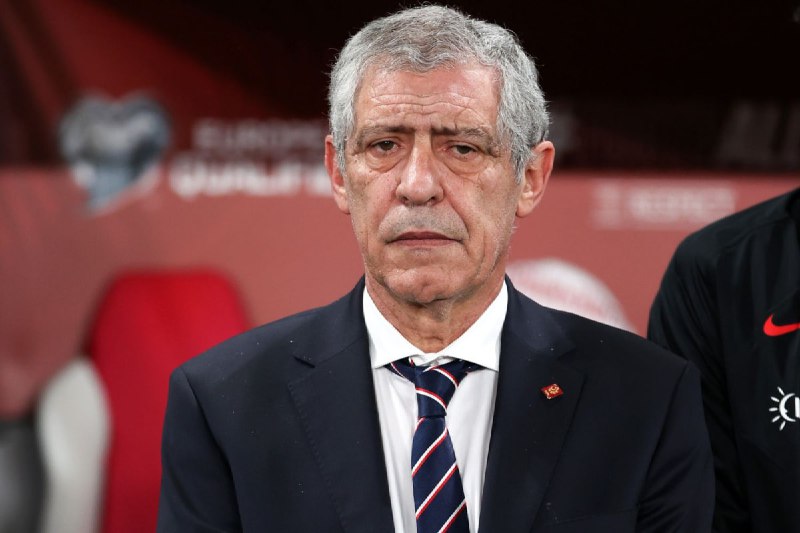
I tell you honestly that we have reached the point where a defeat like this 0-1 with Turkey it no longer produces either real anger or genuine revolt, but only a form of almost quiet resignationas if, deep down, we knew this was going to happen, and we just ticked off another episode of a script we've been running for nearly three decades, without the courage or ability to rewrite it.
I remember perfectly how Viorel Moldovan was going in and out during Romania's last goal at a World Cup. I was 18 years old and I thought that one day Romania would scare the world, after the 8 consecutive years since the World Championship, 90, 94 and 98. But since then, from bad to worse, I have come to the embarrassing resignation that this is all we can do.
When you don't count anymore
Because it's not the score that hurts the most, not the opponent, not the context, but the pressing feeling that everything is perfectly logical, that this result is not an exception, it's not an accident, it's not a bad evening, but the natural consequence of a football that, for years, no longer grows, no longer produces, no longer aspires, but only survives from inertia and memories.
And then, inevitably, the question arises that we avoid saying until the end: why do we get excited, why do we cling to the idea that “it is possible”, when reality shows us, constantly and mercilessly, that we are no longer there, that we no longer have the tools, nor the people, nor the direction to bring us closer to big football?
“If” is our defense mechanism
We actually live in a collective mechanism built around “if”, a word that shields us from the truth and allows us to turn every failure into a tolerable story, an acceptable version of reality, where we are not weak, just unlucky, not outmatched, just out of alignment with the moment. If Hagi scored a goal, if Mihăila scored, if there was no bar, if we were playing with San Marino bar.
Because we say, every time, that if we had more courage, if we didn't make a mistake there, if we caught a better day, if the arbitration, if the context, if the inspiration, if… and the list goes on endlessly, until the “if” becomes more important than what is, in fact, obvious: that the difference is no longer one of detail, but one of level.
Turkey is not an elite team, it is not an unattainable benchmark, it is not a force that will inevitably crush you, and that is precisely why the defeat hurts differently, because it shows you that even in front of imperfect opponents you no longer have the ability to impose something, to change the rhythm, to get out of your own limitation.
A system that produces exactly what we see
The footballers are not the main problem, because they do not appear out of nowhere, they are not formed in a vacuum, they do not grow outside of a system, but they are the direct result of a way of thinking and building which, under the leadership of Răzvan Burleanu, emphasized control, stability and image, but lost sight of exactly what is essential: real performance.
Because when for years you create an environment where competition is diluted, where meritocracy becomes negotiable, and the pressure of results is replaced by justifications, you inevitably end up producing players who do not have the risk reflex, who are not used to the high level and who, in decisive moments, cannot do more than they have been taught to do.
And what we see today in the national team is not an anomaly, it is not a missed generation in isolation, it is the true picture of a system that works exactly as it was built.
The U21 rule, the solution that became the symptom
We are told that the U21 rule is an investment in the future, a breath of fresh air, a real chance for youngsters, but in practice it has become more of a breakdown mechanism, forcing decisions, creating imbalances and pushing coaches towards compromise solutions, rather than really stimulating growth.
Because when you are forced to use, you stop choosing, and when you stop choosing, you stop building, you just adapt, and this adaptation is seen today in a painful way: a generation in which full-backs are omnipresent, while the essential positions, central defenders and forwards, have become almost structural gaps. No structural gaps, they don't exist anymore. Lucky that Italy raised Coubiș or Duțu.
We don't have spikes anymore, we don't have stoppers anymore, we don't have players to decide anymore. And not because there is no talent, but because there is no longer a context to properly form it. May I remind you that we were beaten by Tashpulatov, that is Kazakhstan at U19? And you say that this rule is good when the football school of the Kairat Almaty club beats us? That they have nothing else!
Romania missed another World Cup qualification PHOTO: Cristi Preda (GSP)
The normalization of mediocrity
Perhaps the biggest drama is not that we lose, but that we have come to accept this as normal, explainable, digestible, part of a process that no one clearly defines anymore, but that everyone invokes when they need to justify another miss.
Because we've lowered our expectations so much that any decent match becomes a reason for hope, and any honorable loss almost becomes an argument that “we're on the right track,” even though that track doesn't seem to be going anywhere. Or did you forget the match with Ukraine and then we didn't play anything at the Euro or the victory with Austria, yes, but Bosnia and Herzegovina and Cyprus woke us up.
And in this context, enthusiasm is no longer a sign of confidence, but one of self-delusion, a form of avoiding the obvious conclusion that Romanian football no longer matters at a high level, no longer makes a difference and no longer inspires.
The ending that doesn't hurt enough anymore
28 years without a presence at the World Cup is no longer an open wound, but a scar that we have learned to ignoreand that says, perhaps, more than any defeat. Because it is not the lack of results that is the biggest problem, but the lack of real reaction to them, the lack of that moment of rupture in which you can say that it is not possible anymore and really start from scratch.
Instead, we continue to live between “can't” and “if”, between resignation and illusion, between acceptance and unjustified hope, without having the courage to see things exactly as they are.
And until that courage emerges, until we let go of the stories and start building real, all these defeats will continue to look different, but they will, in fact, say the same thing. And that, for a long time, we don't even really try to be anymore.