Fuel and food prices are going up significantly. 10 charts show the effects of the war in Iran

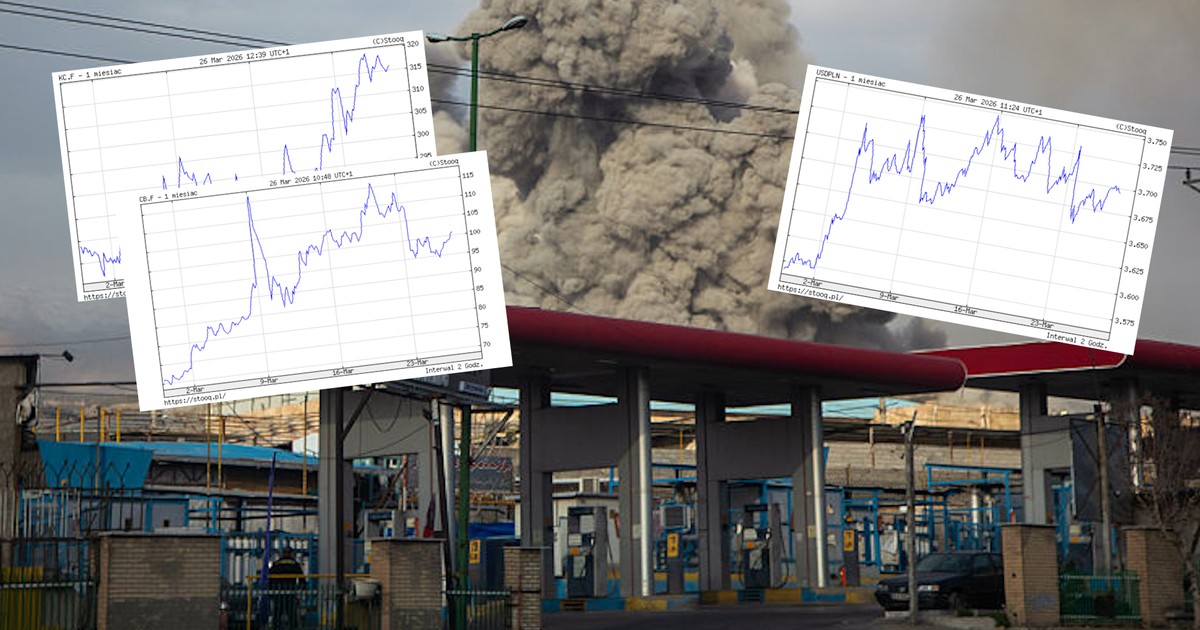
Prices at gas stations have skyrocketed, tourists must prepare for more expensive holidays, and in a moment increases may be visible on store shelves in the case of basic food products. In 10 charts we show how market valuations of wheat, milk and sugar change from day to day.
The rest of the article is below the video
The attack by the United States and Israel on Iran turned from a planned short intervention into a large conflict spanning the Middle East. Almost four weeks of fighting are behind us, which is causing huge turmoil in the financial markets for the rest of the world. Not only investors and financial sharks are losing, but also ordinary people who are already feeling the effects of the war in their wallets.
See also: Billions in retirement savings have disappeared. This is the result of the war in Iran
Price shock after the outbreak of the war in Iran. What about oil, gas and currencies?
The first and obvious consequence of the conflict in the Middle East is the increase in oil prices on world stock exchanges. A barrel (159 liters) of the European Brent variety cost about $100 on Thursday. vs. $73 recorded on the last day before the attacks on Iran. This means a jump of 37%. In the meantime, the price of the raw material reached almost $120.
The price of a barrel of Brent crude oil last month
|
Stooq, own study
The chart of wholesale diesel oil prices in Poland took a similar shape. Before the war, a liter of fuel wholesale cost less than PLN 5 (less than PLN 5,000 per cubic meter), and now it is about PLN 6.80 (less than PLN 6,800 per cubic meter)..
See also: Fuel prices skyrocketed in March. Drivers in shock, but not everywhere
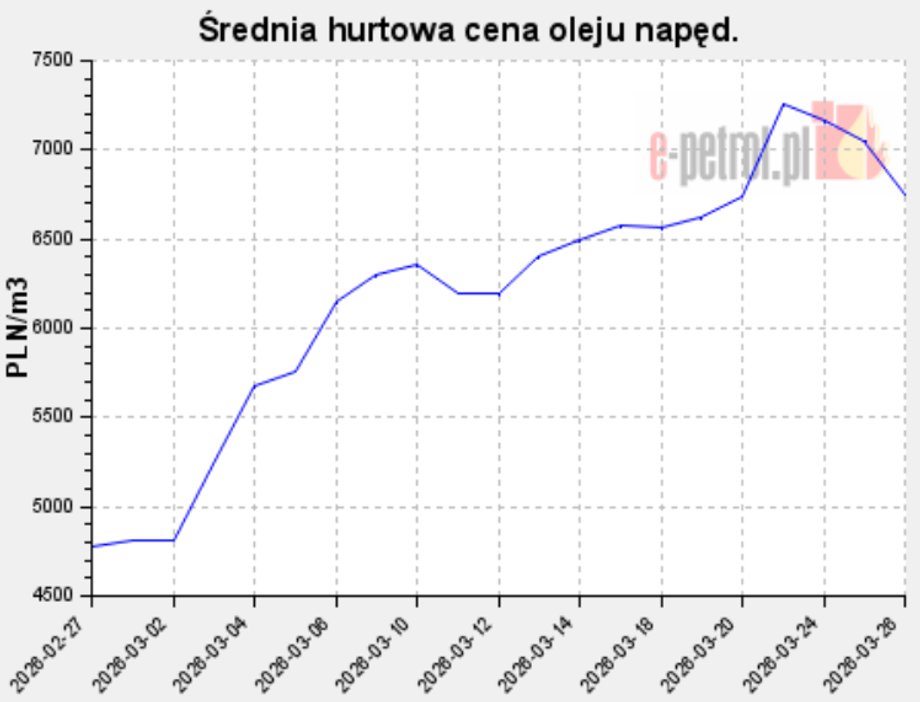
Wholesale diesel prices skyrocketed after the outbreak of the war in Iran
|
e-petrol.pl
In the case of liquefied petroleum gas (LPG), the situation is more complex than in the case of crude oil, because there is no single global benchmark on a scale comparable to Brent or WTI. The reference point for LPG prices in Poland and Europe includes, among others: CIF ARA quotations (Antwerp-Rotterdam-Amsterdam). European Propane CIF ARA futures contracts converted into Polish currency increased by almost 60% in March. — from PLN 1,900 to over PLN 3,000 per tonne of gas.
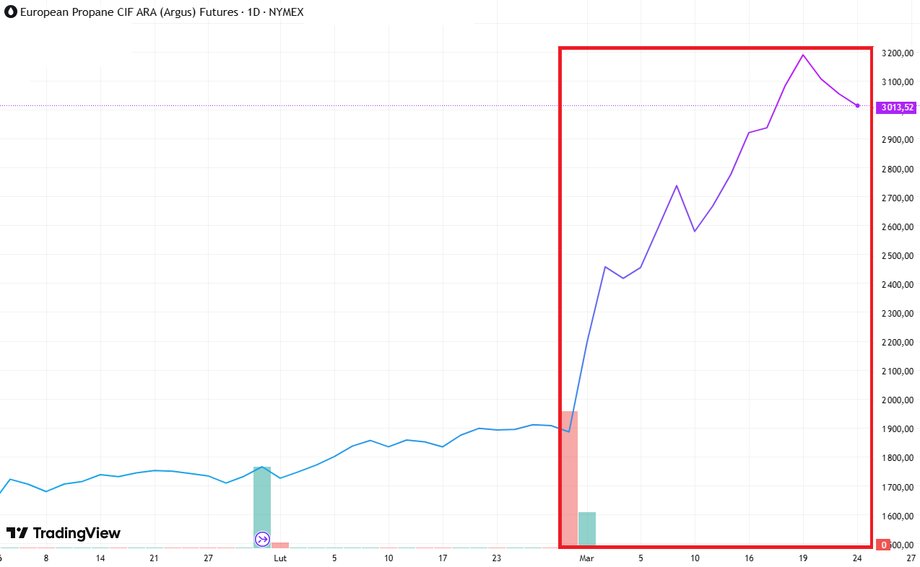
After the outbreak of the war in Iran, the price of a metric ton of LPG (propane and butane) jumped to around PLN 3,000
|
tradingview.com
Price increases may already be noticed by tourists or anyone planning a holiday abroad. All due to rising currency rates. The dollar, which is the key currency outside Europe and is where fuels are priced, increased from PLN 3.57 to PLN 3.70..
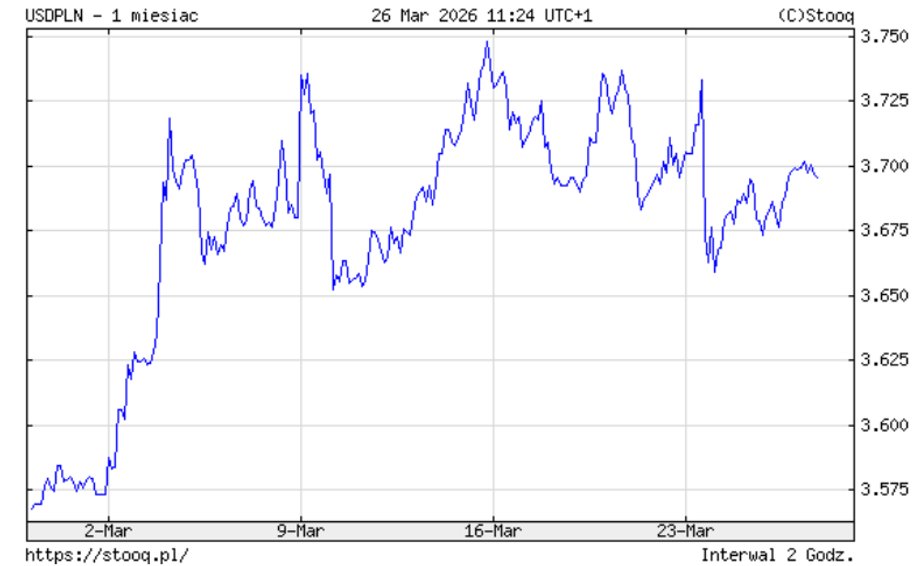
The dollar exchange rate has increased significantly in the last month
|
Stooq, own study
See also: Currency rates influenced by Donald Trump's words. The dollar returns to its upward path
The euro exchange rate from the perspective of people who need to buy the common currency has also clearly deteriorated. The rate increased from PLN 4.22 to PLN 4.27.
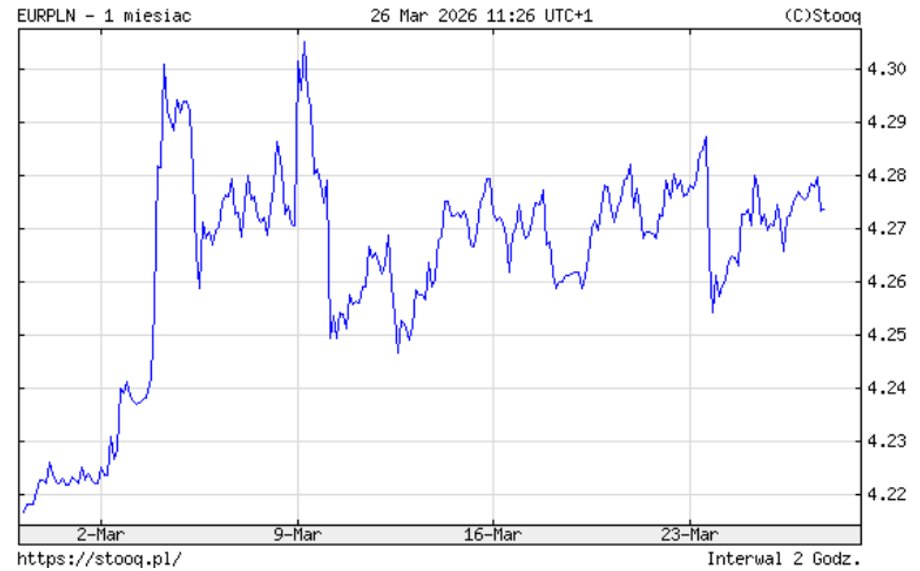
The euro exchange rate went up by a few cents
|
Stooq, own study
It's good that spring has come, because market turmoil also increased coal prices. ICE Rotterdam Coal prices increased by approximately 18% in March. to the level of $128. per ton. It is the most important stock exchange reference point for hard coal prices in Europe. The index reflects the price of steam coal delivered to ARA ports (Antwerp, Rotterdam, Amsterdam). It is a key entry point for raw materials imported to Europe, including Poland.
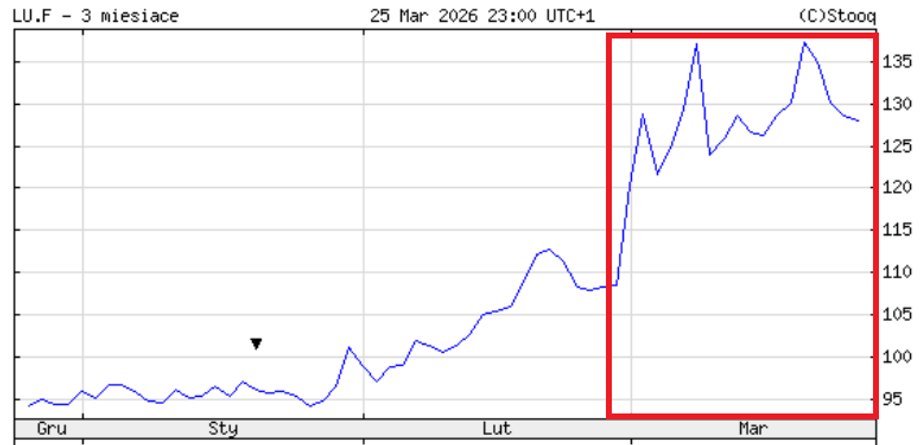
The price of a ton of coal in dollars has clearly moved away from the level of $100.
|
Stooq, own study
Grocery shopping will be more expensive. Prices of wheat, sugar, coffee and milk
Stock exchange prices of food products are also rising around the world. The price of consumer (milling) wheat, which is key to the prices of flour and bread in Europe, is rising relatively gently. On the MATIF exchange (the most important futures commodity exchange in Europe), quotations increased by approximately 1.5 percent, but in the meantime in March the increases already exceeded 5 percent. We are talking about prices exceeding EUR 200 per tonne.
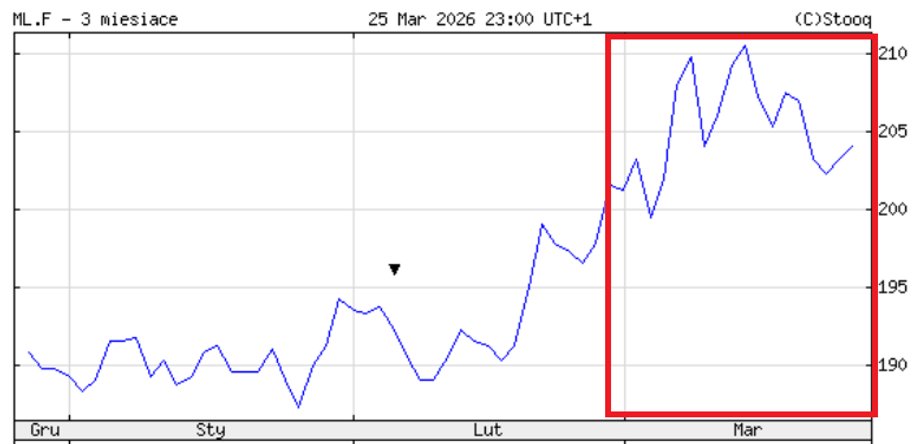
ML.F (Milling Wheat) quotations: consumption wheat (milling)
|
Stooq, own study
The bigger changes concern the prices of white sugar. We are talking about a finished product listed on the ICE Stock Exchange in London, which goes to the food industry (e.g. for the production of drinks, confectionery) or directly to store shelves. At the end of February, a tonne cost less than $408. Now it is 11% more expensive. and amounts to approximately $454.
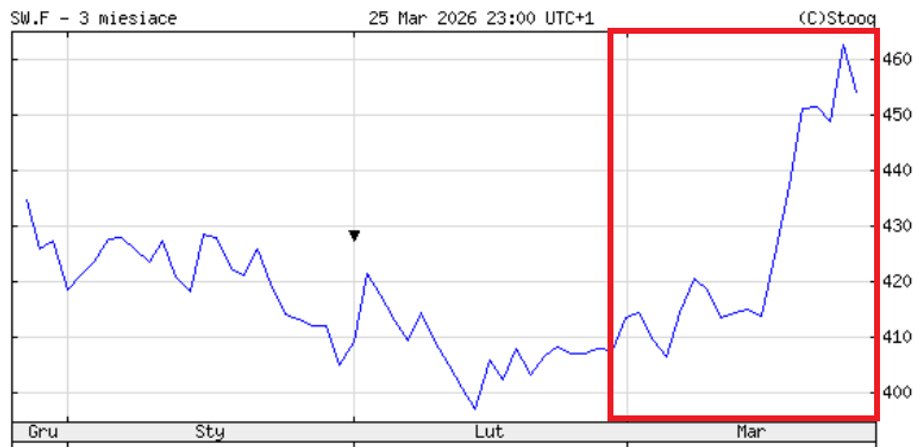
In mid-March, sugar prices went up significantly
|
Stooq, own study
Coffee lovers will not be satisfied either. In March, the downward trend in prices was interrupted. At the end of February, Arabica was valued at 280 cents per pound of coffee, and now it is 315.5 cents. The increase is 13%.
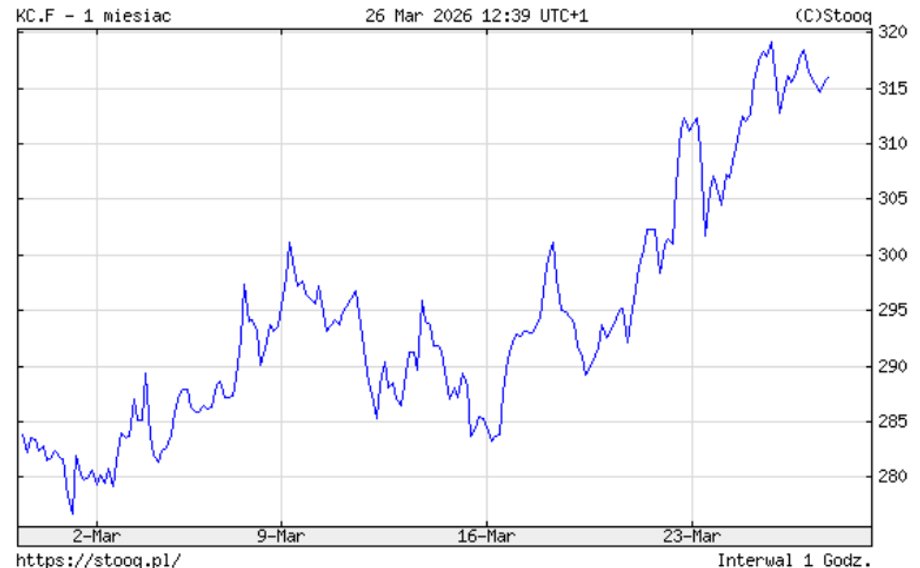
The prices of Arabica coffee increased especially in the second half of March
|
Stooq, own study
Milk prices are also rising. The chart below shows data from the American Commodity Exchange. It is the world's most important market for agricultural futures. This is milk intended mainly for the production of hard cheese. On Wednesday it was $17.7. per 100 pounds, which is approximately 39 cents per liter. We are talking about an increase of almost 9%. compared to the end of February.
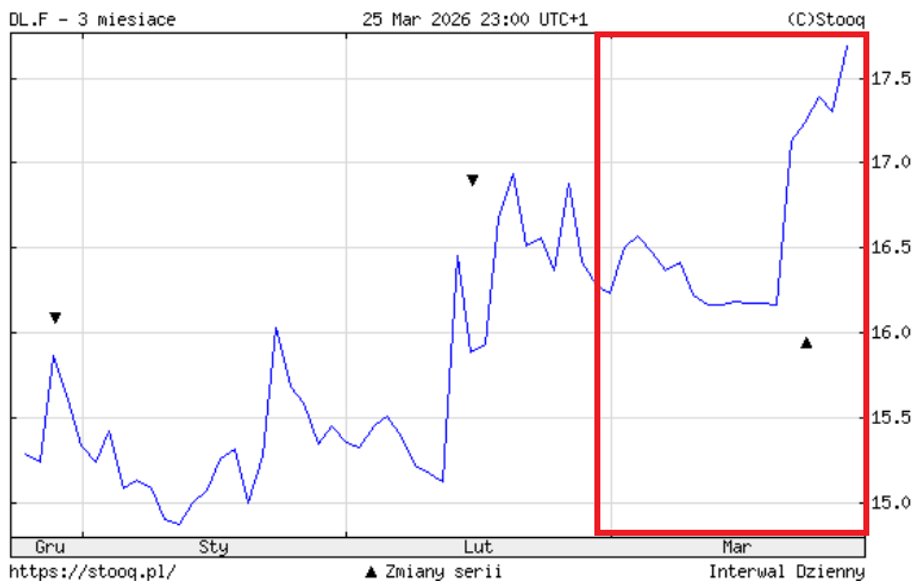
Quotations DL.F (Class III Milk) – milk intended mainly for the production of hard cheese
|
Stooq, own study
An increase in inflation in Poland is a matter of time
Only these 10 charts show the first shock and price changes of basic commodities quoted on the largest stock exchanges. This will sooner or later be reflected on store shelves in Poland. Already some economists warn that the inflation rate in March in our country may jump to around 3 percent, while in February it was at the level of 2.1 percent.
See also: Surprising comments from economists after inflation data. It will get worse
“CPI inflation most likely reached this year's minimum in February, and the following months will see it increase towards the upper limit of the inflation target,” PKO BP economists forecast.
“After the conflict in the Middle East intensified, we revised our forecast of average annual inflation to 2.8%. from 2.2 percent, but the final size of the energy shock depends on the duration of the conflict,” they emphasize.
Author: Damian Słomski, journalist of Business Insider Polska