“The COVID Model”. Asia is preparing for the most pessimistic scenarios of an energy crisis amid the Iran war

The fuel shortage is already acutely felt across Asia, where working hours have been reduced, street lights have been turned off and gas stations have been forced to close, Bloomberg writes.
Governments in Asia are preparing for worst-case energy scenarios, which could include a prolonged supply disruption, amid the Iran war that has led to the blockade of the Strait of Hormuz.
South Korea went into crisis mode on Wednesday, setting up an emergency economic task force to prepare for such scenarios. Officials in the Philippines have declared a national emergency, citing an “imminent danger of critical depletion of energy reserves.”
Japan is reviewing its entire oil supply chain as the likelihood of shortages and knock-on effects on the economy grows, while India's Prime Minister Narendra Modi has warned that the war could cause unprecedented challenges for the country, Bloomberg writes.
How the crisis manifests itself
About a quarter of the world's seaborne trade in oil and a number of other commodities passes through the Strait of Hormuz, much of it destined for Asia. Iran has effectively closed it to all but approved ships.
The worry in Asia contrasts with cautious optimism in financial markets as US President Donald Trump seeks to open talks with Iran to end the war.
On Wednesday, stocks rose and oil prices fell. But that did little to assuage concerns in Asia, where many countries get most of their oil from the Middle East and reserves are starting to run low.
The shortage is already acutely felt across Asia, where working hours have been reduced, street lights have been turned off and gas stations have been forced to close.
In Pakistan, people were even asked to stay at home and watch cricket matches on TV to save fuel. The country also plans to impose fuel quotas on vehicles, according to sources familiar with the situation.
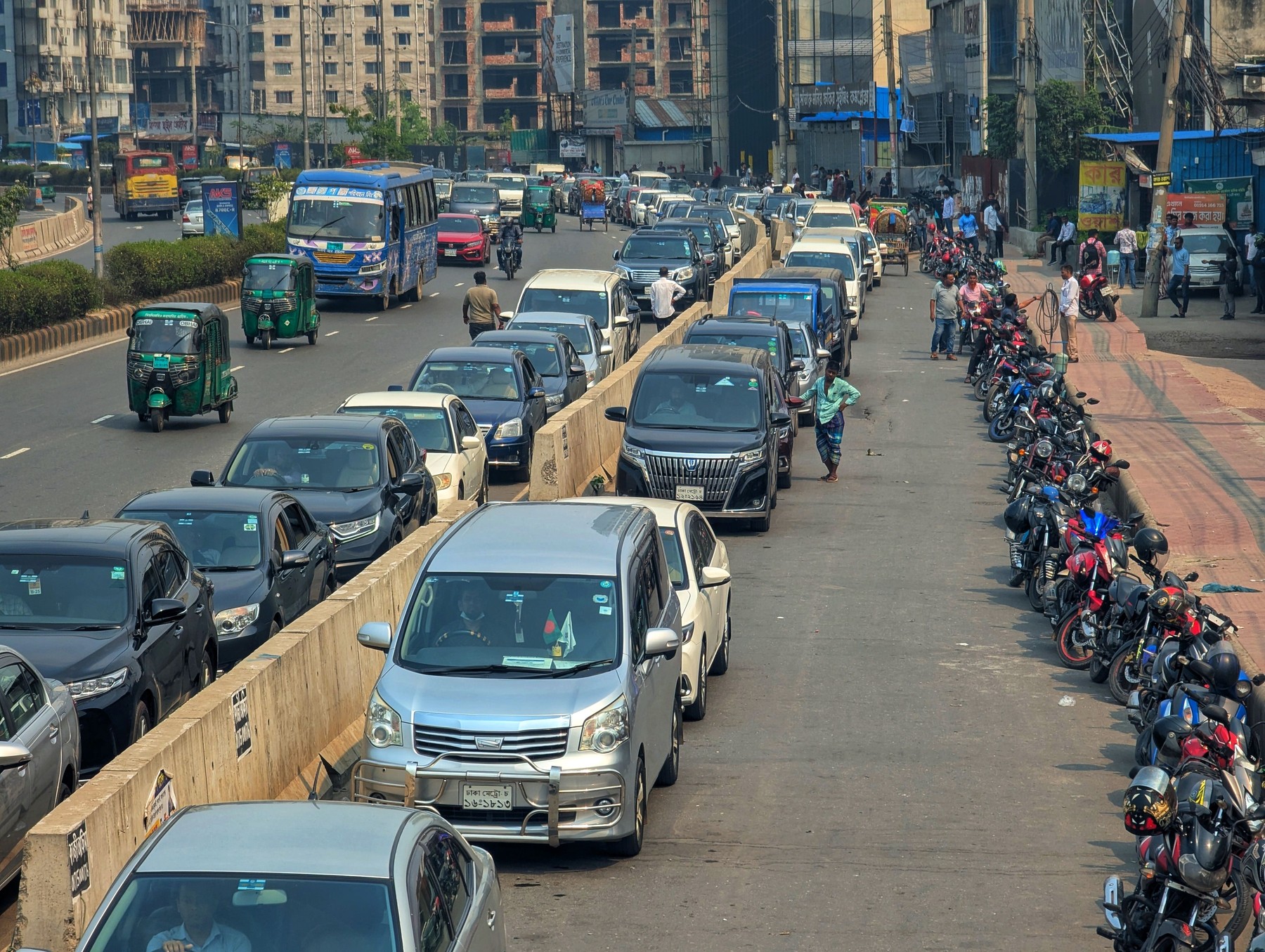
In some parts of Bangladesh, drivers wait for hours to refuel, with queues stretching up to a kilometer. Authorities have halted production at most fertilizer plants and are urgently seeking $2 billion in loans to secure enough power to meet increased summer demand.
Back to protectionism
The rush to secure supplies of oil and other key commodities has sparked a return to protectionism.
China has restricted exports of fertilizer, while Indonesia has announced it will introduce an export tax on coal and nickel.
Vietnam prioritizes domestic refineries for its crude oil.
Such measures, writes Bloomberg, can have the opposite effect. A World Bank study of food shortages in the mid-2000s showed that much of the increase in global prices for products such as rice and wheat was due to high trade barriers to keep harvests for their own populations.
Some countries are turning to suppliers they previously avoided. Indian refiners have bought about 60 million barrels of Russian oil for delivery next month after sharply cutting their purchases earlier this year under pressure from the United States, Bloomberg reported on Wednesday.
Prices have also increased.
The energy crisis has also changed geopolitical calculations, with Manila willing to cooperate with Beijing on oil and gas exploration in a disputed area of the South China Sea.
The Covid model
Indian Prime Minister Modi said the country must prepare for the current situation just as it did during the coronavirus pandemic five years ago.
While a severe shortage is not the baseline scenario, Barclays Plc warned in a report on Wednesday that the negative impact on economic activity would be “overwhelming” if it materialized.
“Depending on the severity, emerging Asian governments could draw inspiration from pandemic-era policies and even impose lockdown-level restrictions on economic activity,” economists at Barclays wrote.
“People could be told to stay at home and entire industries could be shut down, for example,” the report said.