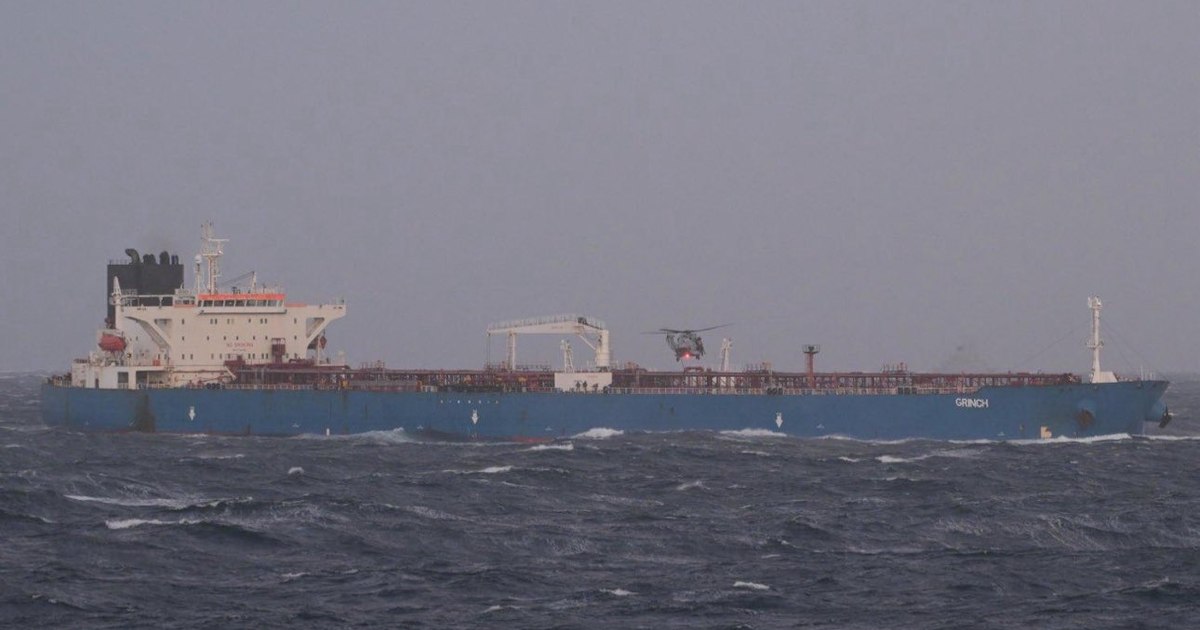
“Worst Nightmare”. The industry is not happy about the increase in fuel prices

This was the second time in four years that top White House officials appeared at S&P Global's CERAWeek conference to urge producers to increase production to cover supply disruptions caused by wartime shocks in oil and natural gas prices.
But unlike the coordinated international response to Russia's 2022 invasion of Ukraine, the war in the Middle East has received little support from allies and appears worryingly ad hoc, industry officials said, leaving it uncertain about how to respond.
-We haven't seen anything like this before. There has been no disruption on this scale in the past, Gareth Ramsay, chief economist at oil and gas giant BP, said at the conference. “It's every oil analyst's research topic or worst nightmare — something we never thought would happen,” he added.
“It's the worst I've ever seen”
Executives of the world's largest oil companies seemed more surprised by the scale of supply disruptions caused by the war than delighted by higher prices.. The war disrupted operations of many companies in the Middle East, and the CEOs of some of them – including Exxon Mobil and Saudi Aramco – were absent from the conference even though high prices boosted their profits.
Exxon Mobil gas station, Los Angeles, USA, September 23, 2024 (illustrative photo)Allison Dinner / PAP
For many in the sector, the war made their greatest fear – the closing of the Strait of Hormuz – become a reality. Water route, which 20 percent world's oil leaving the Middle East to reach a wider market has become the target of attacks by Iran, which has also destroyed or severely damaged major refineries, oil and gas fields and gas export facilities in the Persian Gulf region.
— This is the worst I've ever seen – says Paul Sankey, senior advisor at the consulting firm Oliver Wyman and a long-time energy market analyst, referring to the turmoil in the oil market caused by what he called the “third Gulf War”.
— How do we replace all this gas, all this oil, helium? The list is long, he adds.
The White House said tankers would once again pass freely through the strait — and energy prices would fall — once the United States achieved its military goals.
“President Trump knows exactly what he's doing, and his entire energy team has taken many actions to mitigate the impact of this short-term disruption,” White House spokesman Taylor Rogers said in a statement. “Ultimately, when military objectives are achieved and the Iranian terrorist regime neutralized, oil and gas will flow more freely than ever before and prices will plummet again,” he added.
Great absentees. “We are outraged”
The enormous chaos that the war caused in the industry cast a shadow over the conference itself: there was a noticeable absence from some of the world's top oil producerswho regularly attend the annual meeting in Houston. Exxon Mobil Chairman and CEO Darren Woods, whose company has significant oil and gas operations in the Persian Gulf, and Amin Nasser, CEO of state oil company Saudi Aramco, left this year's conference to address disruption concerns. Top executives of state oil companies from Kuwait and the United Arab Emirates appeared virtually.
Trump administration officials, including Energy Secretary Chris Wright and National Energy Dominance Council executive director Jarrod Agen, met with industry executives throughout the week in Houston and argued that oil companies would heed their calls to speed up drilling.
“Markets do what markets do,” Wright said Monday, noting that rising oil prices should encourage companies to increase production. Agen told POLITICO Pub during CERAWeek that producers “fully support” the administration's actions and that he had not heard any dissent.
Privately, however, members of the oil, gas, investment and insurance industries present at CERAWeek expressed a mix of disbelief that the Trump administration thought it could quickly weaken Iran and concern about how it would affect their businesses and the broader economy.
ConocoPhillips President and CEO Ryan Lance said his discussions with administration officials focused on protecting oil and gas fields, export facilities and refineries in the Middle East.
“Many of my conversations with the administration are actually requests for additional protection for U.S. assets in Qatar,” Lance said.
Oil price changes: 'something no oil company wants to see'
One investment analyst complained to POLITICO that oil traders have to make quick decisions based on Trump's social media posts, only to see the president convey a completely different position moments later. During the first three weeks of the war, oil prices fluctuated in the $40 range. (about PLN 150).
BP's Ramsay said he doubted producers would approve any production increases due to the conflict, calling oil price volatility “something no oil company wants to see.”
— There is no supply reaction in such a short time horizon as we are currently talking about. There is no potential supply reaction, he emphasized.
Geoffrey Pyatt, who led the State Department's energy office under Biden, said the situation was reminiscent of the 2022 crisis, when then-Energy Secretary Jennifer Granholm's call for producers to increase output during the same conference was met with a lukewarm response.
— Perhaps the most important thing I learned from working on these issues in government was the limitation we faced in trying to pull levers to encourage new investment or new production in a sector where [zwrot z inwestycji] is measured in decades, and project timelines go back years,” Pyatt said in an interview.
Difficult search for a replacement for fuels from the Persian Gulf
However, some large companies have also rejected the idea of investing there, with their executives saying they need to see much more reforms from Venezuela to ensure it is ready to scale up production on a large scale.
— [Wenezuelskie władze] have a long way to go to make the country competitive internationally and attract the billions of dollars of investment that is necessary, said ConocoPhillips' Lance. — Not only physical security is needed, but also the inviolability of contracts and durability of policies, he added.
“There are still things that need to happen to encourage investment at the scale that people would like to see.” Reaching a level [produkcji]where Venezuela was 20 years ago, will require tens of billions of dollars and time, Wirth said.
Trump 'needs to feel it in his bones'
The only thing the industry can now clearly predict about the war — which Trump has said at times will last just a few weeks and at other times will end when he “feels it in my bones” — is that its effects will be long-lasting.
Not only will the industry have to rebuild infrastructure in the Middle East, which is worth billions of dollars. Countries struggling with extreme increases in the price of imported energy will likely seek to expand supplies closer to home, executives said.
“These will be side effects that will have a significant impact for a significant period of time,” said Tom Donilon, vice president of investment management firm BlackRock and a former national security adviser in the Obama administration.
Fuel prices will remain high even after the end of hostilities – say analysts. Companies will likely buy more fuel than usual before the war to increase their supplies. Higher fossil fuel prices will give renewable energy a “second chance,” says Brian Falik, chief investment officer at commodities trader Mercuria.
“We will see stockpiling, but this time it won't just be toilet paper,” he says [nawiązując do gromadzenia zapasów tego produktu na początku pandemii COVID-19].