
Why the Government's measures in the fight against fuel prices will not stop the price increases

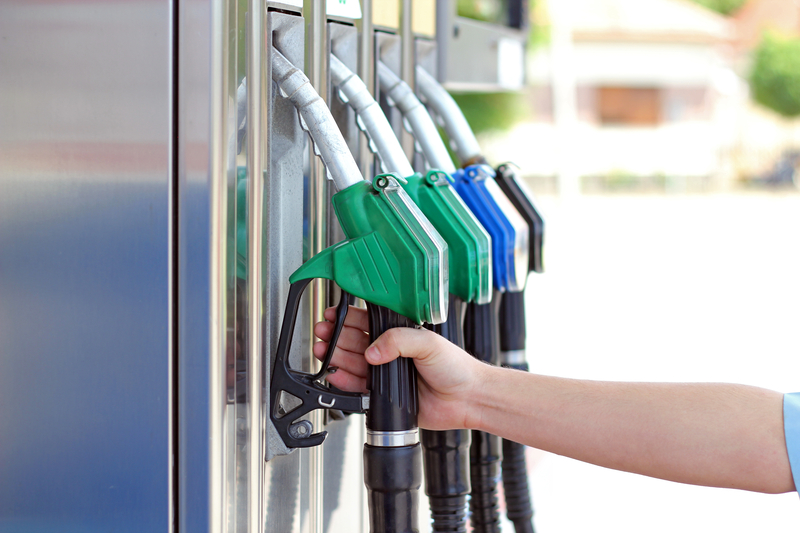
The government announced on Monday that it will take a series of measures that the authorities say will protect the economy and the population from the price crisis at the pump. In reality, however, these measures are just rainwater and will have very little effect at the pump, while fuel prices will continue to rise unabated.
Let's take them one at a time.
The first and most important measure from the Government's package is the capping of the commercial surcharge applied by companies for gasoline, diesel and raw materials, on the entire chain of economic activity, according to a Government statement.
A benefit of this measure is that it limits speculation, but in this period the price increases do not come from the addition practiced by companies, but from the international quotations of oil.
On the other hand, however, capping profit margins can lead to market shortages. That is, companies no longer have any reason to sell fuels, they reduce their production and stop importing. That's how we can find ourselves arriving at the gas station with nothing left to buy (maybe just an expensive sandwich).
In addition, companies can circumvent this rule and offset losses by increasing other internal costs or shifting profits to other segments, such as stores or services.
At the same time, the measure disfavors small companies, which could find themselves at risk of exiting the market, thus affecting competition and, in the long term, the possibility of a natural reduction in pump prices.
The export of fuels will depend on the decision of two ministries
Another measure presented is the prohibition of the export of fuels, which will only be possible with the approval of the Ministry of Economy and the Ministry of Energy.
First of all, it is about limiting the export only for domestically produced fuels (as stated by the Minister of Energy) which, for diesel, means only half of the consumption.
On the other hand, as it is formulated, this measure allows the export to be decided on a discretionary basis, at the discretion of the two ministers.
The main destinations for the export of Romanian diesel are the Republic of Moldova and Ukraine.
Removing the bio component from gasoline – small impact on price, but increases pollution
Another measure announced is the abandonment of the biofuel component that was now in gasoline (8% by volume), this in the conditions where the quotations of biofuels (ethanol to gasoline and biodiesel to diesel) are, as a rule, higher than the quotations of classic fuels. But during this period, when the price of oil increased, the difference between them narrowed.
In addition, the Government only talks about the bio component in gasoline, not the one in diesel. But the price problem is primarily diesel, the fuel most used by both the population and industry.
Furthermore, removing the bio component from gasoline will lead to increased pollution.
In conclusion, all these “measures” will be like a water gun in the price war at gas stations.
The Minister of Energy did not know how to explain the effects of these measures
On Monday, in the press conference in which he presented the measures, the Minister of Energy, Bogdan Ivan, did not know that he was explaining what their concrete effects will be on the prices at gas stations.
Asked by reporters if prices would drop as a result of these ideas, Ivan stuttered and said he didn't have a crystal ball to guess who would attack whom globally.
“At the moment, all these measures have the role of stabilizing, but they cannot change the international dynamics of prices. The measures will have an impact of protecting the market and limiting the negative impact. If you want a definite figure, it would not be… To come back, so far we have proposed a broader set of measures that have been analyzed. Now we have a set of measures that we will adopt and we have another set of measures that, from my point of view, must be taken immediately,” said Minister Ivan.
A measure that would immediately reduce the price at the pump is the reduction of taxes collected by the state, and Ivan says that he came up with this proposal in the Government, but so far no decision has been made in this regard.
Unpopular opinion: leave the car in the parking lot!
However, there is a cheap and simple measure, which no one in the Government has thought of until now. Or maybe he thought, but no one said it out loud. It is about encouraging the population to reduce fuel consumption and turn to alternative methods of travel.
Of course, for Romanians, these recommendations can bring back sad memories from the communist era, when we used to drive alternately if we had odd or even numbers on our cars and stood in queues for kilometers (literally) when fuel was available in gas stations.
What we can do is stop waiting for measures only from the Government and participate in the efforts to counter this crisis: leave the car in the parking lot and use public transport more or group with colleagues to share the costs of commuting to work, for example, where possible.
Likewise, let's use bicycles or scooters, especially now that it's warm outside. And let's not forget that walking makes the legs beautiful.


