
Iran has announced what it will do if Trump strikes energy infrastructure. The Revolutionary Guards also talk about “legitimate targets” in the region

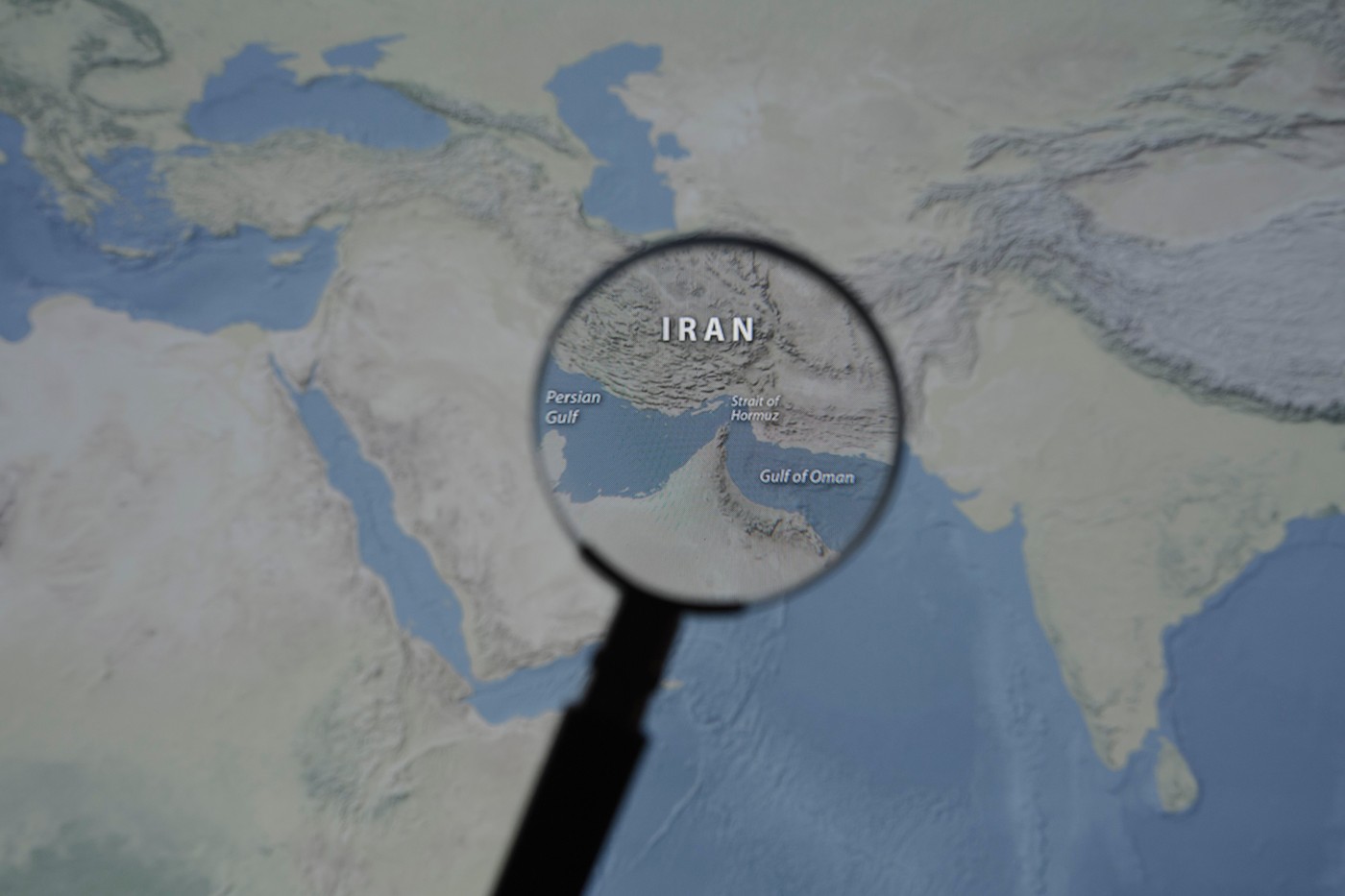
Iran will completely close the strategic Strait of Hormuz if US President Donald Trump carries out his threats to strike Iran's energy infrastructure, the Revolutionary Guards said on Sunday, according to Reuters and CNN.
Trump on Saturday threatened to “wipe off the face of the earth” Iran's energy plants if Tehran does not fully reopen the Strait of Hormuz within 48 hours.
In Sunday's statement, Iran's Revolutionary Guards also said that companies in which there are US stakes will be “completely destroyed” if Washington strikes Iran's energy infrastructure, and energy facilities in countries that host US military bases will be considered “legitimate targets”.
Earlier, Iranian Parliament Speaker Mohammad Baqer Qalibaf wrote in a post on X that critical infrastructure and energy facilities in the Middle East would be “irreversibly destroyed” if Iran's power plants were targeted.
Earlier, Tehran's representative at the UN maritime agency had said the Strait of Hormuz remains open to shipping, except for ships associated with “enemies of Iran”.
Ali Mousavi said Tehran is ready to cooperate with the International Maritime Organization to improve navigation safety and protect seafarers in the Gulf. He added that ships not associated with “enemies of Iran” can cross the strait if they coordinate their security and safety measures with Iranian authorities.
“Diplomacy remains Iran's priority. However, a complete cessation of aggression as well as mutual trust are even more important,” Mousavi said, adding that Israel and the United States' attacks against Iran are “at the root of the current situation in the Strait of Hormuz.”
Donald Trump issued a 48-hour ultimatum on Saturday night to fully reopen the sea route through which about a fifth of the world's oil and liquefied natural gas transits. Otherwise, the United States will strike Iran's energy infrastructure.
“If Iran does not TOTALLY reopen, WITHOUT ANY THREAT, the Strait of Hormuz within 48 HOURS from this precise moment, the United States of America will strike and destroy its various POWER PLANTS, STARTING WITH THE BIGGEST ONE!”, the US leader said Saturday evening, in a message posted on his Truth Social platform.
Trump posted on his Truth Social platform at 23:44 GMT on March 21, which means Iran has until 23:44 GMT on March 23 (01:44 Romanian time on March 24 and 03:14 in Tehran) to comply with the US president's request.
Iran's military responded on Sunday, announcing it would target energy infrastructure and desalination plants in the region if Donald Trump followed through on his threat to destroy the country's power plants.
Impact of closing the Strait of Hormuz
About 3,000 ships typically pass through the strait each month, but that number has dropped dramatically recently as Iran threatens to attack oil tankers and other ships.
At least 21 ships have been hit, targeted or reported attacked since the start of the war, according to an AFP tally published on March 18.
Global fuel prices skyrocketed following the war. The price of crude oil has topped $100 a barrel – up nearly 70% this year and up nearly 50% from last year.
The Strait of Hormuz is more than an energy route for the Persian Gulf countries, being the route through which most of the food shipments the region imports pass through, one now considered high risk by insurers and shipping companies, according to CNN.
Saudi Arabia imports over 80% of its food, the United Arab Emirates, around 90%, and Qatar – around 98%. Most of Iraq's food imports also pass through the Strait of Hormuz.
Even Iran, which closed the strait in response to attacks by the United States and Israel against it, depends on Hormuz for much of its trade.
Tehran's conditions for peace
Iranian President Masoud Pezeshkian said on Saturday that an “immediate cessation of aggression by the US and Israel, along with guarantees against their future repetition,” was the only way to end the war and prevent a wider regional catastrophe, The Guardian reported.
Speaking on the phone with Indian Prime Minister Narendra Modi, the Iranian leader said any solution must include firm guarantees to prevent future military attacks against Iran, according to a statement issued by Iran's embassy in India.
The parliamentary committee on foreign policy and national security circulated an additional condition for ending the war. Through the voice of a spokesman, the forum said Iran should be given a permanent seat on the UN Security Council with veto power, according to the opposition publication Iran International, a Persian-language satellite TV channel and multilingual digital news agency based in London.
Iran threatens to hit 'parks' and 'tourist destinations anywhere in the world'
Iranian military spokesman General Abolfazl Shekarchi said on state television that “tourist destinations anywhere in the world” could become Tehran's targets.
“From now on, based on the information we have about you, even parks, recreation areas and tourist destinations anywhere in the world will no longer be safe for you,” the Iranian military official said, according to the AP and New York Post.
Shekarchi's statement, which did not name specific targets, reignited fears that Tehran could resort to terrorist attacks outside the Middle East to pressure its adversaries.
High alert in Europe
On Saturday, an Interior Ministry spokesman in Berlin announced that the threat level from the Iranian government and its actors is assessed as very high.
The warning of the German authorities is doubled by the alarm signal launched, the same weekend, by the head of the Israeli army, Eyal Zamir. He pointed out that major European capitals have already come within direct threat range of new Iranian ballistic missiles after a recent test targeted a US base in the Indian Ocean.
“These missiles were not intended to hit Israel. Their range reaches as far as the capitals of Europe – Berlin, Paris and Rome are all within direct threat range,” Eyal Zamir said in a video message, quoted by The Times of Israel.
Iran has launched missiles with twice the range of what it was previously known to have
Referring to Friday's Iranian attack on the US-UK base on the island of Diego Garcia, the head of the Israeli army said that Tehran used a ballistic missile with a range of 4,000 kilometers. This capability exceeds the 2,000 kilometer limit that Iran has publicly claimed so far, demonstrating double the range.
If with the known missiles that hit at about 2,000 km, only part of Eastern Europe fell under the umbrella of the ballistic threat, the new missiles can target almost the entire continent.
Thus, depending on where in Iran they are launched, Tehran's intermediate missiles can threaten European capitals such as Berlin, Paris, Rome or even London.
In such a scenario, it is NATO's anti-missile shield, with its bases at Deveselu and Redzikowo in Poland, that can intervene to intercept Iranian missiles.
Bigger story here: implied range of an Iranian IRBM from a launch box in central Iran, with a range of ~4500 km (distance to Diego Garcia).
Theoretically could also target sites in Central Europe. pic.twitter.com/8KCQtsHPQ4
— OSINTtechnical (@Osinttechnical) March 21, 2026
The Deveselu Shield was established precisely to counter the threat of ballistic missiles launched by Iran against any area in Europe.
At Deveselu, the United States installed a SPY-1 3D PESA (Passive Electronically Scanned Array) radar with a detection range of about 300 km, as well as a battery of SM-3 interceptor missiles in MK-41 vertical launchers.
The same type of interceptor missiles were used by the US to shoot down one of two intermediate-range ballistic missiles fired by Iran at the Diego Garcia base overnight Friday into Saturday.
SM-3 block IIA interceptors, such as those at Deveselu, have a diameter of 53.3 cm, a length of 6.55 m, an operating range of 1,200 km and an altitude ceiling of between 900 and 1,050 km, depending on the type of intercepted target.


