Ali Larijani, the head of national security and one of the most powerful figures in Iran's political and military establishment, was killed overnight, marking a possible turning point for the Islamic Republic. Considered Iran's de facto leader since last year's 12-day war, he has taken over the reins of the current war, vowing revenge after the former supreme leader's death.
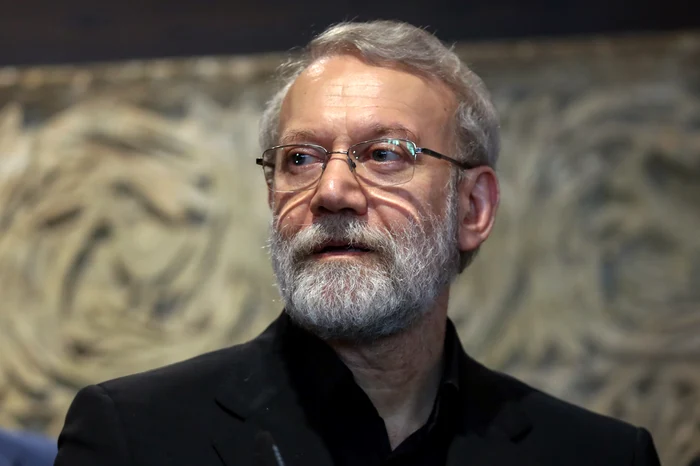
The former head of the National Security Council Ali Larijani was killed on Monday PHOTO EPA-EFE
Hours after Khamenei's death was announced, Larijani issued a stark warning. “Today we will hit them with a force they have never experienced before,” he wrote in a message published on social media, the Daily Mail reports.
A targeted operation
Israeli officials claim that Larijani was taken out in a “precision strike” carried out by the air force on the night of March 17, based on intelligence.
According to Israeli media, the operation had been originally planned a few days before, but was allegedly postponed at the last minute. Later, the intelligence services learned that he was going to move to one of the apartments used as a hideout near Tehran, together with his son, instead of staying at his usual residence.
On the order of the Israeli prime minister, precision strikes were launched and the mission was quickly completed, an Israeli security source told Channel 12. “There is no way he would have survived this attack.”
Israeli officials also stated that the operation was also possible thanks to information provided by locals. “In the last 24 hours,” we have received valuable information from residents of Tehran, an official told Iran International. “Over the past few days, Larijani has behaved arrogantly, appearing frequently in public (including at Quds Day rallies), interacting with both local and international media, and thus exposing himself to the public gaze, which ultimately led to his identification,” the official said.
Following the announcement of Larijani's death, the Israeli Prime Minister's X account posted a photo of Netanyahu on the phone, “ordering the removal of senior officials of the Iranian regime.”
“The IDF announces that on the night of March 17, 2026, the Israeli Air Force, acting on IDF intelligence and integrating unique operational capabilities, conducted a precision strike that eliminated Ali Larijani, the Secretary of Iran's Supreme National Security Council, who was acting as the de facto leader of the Iranian terrorist regime“, an IDF statement said.
Conflicting messages from Tehran
Iranian state media initially questioned reports of Larijani's death, suggesting they were false and promising evidence that he was alive. However, no video footage or direct statement has emerged. Instead, a handwritten note attributed to Larijani commemorating Iranian “martyrs” was published, a document believed to have been drafted before the attack.
More leaders eliminated
Israeli Defense Minister Israel Katz confirmed that Gholamreza Soleimani, commander of the Basij paramilitary forces, was also killed in a separate attack.
“Larijani and the Basij commander were eliminated overnight and joined Khamenei and the rest of the Axis of Evil in the depths of hell”Katz said. “The regime's leaders are being removed and its capabilities are being neutralized.”
Iran's security chief rejects negotiations with the US and attacks Trump: “He threw the region into chaos with his illusory dreams”
Larijani's death, in particular, will undoubtedly be a devastating blow to Iran, as he was a central figure in both the country's war machine and bloody repression, nimbly managing the religious establishment and matters of foreign diplomacy.
Just last week, in a defiant message on Iranian state television, he warned Donald Trump to “be careful not to be removed”, before mocking the US president for his “serious miscalculation”.
Marching through the streets of Tehran in a show of bravado, the head of national security dismissed the Israeli-American attacks on the capital as an “act of desperation”.
“These attacks are motivated by fear, by desperation. Someone powerful would not bomb demonstrations. It is clear that they have failed,” Larijani said at the Quds Day march.
A pillar of strength
Larijani, 67, has been a central figure in Iran's political system for decades. Former president of the Parliament and leader in the field of security, he ensured communication between the religious leadership, military structures and foreign diplomacy.
He was considered the architect of Iran's internal security strategy, including this year's crackdown on massive protests that reportedly killed tens of thousands of civilians.
“Larijani is an insider, a skilled strategist, who knows perfectly the mechanisms of the system,” previously stated Ali Vaez, an expert at the International Crisis Group.
Although he could not become supreme leader – a position reserved for clerics – Larijani reportedly tried to consolidate his power after Khamenei's death. He had already marginalized President Masoud Pezeshkian and was coordinating negotiations with the West before the war broke out.
Power vacuum and uncertainty
The new supreme leader, Ayatollah Mojtaba Khamenei, has not appeared in public since his appointment. There are unconfirmed rumors that he was injured in an airstrike or even evacuated to Moscow for treatment.
Trump says it's an “honor” to remove Iranian leaders who are “killing innocent people.” Tehran's reaction: “We are a determined nation”
Born in Najaf, Iraq, in 1957 to a family of prominent Shiite clerics close to the founder of the Islamic Republic, Ayatollah Ruhollah Khomeini, Larijani's family has wielded significant influence within the Iranian political system for decades.
Larijani ran in the 2005 presidential election, losing to populist candidate Mahmoud Ahmadinejad, with whom he later fell out over nuclear diplomacy. Larijani was then disqualified from the presidential race in both 2021 and 2024.
Recently, he was appointed Khamenei's personal envoy to Vladimir Putin and met with the Russian president in Moscow. He also appeared on Al Jazeera to state that Tehran had learned the lessons of last year's conflict with Israel and that this time it would retaliate with force.
The IDF also confirmed that it had assassinated the head of the IRGC's Basij paramilitary militia, Soleimani, who ordered the massacre of thousands of anti-government protesters in January.
He and his deputy, Seyyed Karishi, were killed in a makeshift tented area that had been set up to make tracking them difficult, as opposed to a known headquarters.
The army also announced that it had killed the head of the IRGC's Aerospace Forces.
The conflict, now in its third week, has already left more than 2,000 dead in Iran, as concerns of a regional spread of the war grow.
The Strait of Hormuz, critical for global energy transport, remains largely blocked while European allies have refused Washington's requests to send warships.