Trump, bizarre monologue about paint and marble, in full crisis in the Middle East. Medical secrets revealed to the press

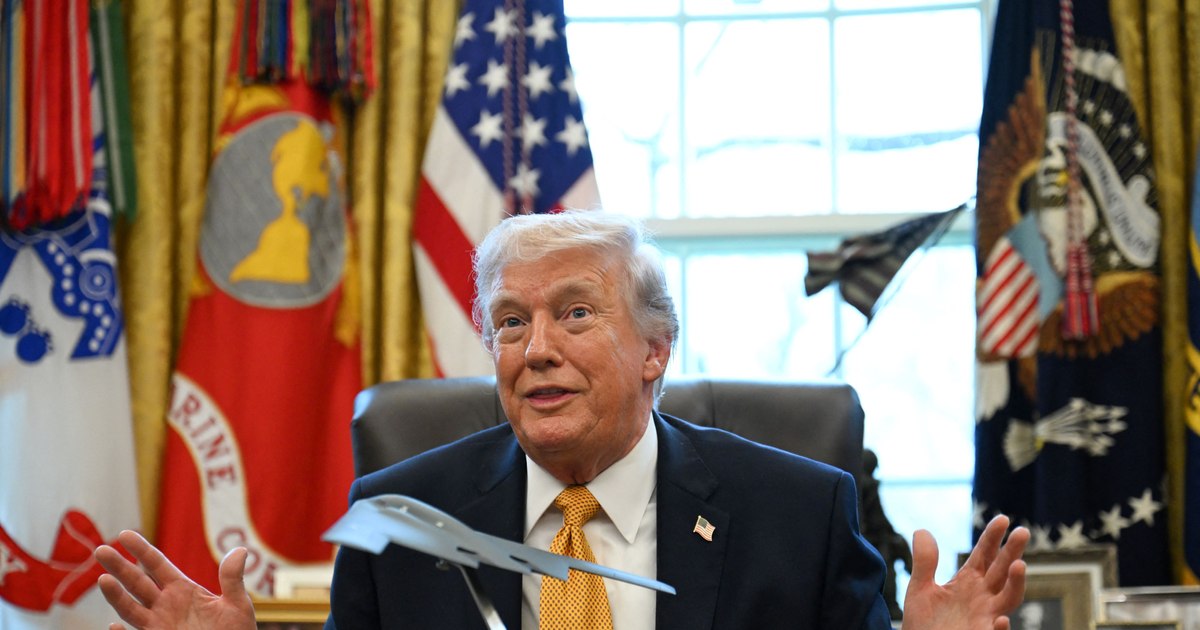
After announcing on Truth Social a “press conference” on the 17th day of the war in the Middle East, Donald Trump held long and incoherent monologues on Monday, referring, among other things, to his big projects and the health problems of a congressman, AFP journalists note.
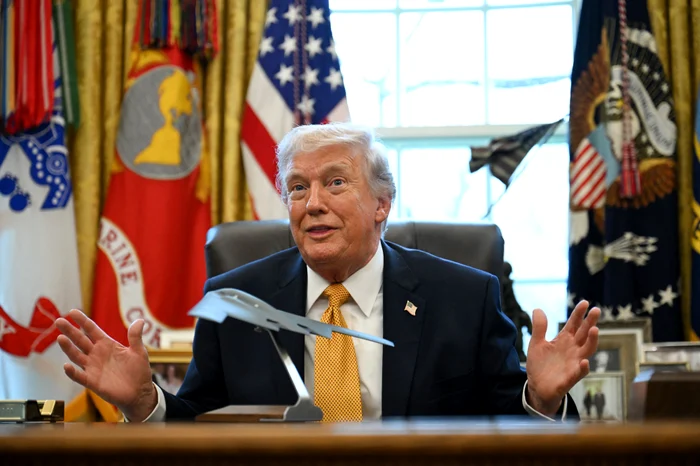
Donald Trump, US President PHOTO AFP
The American president had announced on his Truth Social network a “press conference”, taking by surprise and creating expectations. The White House later specified that it would be more of an informal discussion with several journalists present at a meeting dedicated to the Trump Kennedy Center, the emblematic performance hall of the American capital.
Trump first launched into a long improvisation, dedicated at first to the offensive against Iran and the situation in the Strait of Hormuz, then to topics unrelated to the Israeli-American offensive, writes the News.
Gold paint
He has long insisted on the upcoming renovation of the Kennedy Center, renamed the Trump-Kennedy Center in his honor. “What I do best in life is to build“, said Donald Trump, who took over this cultural institution.
He then praised “the beautiful golden curtains” behind him, before mentioning another construction site he launched: the construction of a ballroom at the White House. “This entire floor will be a cocktail lounge,” he described. “We're under budget, except for the marble, which will be top quality. We're using onyx and stones that are incredible.”detailed the head of the White House.
Trump then brought up the Kennedy Center, where he will also install “very beautiful marble” and whose paintings he described in detail. “It was painted a cheap gold and I painted it white, a very thick coat of very strong white,” he declared. “No one has ever managed to make gold paint that looks real“.
“It wasn't something public”
A little later in his intervention, Donald Trump reached the fragile majority of Republicans in the House of Representatives. “Death is very bad when you have a majority of two or three seats”, he said, before speaking, to everyone's surprise, about a conservative congressman from Florida who is “very sick”.
“He was sentenced until June” the president said, referring to this congressman, Neal Dunn. “It wasn't something public“, remarked the president of the House of Representatives, Mike Johnson, sitting to the right of the head of state and visibly embarrassed.
Donald Trump then suggested that the president-elect was saved because of the help he gave him to find the best possible medical care, saying: “I did it first for him, then to keep his place”, implying that the second reason mattered almost as much as the first.
Next to Trump, to his left, was his chief of staff, Susie Wiles, whom Trump had revealed a little earlier, on Truth Social, that she had breast cancer.
“They got used to being bombed”
When he opened the question-and-answer session with the press, after about thirty minutes of improvisation, Donald Trump was asked about the war in the Middle East, and his answers gave rise to other digressions.
When asked about Lebanon, he recounted, for example, that he spoke to a person “very important” and “rich”whose parents live in this country. “They got used to being bombed“, said the American president, adding: “I imagine they're getting used to it. I don't know, there are people who live in Ukraine, you might think they wouldn't want to live in Ukraine, but they live in Ukraine. I don't think I would do that.”
Claims to have predicted the September 2001 attacks
Donald Trump also claimed that he predicted that Iran would use the Strait of Hormuz as a “weapon”, before adding: “I predicted that Osama bin Laden would destroy the World Trade Center” in a book published a year before the attacks of September 11, 2001 in the United States.
It is not the first time that the American president makes this statement, which several American media outlets have proven to be false. The book contains a mention of the founder of Al-Qaida, but without associating him with a specific threat against the United States.