The conflict in the Middle East is constantly changing. Although attacks on several states, including the United Arab Emirates, are declining and some flights have resumed, the effects of the conflict are increasingly spreading across the economy, including sectors such as real estate, tourism and aviation.
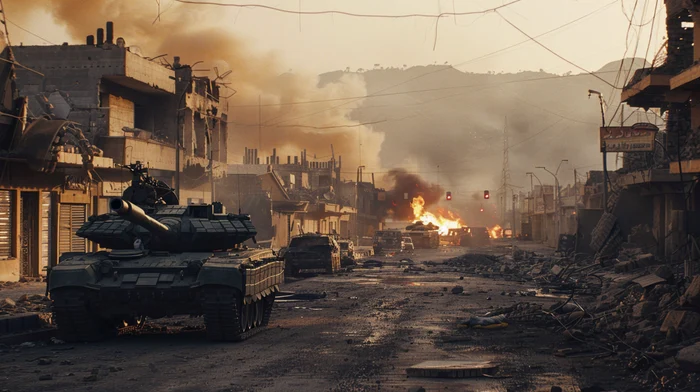
The conflict in the Middle East is constantly changing. Archive photo
In the two weeks that have passed since the outbreak of the conflict, analysts say that the war risks extending beyond the short horizon that would have limited the effects on the global economy, according to an analysis of the economic effects of the war in Iran at the global level. There is, however, a daily pumping limit, which would stretch the effective use of resources over almost 200 days. Brent crude has recently risen above $100/barrel and is more than 60% higher than at the beginning of the year.
The impact of a one standard deviation oil price shock was associated with a 0.3 percentage point jump in inflation in one quarter, and a cumulative 1.2 points after two years, according to an IMF study, at the global median.
Time is of the essence
The duration of the conflict, the level of traffic bottlenecks and damage to transport and production infrastructure will ultimately determine the impact on oil prices and the true size of the price shock. One standard deviation, however, is close to what happened after the conflict in Ukraine.
The dispersion of effects is not uniform globally. Asia, Thailand, India, South Korea and the Philippines are vulnerable countries with a high dependence on oil imports. On the other hand, Malaysia, a net exporter, would be a relative beneficiary, states Claudiu Cazacu, strategy consultant within XTB Romania.
India has prioritized LPG resources (two-thirds imported, 90% via Hormuz) to the population, leaving restaurants and hotels scrambling to be classified as essential sectors. If the situation drags on, some will switch to wood, kerosene or electric stoves, but some of them risk closure, affecting a $79 billion industry.
Japan introduced subsidies of about ¥170 per liter and the release of 80 million barrels of oil. Japan's stock index is, despite these measures, 7.5% below its pre-Iran conflict level, a better performance, however, than South Korea's, which lost 10.6% over the same period.
An additional concern for the semiconductor industry is the dwindling supply of helium, used in several essential manufacturing processes, and for which Qatar supplies a third of the world's demand. SK Hynix is down 12.4% since the start of the Iran war, and Samsung is down 13.2%. The South Korean won lost 2.7% against the US dollar.
While the Strait of Hormuz limits traffic to Iraq, Kuwait, Bahrain, Qatar, the United Arab Emirates and partly Saudi Arabia, Iran has started using the Jask terminal in the south of the strait, which thus bypasses the disputed region. Although much less efficient, it was used to send a 2 million barrel oil tanker, a rare operation in recent years.
A US-Iran war could significantly affect the European gas market. The blockade of the Strait of Hormuz may paralyze the energy market
China is still receiving oil from Iran, although the 1.2 million barrels per day is almost half the pace seen in February. China has estimated reserves of 1.2 billion barrels, which could last for 3-4 months of production.
With gas production halted, Qatar is losing revenue every day. So are other states in the region, including Saudi Arabia, which cannot deliver at capacity, although it has some alternative options.
Who suffers in this economic war?
One of the big losers of the war is the aviation and tourism sector. Emirates and Qatar Airways have grounded most of their planes. For other carriers operating in the region, the canceled routes and increased fuel cost for those who did not lock in the previous prices will severely affect profitability. Wizz air shares have fallen by 24.2% since the start of hostilities.
Amazon and Microsoft have data centers in the Emirates and Bahrain that have been threatened by missiles. Amazon has even confirmed direct damage, although the indirect effects of energy supply and, in the long term, the appetite to make investments in the region are also relevant, explains the strategy consultant of XTB Romania.
Dubai airport, the largest by passenger numbers, is heavily affected by massive flight cancellations. The Emirates derives 13% of its GDP from tourism, and Dubai had 9.88 million visitors in the first half of last year alone.
At the same time, the ambition of the Dubai authorities to become a global financial center rivaling London and New York has been dealt a blow, although the duration of the conflict will be the decisive element in regaining confidence and a return to a normalcy essential to its appeal.
Banks and investment firms such as Citi, Goldman Sachs, Morgan Stanley or Standard Chartered have allowed employees to either relocate or work remotely. According to sources, some have put expansion plans in the region on hold, and some reports suggest assets moved to Singapore.
Relocations, declining tourism and the general shock to confidence can also severely affect real estate investment. Winners could be other destinations such as Europe, Oceania or some regions in and around Africa for tourism, or Singapore, in addition to the established financial centers, for the business environment.
In recent years, the real estate market in Dubai has attracted a flow of global investors, including from Romania. The risk of seeing fewer tourists, but also investors and companies has increased, and is increased every day by the fighting in the region.
It is about one of the most effervescent real estate markets in the world, with a transaction volume of 250 billion dollars last year, a historic peak, almost half of which in the residential sector. Prices have advanced by over 60% in the last 5 years. The first reaction in markets with previously strong growth is to slow down trading, but if the situation continues, a decline in prices could become a reality, with knock-on effects for global investors.
“Will it be a temporary relocation for most or a long-term rethink? The scenario of the regional future depends on this answer“, believes Claudiu Cazacu, adding that essential variables are the duration of the conflict and the way peace is established. If trust is rebuilt sustainably, the shock will be overcome, although the horizon could be measured in several quarters or years, points out the analyst.