The Israeli government has repeatedly stated that it wants to finally “eliminate” the weakened militia. Hezbollah is to be completely disarmed, and Israel demands the creation of a buffer zone in southern Lebanon along its border – probably up to the Litani River, about 25 km into the country. Even if the war with Iran ends, Israel will not abandon these goals.
In early March, the Lebanese government officially banned all Hezbollah military activities. However, the reality is different: an entrenched militia continues to fire drones and rockets into northern Israel and fights with the Israeli army in southern Lebanon. The Lebanese armed forces have hardly intervened so far.
The army's commander-in-chief, General Rodolph Hajkal, publicly stated that he did not want to risk a military confrontation with Hezbollah. The unity of the country is at risk. Prime Minister Nawaf Salam is demanding military intervention, but so far he has been unable to force it through – also because President Joseph Aoun insists on restraint.
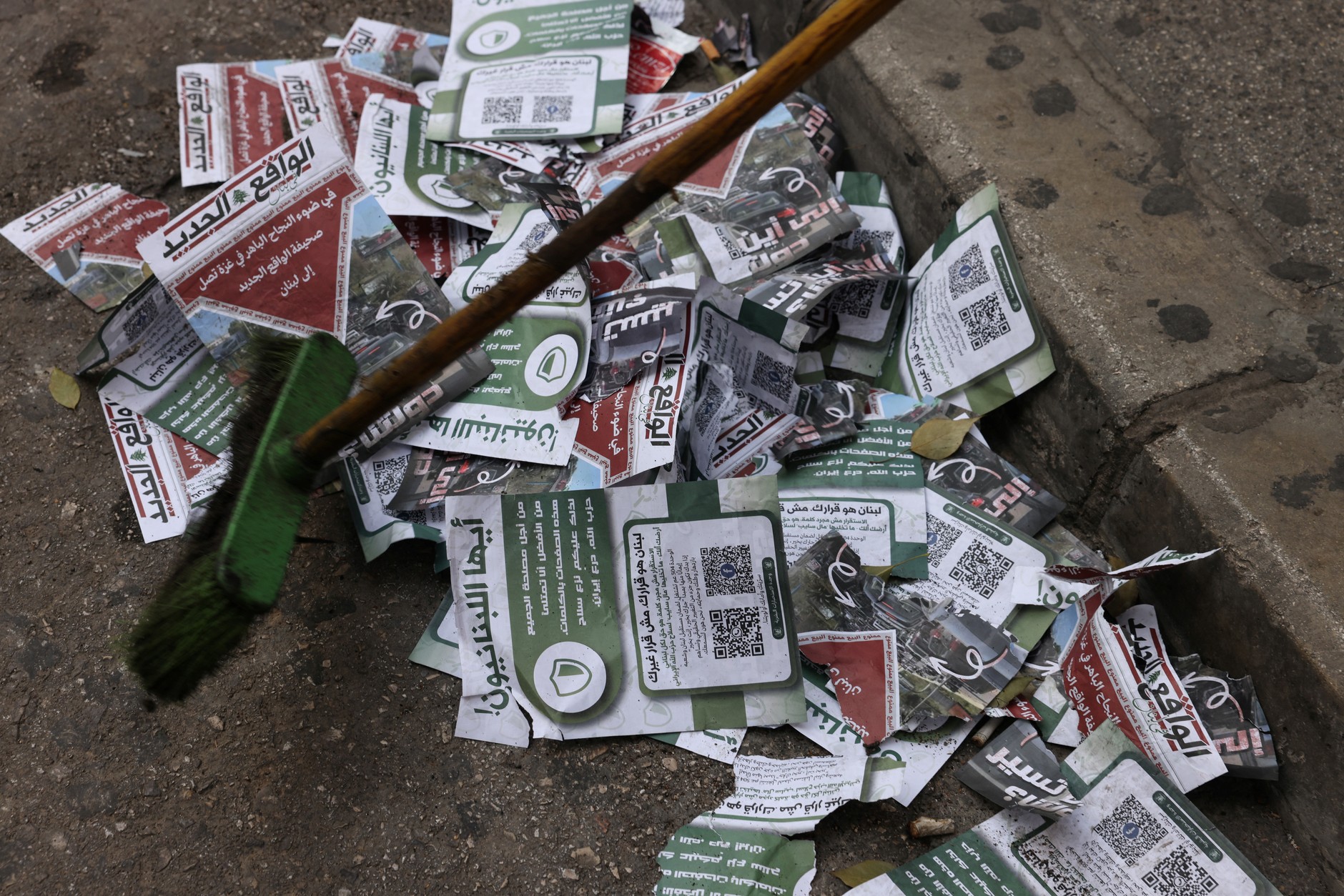
Propaganda warning leaflets dropped by the Israeli armed forces over the capital of Lebanon, Beirut, on March 13, 2026. One of the leaflets addressed to the Lebanese included the inscriptions: “You must disarm Hezbollah, the shield of Iran” and “Lebanon is your decision, not someone else's.” The leaflet also contains a QR code along with the phrase: “Unit 504 works to secure the future of Lebanon and its people.”Anwar AMRO / AFP / AFP
Yet the task was actually clear. After the ceasefire with Israel at the end of 2024, the Lebanese army – supported by the UN peacekeeping forces stationed in the country – was supposed to disarm Hezbollah. It was part of the agreement. Today, if you look at the number of fighters and weapons that the militia still has in southern Lebanon, only one conclusion can be drawn: this mission was a spectacular failure.
Simultaneously the humanitarian situation is deteriorating dramatically. In recent weeks, over 700 thousand people had to leave their homes because of the fighting. This means that currently approximately every ninth resident of the country is on the road. Many of them were already living in poverty – and now they see no prospects.
French President Emmanuel Macron has been warning about a disaster for several days. “Everything must be done to prevent Lebanon from descending into chaos,” he said after a conversation with the Lebanese president. Macron is trying to persuade Israel and Lebanon to enter into ceasefire negotiations in Paris. But whether this can lead to true peace—and the disarmament of Hezbollah—seems highly questionable.
Civil war with Hezbollah or total war with Israel
For years, many Christians, Druze, and some of the Sunni population have been hoping for the end of Hezbollah. Its fighters too often dragged all of Lebanon into conflict. Since October 2023 alone, fighting (including aggressive attacks by Israel) has caused damage amounting to tens of billions (euros), killed many civilians and forced hundreds of thousands of people to flee.
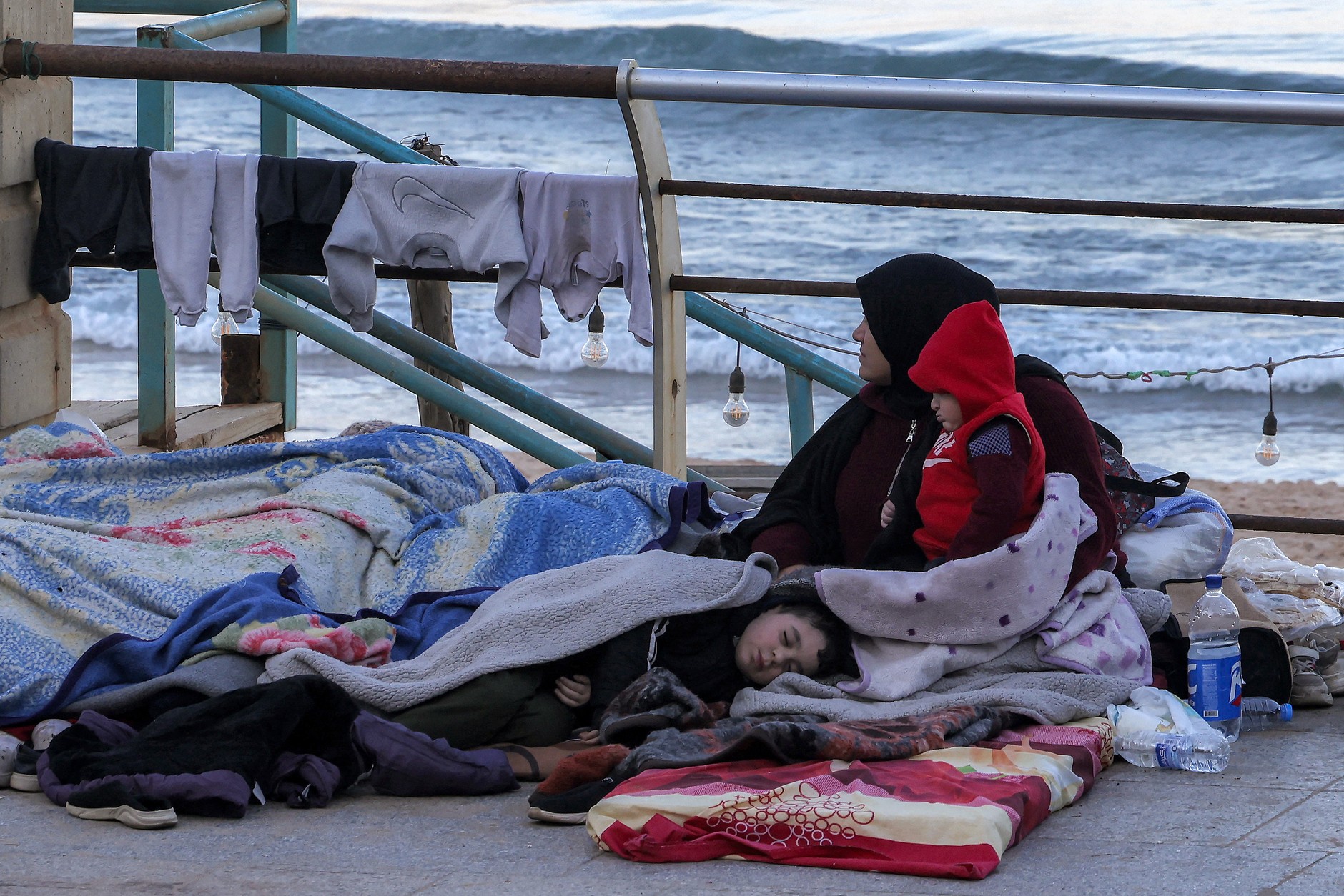
A woman with children in a makeshift camp on the seafront in Beirut after fleeing southern suburbs due to Israeli bombing, Lebanon, March 10, 2026.Anwar AMRO / AFP / AFP
The situation now requires a decision. If the Lebanese army and other forces in the country oppose Hezbollah, there is a high risk of a civil war breaking out — and the militia will fight for survival. If the Lebanese authorities continue to delay, Israel will expand war in Lebanon — while destroying much more infrastructure than before.
However, diplomats in Beirut propose third solution: As part of a possible peace agreement between the Israeli-US alliance and Iran, it could be agreed to disband all Iranian proxy organizations (Iran's allies) — and thus also end financial support (of the Iranian regime) for Hezbollah. This would significantly weaken the militia and perhaps even lead to its collapse. However, the region is currently far from such a scenario.