Mihail Kogălniceanu, Romania's hottest point: “As if someone is controlling the Americans? They can also bring a chemical weapon”

Mihail Kogălniceanu, the small Dobrogean settlement located on the road that connects the city of Constanța with Hârșova, kept more memories of the Germans than of the Americans who were stationed in the military base. After their departure from the town, legends were woven, which are told on the street corner.
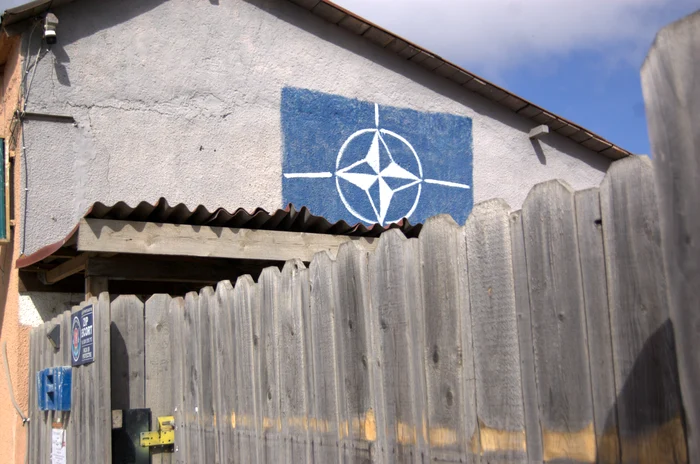
Bar of the Americans in Mihail Kogalniceanu
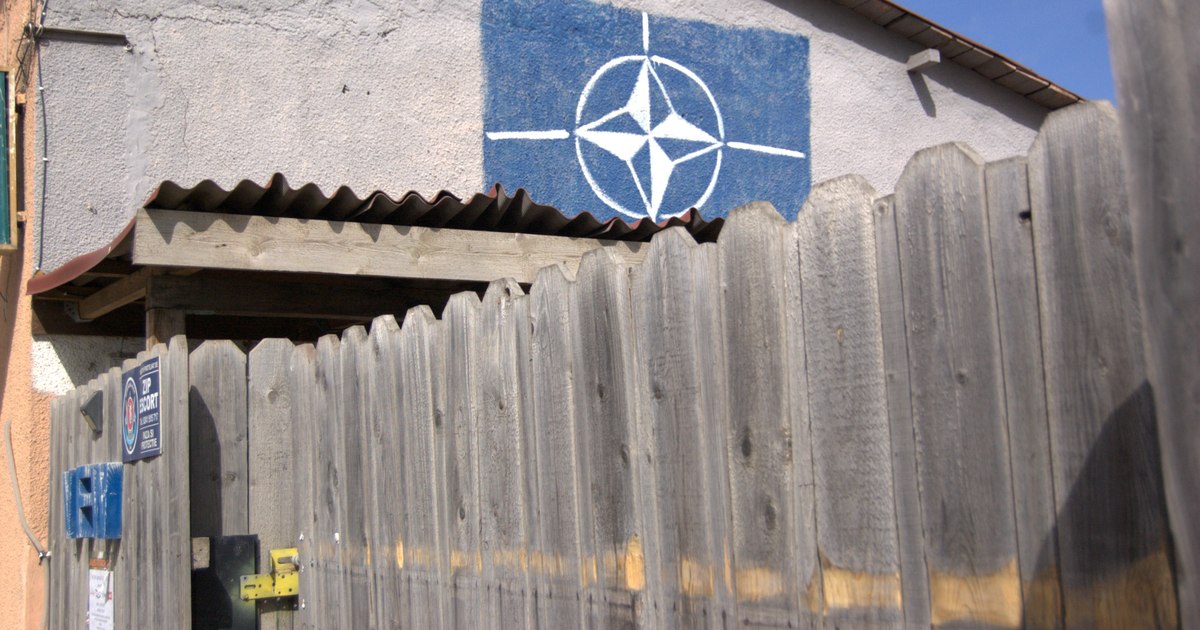
At the entrance from Constanța to Mihail Kogălniceanu, a bar now closed, but which does not seem to have been anything of the kind once, has the NATO flag painted on the outside wall. The locals tell him: “To the American”. Here, people say, only American soldiers stationed at the military base in the town came.
“It was a bar just for them, only they came in here”the people explain to us. Now, the space has a lock on the door, and on the long unpainted wooden fence are three wooden initials: VFW. A weathered poster announces an event that took place on June 13, 2025. If you go around the building you discover, behind a reed fence and another metal fence, a roof black with smoke, probably from a fire. The broken windows are closed in places, but pieces of protective wood can be seen behind the hatches. This bar is about the only memory that connects the locals with the Americans with whom they shared the town and the few restaurants of the kind that can be counted on the fingers of one world.
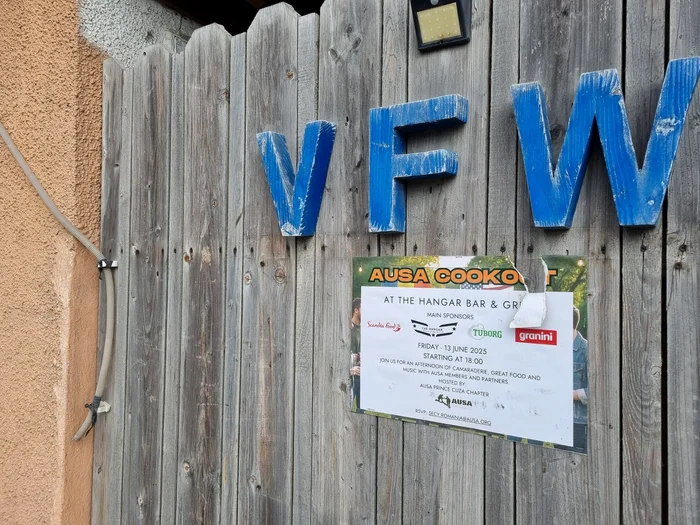
Closed bar Mihail Kogalniceanu
The name of Mihail Kogălniceanu commune in Constanța county is again on the lips of all Romanians and not only, after it was decided that American soldiers will come here again and American technical means of a defensive nature will be brought, following the decision of the Supreme Defense Council regarding the request of the United States to temporarily deploy planes and troops in Romania, in the context of the crisis in the Middle East.
The US military is not new to this settlement. In 2003, the Base served as a support point for US troops involved in the Iraq war, and after 14 years since the landing in February 2003, the Americans arrived again at Mihail Kogălniceanu, to ensure peace and regional stability on NATO's eastern flank. At the end of last year, approximately 1,000 American soldiers were withdrawn from the Mihail Kogălniceanu Base in Constanta, the number of those who remained being unknown.
“Everyone is against it. We are also guarded, but if they are going to bomb, we are the first”
The most entitled to comment on the arrival of the Americans and the fate of the world are considered to be the locals, those who have mingled with NATO soldiers for many years. On the street, in the shops or in the pubs, the war is the main topic of discussion. Predictions are made about how long the conflict in the Middle East will last. Some give Donald Trump advice, others curse him. “Americans like you come to make money and we talk for nothing”, recognize a man.
“It's good that I'm coming. We had 3,000-4,000 soldiers here, with us, now another installment is coming“, says one.
His bank colleague contradicts him: “Everyone is against it. We are also guarded, but if they are going to bomb, we are the first. It's as if someone is controlling them… if they also bring a chemical weapon… How is the airport fenced off, who can see what's inside?“, he asks himself.
Some are of the opinion that in a few days Trump will bring Iran to its knees, others that “it lasts four more years, as long as Putin tries to conquer Ukraine”.
“You take after Trump?“, he addresses the first one. “Haven't you seen what's happening in that strait with all the oil tankers?”.
They were not bad with the Americans. “They gave jobs to people: drivers, green space maintenance, construction, painters, repairs, warehouses. People also came from Constanța to work here, from Târgușor, Nicolae Bălcescu, because he provides their transport”. The Americans also renovated a school and a kindergarten.
Imagined or not, they say that Americans, men and women, often got drunk in local pubs. “The women would come and drink vodka with beer, they would make a fuss and their van would come to pick them up, also load their bill… then they made them a restaurant…”they say.
What bothered them the most was that they were forced to give their arable land for 50 cents a square meter to build a NATO base here. “It was arable land, people cultivated wheat, corn, alfalfa. They took the land wholesale, pushed the Romanians forward. People made noise…“, recalls a local. The others support him, a sign that he is right.
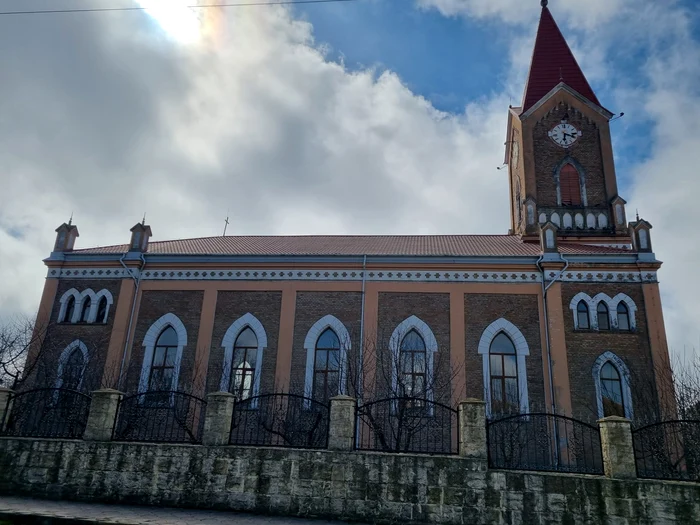
Catholic Church in Mihail Kogalniceanu
The beautiful weather outside encourages them to go for a walk. The war is far away. “Where are we walking today?“, one of them asks. “I heard that they have a beautiful girl at the store”.
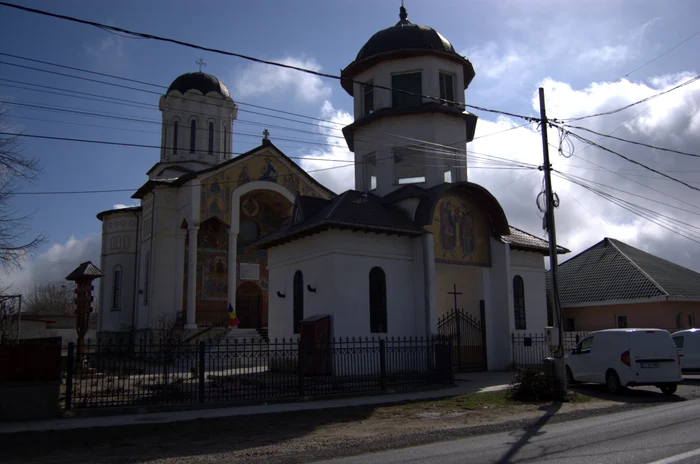
The Orthodox Church of Mihail Kogalniceanu
“We also get along well in pubs”
Toward the center of the commune, at the small store opposite the Catholic church, many people stop to buy something. “I heard the Americans are coming. We are afraid of war, we are quiet. I didn't touch the wars, neither the first nor the second. Yes, we see what is happening in the world, that's why we are afraid. The drones don't reach us because they are 2,800 kilometers away. We felt very safe with the Americans here, but we are afraid that something will start. We also get along well at pubs, because I still go out to pubs in the evening, he still allows them. They come near the forest there, he gave them permission to go out on Saturday“, says a local.
Romania accepts the US request in CSAT: American aircraft and equipment on the country's territory. Nicușor Dan: “I assure the Romanians that they have no reason to worry”
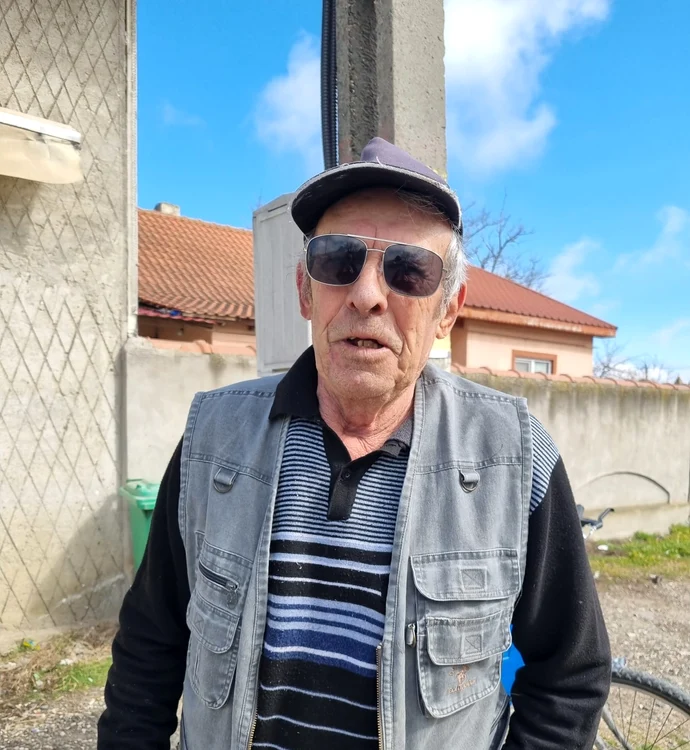
Local from the commune
A woman who lives in the blocks at the entrance to the village looks at the future with fear. “I live here, there are nice blocks, but the noise? Here at least you can't understand each other on the phone when their planes pass by. Every time they transmit, the internet goes down. There are a lot of complaints.”
Another woman admits that she doesn't know how, but when asked if she fears that Romania will also be at war, she gives the verdict on the street corner: “They will bomb us first”.
“The commune did not get rich with those from the base”
In the park, two women accompany the children to the playground. They are not afraid of war. Both have family members who work at the military base. They are not afraid that we will be attacked by anyone. “But are the Americans really coming again?”one of them asks us. “We don't really watch the news,” he then explains.
They are indifferent to the return of the Americans and say that the town did not get rich from them. It is true, I admit that the locals who worked for them were somewhat better paid, including the cook, a case known to one of the women, but he adds that everything that was done in the commune is the result of the work of the mayor's office Anca Belu. “The commune did not get richer with those from the base. Apart from the fact that the houses became more expensive, nothing changed. The prices have reached the same as in Constanța. A two-room apartment is rented for 400 euros, and the same apartment, if it is for sale, is given for 60-70,000 euros”, says one of the women.
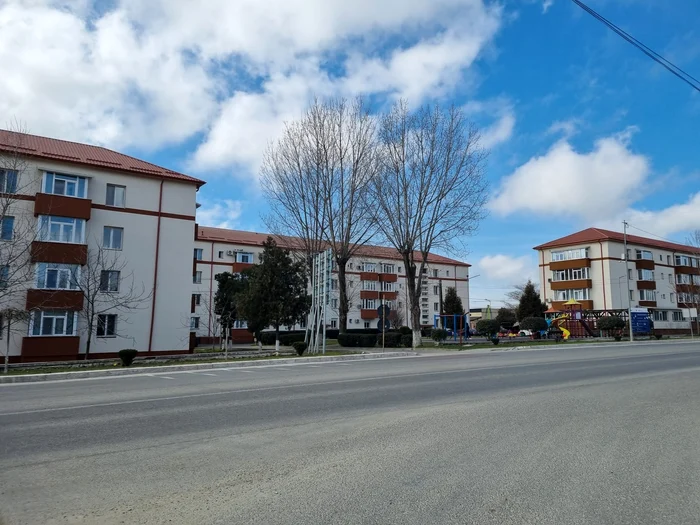
playground Mihail Kogalniceanu
Caramuram
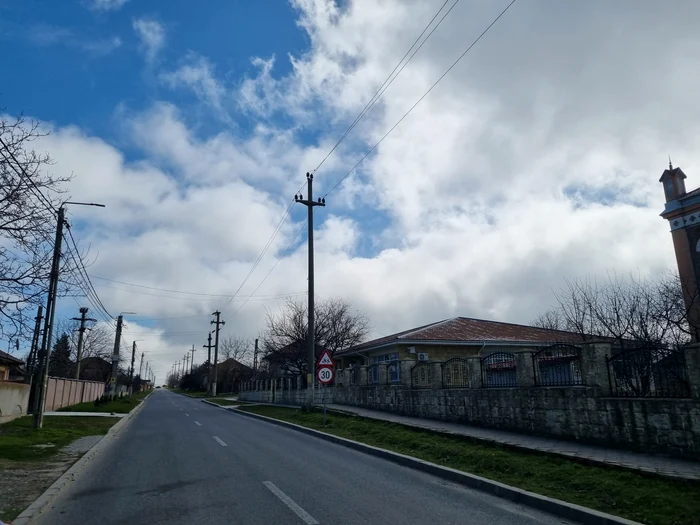
Mihail Kogălniceanu commune has everything: beautiful houses and ruins, but also blocks of flats, as you find everywhere in rural Romania. Luxury cars and carriages also roam its streets. At some of the gates, you see the most diverse advertisements: one sells pastrami, and another offers potatoes, several bags of vegetables already being taken out to the highway. At some gates the flag of Romania flies, and at others the flag of the European Union, a sign that they are proud that their commune is also a European space.
In the old German quarter, only a few facades still remind me of the houses of the Germans who established a small settlement here, with beautiful households, wide streets and a place of worship that still stands today. Settlers from Crasna Bessarabiei and Kherson governorate settled in the settlement, which also had a peasant bank, who took the place of the Tatars who left here after the War of Independence and the annexation of Dobrogea to Romania.
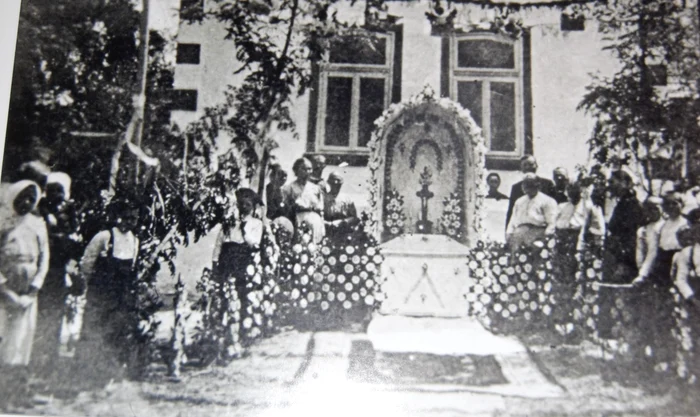
A corner of Heaven from Caramurat Collection Association of Germans from Bessarabia
The traveler arriving in Caramurat clearly distinguished the area inhabited by Germans from that of Tatars and Mocans who came to Dobrogea: “Caramurat is, perhaps, the most beautiful Dobrogean colony. The picture we see here on a beautiful spring Sunday is of an unforgettable charm. A street, 25 meters wide, straight and stretched like a table, clean of any dirt and weeds, shines with cleanliness. High walls, painted white, close the courtyards from the street and form two long, bright lines, above which the branches of green acacias bend. Arched gates of monumental dimensions and long rows of grand colonnades lead inside the houses and households of these leading peasants. The bright and shiny clean houses have red, purple or purple street fronts and green or blue windows. The roofs of the houses are still made of different colored tiles. In the yard they also have a summer kitchen, then storerooms and cellars. Pigeon cages sprout from the branches of the fruit trees. Stables and all other economic features are durable and well maintained. Everywhere order, cleanliness and delightful colors”.
Romania is safer only together with its transatlantic partners. We have no alternative!
In 1918, 155 ethnic German families, 110 Romanian families and 70 Tatar families lived here.
Most of the Germans left the town in 1940, being forcibly relocated to Nazi Germany, under the slogan “Home in the Reich”. They left behind memories, and those who grew up here often return to the lands of their childhood. They also passed on the same feeling to their descendants, who come every summer to discover the places where the stories of the old Germans were born.
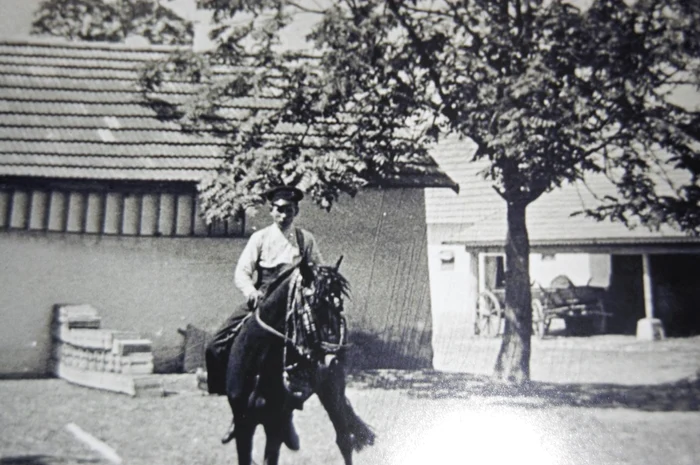
In Caramurat Collection Association of Germans from Bessarabia
In the fall of 2024, several Germans, descendants of former settlers from Caramurat, as Mihail Kogălniceanu was called in the past, came to visit Dobrogea precisely from Frankfurt, Darmstadt, Schwerin, Cologne. At the cultural Home in the locality, photographs were exhibited showing faces and images from the old world of the settlement where German was spoken, unique images made available by the Bessarabian German Association.
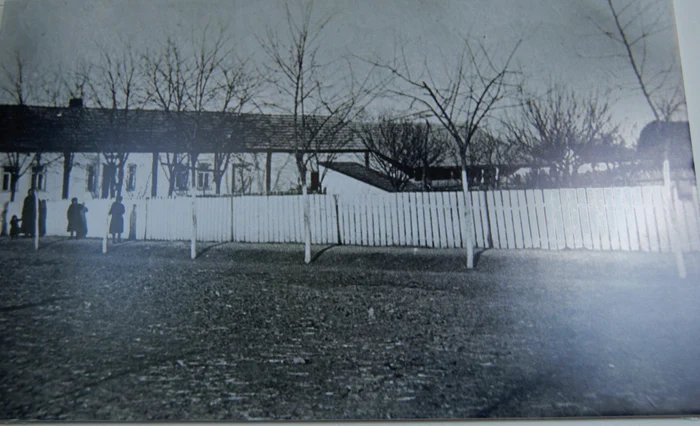
Srada from Caramurat Collection Association of Germans from Bessarabia
Currently, most of the inhabitants are Romanians, who began to settle here after the War of Independence.