Expanding trade ties and developing border infrastructure between China and North Korea suggest bringing Pyongyang back into Beijing's sphere of influence, as Trump expresses interest in resuming negotiations with North Korean leader Kim Jong-Un, Reuters reports.
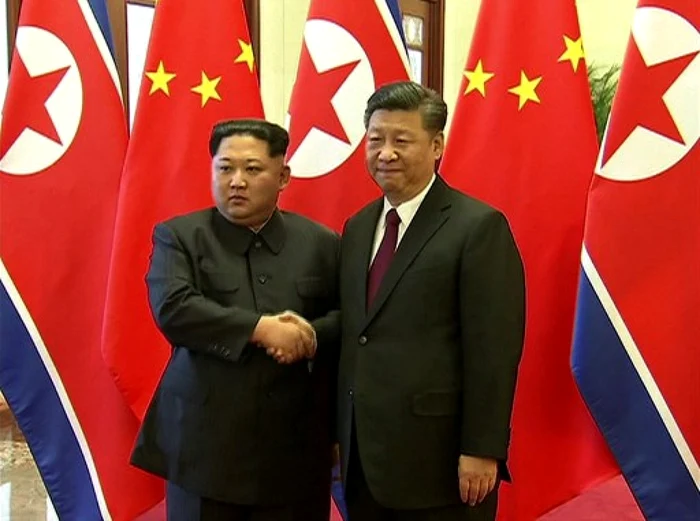
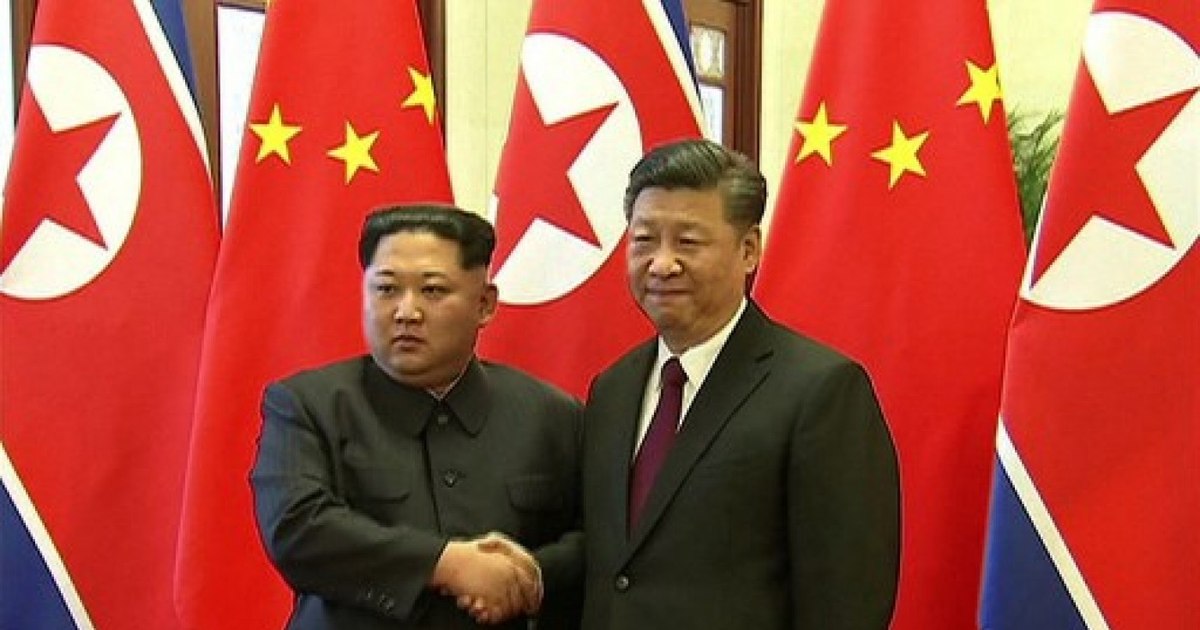
Km Jong-un and Xi Jinping close ranks/PHOTO:AFP
When Kim arrived in Beijing for a military parade last September, the event marked a warming of relations between the two countries. The North Korean leader came accompanied by a team of senior economists to discuss trade and investment. Five weeks after that visit, Chinese Premier Li Qiang traveled to Pyongyang and China's ambassador to North Korea spoke of a “new page” in bilateral relations.
For Beijing, the goal is clear: to restore traditional influence over a neighbor that moved closer to Russia after its invasion of Ukraine in 2022. North Korea has begun supplying weapons and sending troops to Russia in exchange for fuel and food to shore up its isolated economy.
Reuters investigations show that as Trump prepares to visit China and explore resuming dialogue with Kim for the first time since 2019, Beijing is deepening its cooperation with Pyongyang. China and North Korea are building new border facilities, including roads and ports, and developing closer economic ties, bolstering Beijing's influence in the face of any American attempts at rapprochement with Pyongyang. US President Donald Trump is scheduled to visit China at the end of March.
Reuters analyzed trade data and interviewed about three dozen sources, including North Korean workers, Chinese entrepreneurs with factories in North Korea, Western tour operators and a Chinese government official.
A careful approach
The relationship between the two countries is gradually evolving. North Korea closed its borders in 2020 due to COVID-19 and remains largely inaccessible to tourists, even as passenger rail routes from China to North Korea resume this week. Kim's increasingly close ties with Moscow in recent years have allowed Pyongyang to diversify its political and economic partners amid continued pressure from international sanctions.
But strengthening cooperation with China offers Beijing an opportunity to increase its economic dependence on its neighbor and demonstrate to Trump that its main strategic competitor holds the key to influence over Kim.
Last year, China's exports to North Korea hit a six-year high of $2.3 billion, up 25 percent from the previous year. In November 2025, China abandoned its historic call for the denuclearization of North Korea. On March 9, Kim said bilateral cooperation would become even closer in the future as the two countries “advance the common cause of socialism,” according to North Korean state media.
“Negotiations have begun in all areas – politics, economy, security and military affairs – which creates the basis for a leap in relations”, says Professor Lim Eul-chul from Kyungnam University in South Korea.
When asked about China's rapprochement with North Korea, Kremlin spokesman Dmitry Peskov told Reuters that Russia welcomes strengthening regional cooperation that contributes to stability and security.
China's foreign ministry told Reuters that Beijing and Pyongyang are “actively developing border cooperation to facilitate collaboration,” without referring to North Korea's relationship with Moscow.
Border infrastructure
In the Chinese city of Dandong, authorities have shown preparation for more intense cross-border traffic. On the Chinese side of a yet-to-be-completed bridge over the Yalu River that marks the border with North Korea, signs for “trucks in” and “cars in” have been installed.
Recent construction work is also visible at other Chinese border points, including roads and port buildings at Quanhe Port and new infrastructure in Nanjing and Sanhe. North Korea is also building a customs and immigration complex, as well as warehouses and cargo facilities, after a 15-year delay.
China's announcement of the resumption of passenger trains between Beijing, Dandong and Pyongyang for the first time in six years is seen as a signal for a possible return of tourism. Tickets are only available for travelers with a North Korean business visa.
“Reopening of railways could mean the return of tourists,” says Rowan Bird, co-founder of Young Pioneer Tours.
Trade and resources
Strengthening cooperation reflects China's readiness to expand trade. CSIS analyst Joseph Bermudez points out that North Korea has resources and manpower available at very low cost.
Even as UN sanctions restrict traditional exports such as coal, China is focusing on importing labor-intensive materials needed by the Kim regime. Beijing is also the main buyer of North Korean strategic metals, including molybdenum and tungsten, used in missile production, allowing it to supplement its stockpiles at low prices and control exports.
Politically, the rapprochement is accelerating. In October 2025, North Korea supported China's position on Taiwan, before Beijing dropped the requirement for Pyongyang to denuclearize in its weapons white paper.
Trump, who is visiting China in late March-early April, has expressed his desire to meet with Kim again. The North Korean leader responded that the US must first drop demands for denuclearization.
Still cautious
Despite intensifying interaction between Beijing and Pyongyang, changes in Dandong remain modest. The project of a new North Korean port, thought of since 2010, is abandoned, and the area remains deserted. The city's streets are lined with empty storefronts and real estate prices have fallen to about 3,000 yuan per square meter from 10,000 during Trump's first term.
A Chinese trader explains: “Before the pandemic, our trucks could move freely inside North Korea for deliveries or loading. Now operations are limited to customs.”
Lim Eul-chul points out that Pyongyang's caution reflects disappointment that China has not done more to ease UN sanctions. A Chinese border official said the improvements would be gradual.
“The most difficult time is over. It's only going to get better,” he said.
At the party congress in February, Kim pledged to expand North Korea's nuclear arsenal and said the prospects for improved relations with the US depended on Washington's stance. In parallel, tensions in the Middle East and the US threat to Iran have increased North Korea's determination to strengthen its nuclear program, considered essential to the survival of the Kim regime.
Analysts estimate that Kim concluded that the lack of nuclear weapons made Iran vulnerable to attack. At the same time, it is not clear whether the US-Iran conflict will create opportunities for negotiations or cause Pyongyang to further isolate itself.