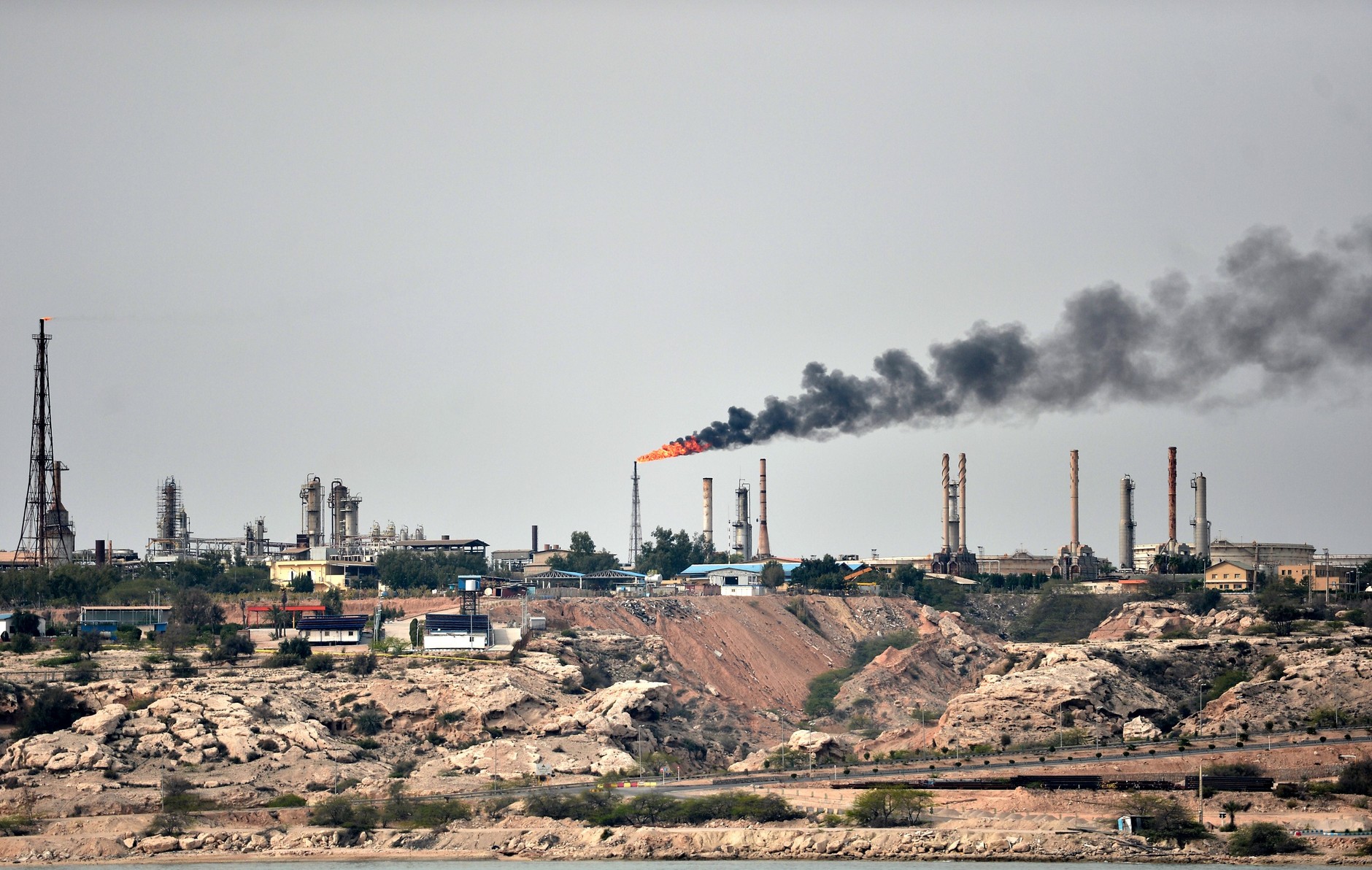
Khark Island is a bottleneck for Iran's oil exports, with nine out of 10 barrels passing through it. The transhipment capacity of the terminal located there is up to five million barrels per day, and the storage capacity is approximately 28 million barrels – this is one quarter of Iran's total reserves. Without the island of Khark, the country's economy would collapse.
By hitting this weak point, Trump could break Tehran's resistance. However, there is one key obstacle standing in the way of achieving this task.
Ellen Wald, a senior research fellow at the Global Energy Center at the Atlantic Council think tank, says Khark Island has long been seen by Iran's opponents as a weak spot for the regime.
However, he says it is unlikely that U.S. or Israeli forces would intentionally destroy Khark. According to her, this could trigger a wave of Iranian retaliatory actions against energy infrastructure in the region, causing oil prices to rise around the world.
“As long as Iran has the ability to extract oil, it won't try to take that ability away from anyone else because it knows that if it does, its oil infrastructure will be destroyed,” Wald says. “It's kind of a mutual destruction guarantee, so no one will take any action.”
The article continues below the video
As early as 1979, Carter's advisers recommended seizing Khark Island to put pressure on Iran during the hostage crisis. Carter refused.
However, this place is still considered a bottleneck for the Iranian economy. According to POLITICO, the US could occupy the most important island of the Iranian regime, on which the country's oil industry is based.
— If Trump intends to intensify pressure on Iran beyond missile attacks and bombings, seizing Khark Island would deprive the regime of a key source of funding, Michael Rubin, senior Pentagon adviser on Iran and Iraq in the George W. Bush administration, told POLITICO.
– If they can't [irański reżim] sell their own oil, they will not be able to pay wages, adds Rubin, who currently works at the conservative American think tank, the American Enterprise Institute.
Oil is the lifeblood of the Islamic Revolutionary Guard Corps. According to Reuters, approximately half of the $50 billion (almost PLN 183, counting at the current exchange rate) of the country's oil industry is controlled by this formation. This includes a fleet of tankers that carry sanctioned crude oil abroad, mainly to China.
In the weeks leading up to the U.S. and Israeli attacks, Iran increased oil production on Khark Island.
Oil terminal on Khark Island (illustrative photo)Fatemeh Bahrami/Anadolu Agency/Getty Images / Contributor / Getty Images
According to Kpler, an energy data company, production at the facility located on the island has been increased to a near record level of approximately. 4 million barrels per day. This represents a sharp increase compared to the baseline of approximately 1.5 million barrels per day.
Kpler analysts found that Iran has not exported this much oil since 2018, when Trump re-imposed sanctions on the country's nuclear program.
“The consequences for the global market would be catastrophic.”
Trump may have a different plan — perhaps opting for an occupation instead of bombing. Whoever controls the island of Khark holds in his hands the source of the regime's income. There is an alternative route for the Goreh-Jask pipeline – it runs approximately 1,100 km through mainland Iran to the Gulf of Oman, bypassing the Strait of Hormuz.
However, its capacity is only approximately 300,000. barrels per day, a fraction of the usual amount of oil exported. Iran would lose most of its export earnings. At the same time, Washington would control the most important oil supply route to China — without directly disturbing the route of tankers heading to Beijing.
There are reasons for US reticence. The attack would result in a further increase in oil prices – the price of crude oil has already increased by approximately 10%. Further escalation would shock markets around the world. Moreover, Iranian retaliation could affect the energy infrastructure of the Persian Gulf states – Saudi Arabia and the United Arab Emirates would be susceptible targets.
Any future government following a regime change in Tehran would be weakened if the country's economic foundations were previously destroyed. In an extreme case, Tehran could even sabotage its own infrastructure – blow up pipelines, destroy terminals – to prevent it from being used by the enemy. The consequences for the world market would be disastrous.
I’m Ashley Davis as an editor, I’m committed to upholding the highest standards of integrity and accuracy in every piece we publish. My work is driven by curiosity, a passion for truth, and a belief that journalism plays a crucial role in shaping public discourse. I strive to tell stories that not only inform but also inspire action and conversation.