Russia has developed Shahed drones faster than Ukrainian interceptors. What solutions does Kiev have


Russia's strategic bombing campaign in Ukraine is increasingly relying on high-speed “Geran” drones, raising questions about the ability of Ukraine's intercept systems to keep up, Forbes reports. These autonomous munitions, derived from Iran's Shahed drones, have been significantly developed since their introduction in 2022, triggering a veritable technological race in the airspace above the conflict zone.
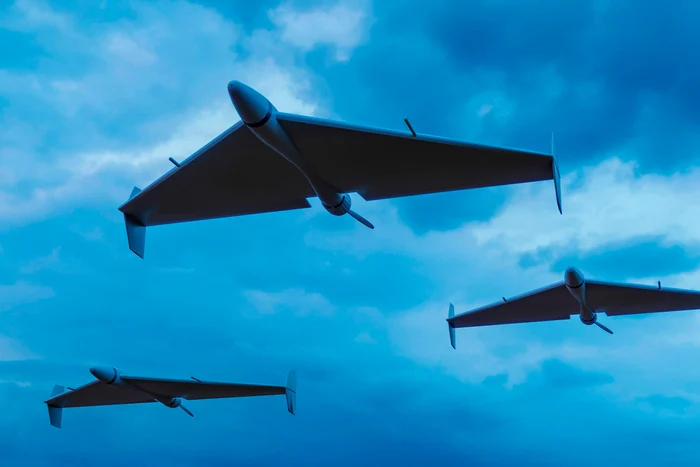
archive photo
The Geran family of drones, including the Geran-2, Geran-3 and Geran-5 variants, are relatively simple autonomous munitions with inertial navigation sensors and satellite guidance systems. Originally designed for autonomous navigation on pre-programmed routes, drones follow predetermined routes to targets.
Over the past three years, Russia has implemented several upgrades to maximize the effectiveness of strikes. Some Gerans now feature AI-based flight control, on-board cameras and advanced GNSS protections to counter electronic warfare. Others are using new tactics, including flying in pairs and decoys, to overwhelm Ukrainian defenses. Despite these improvements, a significant number of Gerans miss their target. The reason: Ukrainian interceptor drones.
Since 2023, Ukraine has countered the Gerans with interceptor drones, and currently they are capable of reaching 300 km/h. These AI-based systems, costing between $1,000 and $1,600 each, are designed for the kinetic destruction of drones and achieve intercept rates of over 60 percent when integrated into Ukraine's layered defense systems.
According to Sergiy “Flash”, an adviser to the Ministry of Defense in Kiev, Russia has three options to overcome these systems: improving evasion capabilities, flying at low altitude or increasing the speed of drones. Technical and logistical limitations make speed the most feasible solution.
Russia's answer comes in the form of jet-powered Geran variants. The Geran-3, first seen in combat in June 2025, uses a Chinese Telefly engine that allows speeds of over 500 km/h, according to Ukrainian intelligence that analyzed the drone. Otherwise, these drones retain the similar Geran-2 delta wing configuration, with a wingspan of around three meters.
Geran-5, introduced in January 2026, represents a further upgrade of the model. With a wingspan of 5.5 meters and a fuselage closer to an airplane, the Geran-5 can carry an estimated payload of 90 kg over distances of nearly 1,000 km, reaching speeds of around 600 km/h. Although the number of drones used in combat remains limited, these jet-powered variants significantly outpace Ukrainian interceptor drones.
The disadvantages
Although faster drones can temporarily bypass Ukrainian interceptors, jet propulsion increases complexity and cost. Unlike the low-cost Geran-2, producing jet-powered drones requires advanced engines and specialized components, currently plagued by supply chain issues. Analysts say a large-scale deployment depends on Russia's ability to produce the engines domestically.
Ukraine's next steps
Ukrainian authorities are actively responding. The Ministry of Defense is prioritizing the development of faster interceptor drones capable of engaging high-speed targets with improvements in propulsion, processing power and autonomous tracking.
In parallel, Ukrainian forces are targeting the production and supply networks of Geran drones, conducting deep strikes on assembly facilities, warehouses and logistics infrastructure in Russia. The objective is to disrupt production, degrade stockpiles and slow the deployment of advanced drones.
A perpetual cycle of innovation
The conflict between Ukraine and Russia remains a technological game of cat and mouse. Ukraine currently holds the upper hand thanks to AI-based interceptors, but the introduction of jet-powered Geran drones threatens to tip the balance. Historically, advantages in drone warfare have proven temporary, lasting only until countermeasures emerge. Both sides continue to innovate, shaping a battlefield where drone supremacy is a critical factor.